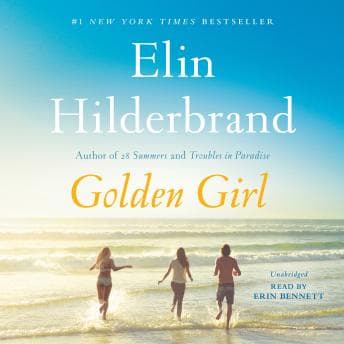

Look, I finished this in the time it takes to walk from my apartment to the lakefront and back. Two hours. That's it. And honestly? I'm still not sure how I feel about that.
Here's the thing about literary sequels - or in this case, postscripts. They're dangerous. You spend an entire book building these characters, watching them navigate the chaos of 1969 (Vietnam, the moon landing, Chappaquiddick, all of it), and then someone asks: "But what happened next?" And the author has to decide whether answering that question is a gift or a curse.
The Levin Sisters, A Decade Later
I listened to Summer of '69 last year while grading final essays, and those Levin sisters stuck with me. Blair, Jessie, Kirby - they felt like people I might've taught. The kind of students who'd either make you proud or give you gray hair. Probably both.
So when I saw Hilderbrand had written this brief follow-up, I was curious. Ten years is a lifetime when you're young. Where did these women land? The answer is... satisfying, if not exactly surprising. Hilderbrand gives us updates on each sister, touches base with the family dynamics, and wraps it up before you've even settled into your walking rhythm.
This reminds me of what Hemingway said about knowing what to leave out. Sometimes the iceberg theory works. Sometimes you just want to see more of the iceberg. I wanted more iceberg. (My students would hate that I just typed that. I love it.)
Erin Bennett Gets It
Now, the narration - this is where I have to give credit. Erin Bennett gets Hilderbrand's voice in a way that feels almost telepathic. She's not just reading words; she's channeling the specific cadence of each character. The way she shifts between sisters, giving each their own texture without making it feel like a performance piece. That's craft.
One listener said she "really gets the nuances of Elin's characters and her writing so that the narration and storytelling just comes naturally." Spot on. There's a warmth to Bennett's delivery that matches the nostalgic, family-centered tone of the story. She understands that pause is punctuation - something I'm constantly trying to teach my juniors when they're reading aloud.
The pacing works too, which matters more than you'd think in a two-hour listen. Nothing drags. Nothing feels rushed. It's like a perfectly timed short story read aloud by someone who actually cares about the material.
The Problem With Postcards From The Past
But here's my honest take, and I say this as someone who teaches literature for a living: some stories don't need epilogues.
Summer of '69 ended with possibility. The sisters were at crossroads, yes, but the beauty was in not knowing exactly where those roads would lead. Cast does something similar with its ensemble of characters, though Hilderbrand at least gives us closure instead of leaving everything hanging. This postscript answers questions I'm not sure I was asking. It's pleasant - genuinely pleasant - but it feels more like a literary postcard than a necessary addition to the narrative.
One reviewer called it "quick and nice, but not really remarkable." That stings a little because it's accurate. It's the literary equivalent of running into an old friend at the grocery store. Nice to catch up, but you're not going to write home about it.
(Don't tell my students I said that. They already think I'm too harsh on contemporary fiction.)
Who Gets the Hall Pass
If you loved Summer of '69 and you're craving just a little more time with these characters, this is a perfectly fine way to spend two hours. The production is clean, Bennett's narration is lovely, and Hilderbrand writes with the kind of accessible warmth that makes you feel like you're catching up with family.
But if you haven't read the original? Skip this entirely. It'll mean nothing to you. And if you finished Summer of '69 and felt satisfied with where things landed? Maybe leave it there. Let your imagination fill in the gaps.
I listened to this while supposedly paying attention to a department meeting about standardized testing (Principal Martinez, if you're reading this - I was definitely engaged). And honestly, that's about the right context for it. Something light, something familiar, something that doesn't demand too much but gives you a small emotional payoff.
Class Dismissed
The prose deserves to be savored, even if there isn't much of it. Hilderbrand knows her craft. Bennett honors it. I just wish there was more to honor.