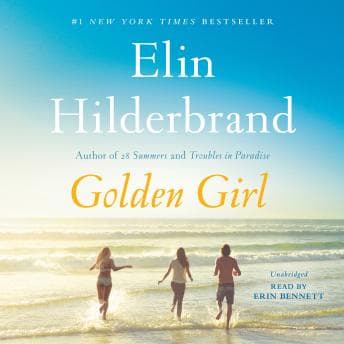

"Forty-two couples. All still together."
That line hit me somewhere around mile three of my drive home, the sun just starting to pink up over the desert, and I thought — okay, Dabney Kimball Beech, you've got my attention. A matchmaker on Nantucket with a perfect record? The nurse in me immediately wanted to know: what's the catch? Because nobody bats a thousand. Not in love, not in medicine, not in anything.
The catch, it turns out, is Dabney herself.
The Diagnosis Nobody Wants
I went into this expecting a beach read. And it is — Elin Hilderbrand does Nantucket the way I do shift reports, with efficient detail and genuine affection. Dabney runs the Chamber of Commerce, wears headbands like armor, makes information sheets about island restaurants, and has this almost supernatural ability to see romantic compatibility. That intuitive gift for seeing connections reminds me of the bond between dragon and keeper in Dragon Keeper — completely different genre, but the same sense of knowing something about a relationship that others can't perceive. Hilderbrand frames it as an actual aura thing — Dabney literally sees colors around couples. Pink when it's right. Green when it's wrong. I kept waiting for an explanation that never came, and honestly? I didn't need one. Sometimes you just know things about people. I've looked at a patient walking through the ER doors and known, in my gut, that they were sicker than they looked. Call it experience, call it instinct. Dabney would call it a gift.
But then Clendenin Hughes shows up — her college love, the one who left for Southeast Asia twenty-seven years ago and lost his arm covering the tsunami — and the matchmaker who's never been wrong about anyone else has to confront how spectacularly wrong she got her own life. She married the safe choice. The Harvard economist. The man who's kind but absent, always in D.C. or on book tours while she stayed rooted on her island.
And then the cancer diagnosis lands.
I'm not going to lie — I pulled into my driveway and just sat there for a while after those chapters. Carlos asked why I was crying in the car. I blamed allergies. It was not allergies. As someone who's actually worked with terminal patients, the way Hilderbrand writes Dabney's decline felt... honest. Not dramatized. Not heroic in that fake Hollywood way where someone gives a big speech and dies beautifully. Dabney gets tired. She gets confused. She keeps making lists and organizing other people's happiness because that's how she copes with losing control of her own body. That felt real to me. The author is a breast cancer survivor herself, and you can feel that lived knowledge in the writing — the specific terror of waiting for scan results, the way illness reshapes every relationship around you.
When the Matchmaker Can't Fix Herself
Here's what surprised me: I expected the love triangle to annoy me. Married woman, ex-boyfriend comes back, affair ensues — on paper, that's not my thing. But Hilderbrand makes a smart structural choice. She doesn't hide the affair behind euphemisms or make it glamorous. She shows the guilt eating Dabney alive while also making it crystal clear that her marriage to Box has been hollow for years. Agnes — Dabney's daughter, who is engaged to a man Dabney can see is wrong for her — provides this perfect mirror. Agnes is repeating her mother's pattern, choosing safety over the scary thing, and watching Dabney try to steer her daughter away from that same mistake while simultaneously blowing up her own life is genuinely painful.
The matchmaking conceit could've been cutesy. It's not. It's Dabney's way of giving other people what she denied herself. Every couple she puts together is a small act of penance.
Erin Bennett on the Night Shift
Erin Bennett's narration is warm and steady — the kind of voice that doesn't fight the material. She doesn't do wildly different voices for each character, but she shifts tone and cadence enough that I always knew who was speaking. Her Dabney has this slightly breathless quality, like someone trying to hold everything together with the sheer force of organized cheerfulness. It works. Her Clendenin is quieter, more grounded. The emotional scenes — particularly the later ones when Dabney's health deteriorates — Bennett handles with restraint, which is exactly right. She trusts the writing. No vocal gymnastics. Just presence.
Perfect for that post-shift decompression. Not too demanding, not too light. At 12 and a half hours, it's basically a week of commutes plus a couple of charting sessions.
Who This Is Really For
If you want a thriller, this isn't it. If you want something you can listen to while the unit is quiet at 3 AM and you need to feel something other than fluorescent exhaustion — yes. This is that book. Women in their 40s and 50s who've ever wondered about the road not taken will feel this in their chest. My mom would love this (she still thinks I should've been a doctor), especially the mother-daughter tension between Dabney and Agnes. The cancer storyline is not a plot device — it's the spine of the book, and if you've lost someone to it, or fought it yourself, be ready.
The Chart Note
Night shift approved, but bring tissues. Hilderbrand did something sneaky here — she wrapped genuine grief and regret inside the packaging of a summer beach read, and by the time you realize what's happening, you're already too invested to protect yourself. The matchmaking is the hook. The love story is the heart. But the real story is about a woman running out of time who decides to spend what's left making sure everyone she loves is taken care of.
I sat in my driveway for twenty minutes. The engine was off. The sun was up. I was not okay. And that, honestly, is the highest compliment I can give a book.