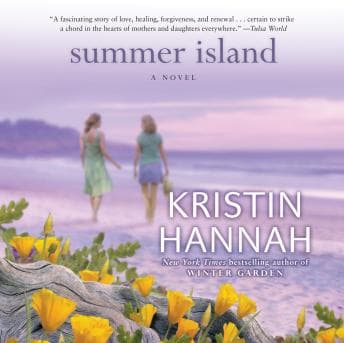

Look, I need to talk about something that has been bothering me since hour two of this audiobook. Kristin Hannah writes a character who's been in a serious accident - possibly a suicide attempt - and then has her up and moving around caring for her mother with broken ribs and injuries like she's just got a mild sunburn. As someone who's actually worked trauma for fifteen years, I wanted to reach through my car speakers and hand Ruby Bridge a PCA pump and a stern lecture about wound care. The medical details are... let's call them generous with reality.
But here's the thing. I kept listening. All ten hours.
The Mother-Daughter Wound That Won't Stop Bleeding
This story got under my skin in ways I wasn't expecting, and not because of the plot - which, honestly, you can see coming from about mile marker 47 on the I-10. Ruby's a struggling comedian who's built her whole career on mocking her mother Nora, a nationally syndicated advice columnist whose perfect public image hides a messy, complicated past. When Ruby ends up having to care for her injured mother and simultaneously gets offered money to write her biography, the collision course is set.
Predictable? Sure. But the mother-daughter dynamic - the eldest daughter who carries everyone's expectations, who became the family disappointment by not living up to a mother's impossible standards - that part hit different. I'm sitting in my driveway at 7:30 AM after a twelve-hour night shift, engine still running, listening to Ruby unravel her mother's secrets, and I'm thinking about every argument I've ever had with my own mom about nursing school not being medical school. The resentment Ruby carries isn't dramatic. It's the quiet, corrosive kind. The kind where you make jokes because the truth would crack you open. Super Sad True Love Story does something similarly uncomfortable with that same corrosive emotional honesty - different genre entirely, but it gets at how people use performance and deflection to avoid the conversations that would actually matter.
My mom would love this book, actually. (She still thinks I should've been a doctor, but she'd cry at the reconciliation parts and then deny it.)
Joyce Bean - Soothing Enough, Distinctive Enough? Eh.
Joyce Bean has won Audies. She's got the resume. And her narration here is... fine. It's smooth, it's warm, she handles the emotional passages with real tenderness. When the story shifts into Nora's backstory and the weight of decades of secrets, Bean's voice carries genuine sadness.
But - and this is the problem - Ruby and Nora sound almost identical. For a book that lives and dies on the tension between these two women, I needed to hear the difference between them. Ruby's supposed to be sharp, cynical, defensive. Nora's supposed to be polished, controlled, cracking at the edges. Bean gives them basically the same voice with slightly different energy levels. By hour five I was relying on context clues to figure out who was speaking in dialogue-heavy sections, and at 4 AM when you're charting and half-listening, that's not great.
Some people find her tone soothing. I get it - it's got that warm blanket quality. But there were moments where the emotional register felt slightly off, like Bean was reading sad when the scene called for furious. It's not bad narration. It's just unremarkable for someone with her pedigree.
Lifetime Movie or Something More?
I've seen people compare this to a Lifetime movie, and I understand the impulse. The blackmail subplot with Nora's former lover feels like it was airlifted in from a different, soapier book. The love interests for both Ruby and Nora are underwritten - they exist to prove these women are lovable, which, okay, but give me something to work with. And the ending wraps up with the kind of neatness that real family trauma never, ever allows.
But Hannah does something well here that I want to give her credit for: she writes the specific, petty mechanics of family resentment with real accuracy. The way Ruby catalogues every slight. The way Nora's advice-column perfection is both her armor and the weapon her daughter uses against her. The biography-as-excavation structure works because it forces Ruby to see her mother as a full person, not just the woman who left.
Is it Hannah's best work? Not even close - this is early-career Hannah, before The Nightingale, before she figured out how to balance sentiment with real structural ambition. But it's honest about the mess of loving someone who hurt you.
Who Needs This and Who Doesn't
If you're an eldest daughter with complicated feelings about your mother, this book will find the bruise and press on it. If you want depth, complex plotting, or a narrator who transforms the material - look elsewhere. This is comfort food with a bitter edge. Good for a long drive, a quiet night shift, a week when you need to feel something without being destroyed by it.
Carlos asked why I was sitting in the driveway so long after my shift. I told him I was finishing something. He brought me coffee. That man.
Night Shift Prescription: Take As Needed, Not As Directed
This is a 3.5-star audiobook wearing a 4-star story's clothes. The bones are good. The narration doesn't elevate them. Worth your time on a streaming service or library hold, but I wouldn't burn a credit on it when Hannah has stronger books that deserve your money first. Perfect for that post-shift decompression when you want something emotional but not devastating - the literary equivalent of scrambled eggs and toast at 8 AM. It'll do the job. It just won't change your life.