
I was debugging a particularly nasty memory leak at 11 PM last Tuesday—the kind where you're staring at heap dumps and questioning your career choices—when I decided I needed something completely different in my ears. Something that had absolutely nothing to do with distributed systems or the fact that our Kubernetes cluster was slowly eating itself.
Enter a 115-year-old forestry textbook. Yeah, I know.
When Your Brain Needs a Factory Reset
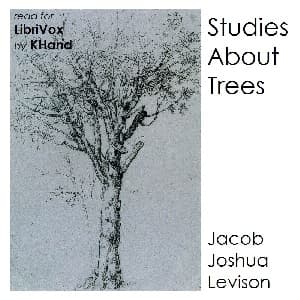
Here's the thing about Jacob Joshua Levison's Studies About Trees: it's basically documentation for the natural world. And I mean that as a compliment. This is a guy who looked at trees in 1909 and thought, "You know what beginners need? A systematic breakdown of identification, structure, uses, and maintenance." It's got that same energy as really good technical docs—clear scope, logical progression, no fluff. Astrophysics for People in a Hurry has that same stripped-down educational approach—complex topics broken into digestible chunks without the filler.
The book moves through tree anatomy (how bark forms, why leaves do what they do), then into identification of common species, then practical applications like timber uses and proper planting techniques. At 3.5 hours, it's basically a crash course you can finish in two commutes. The ROI on this audiobook is surprisingly solid if you've ever wanted to sound smart on a hike or, you know, not kill that Japanese maple your mom gave you.
KHand Does the LibriVox Thing
So this is a LibriVox recording, which means volunteer narrator, public domain text, and your mileage may vary. KHand reads with that steady, educational cadence that works for this material—not dramatic, not boring, just... competent? It's like having a patient professor walk you through the content. There's no production wizardry here, no sound effects when Levison describes the "majestic spread of the American Elm." Just straightforward reading.
I'll be honest—I couldn't find much specific feedback on KHand's performance anywhere, which usually means "fine, unremarkable, does the job." And that tracks with my experience. The audio quality is clean enough for a commute, though I wouldn't call it podcast-level polish. Some LibriVox recordings have that slightly-too-close-to-the-mic quality, but this one's pretty neutral.
The Science Actually Holds Up (Mostly)
What surprised me: a lot of Levison's fundamentals are still accurate. Tree biology hasn't changed in a century. His explanations of how sap moves, why certain woods are better for certain uses, how to read tree age from growth patterns—all still valid. It's like reading old Unix documentation. The core concepts are eternal even if some specifics have evolved.
That said, some of the forestry practices and species references are obviously dated. He's writing about American forests in 1909, so the ecological context is pre-chestnut blight, pre-Dutch elm disease, pre-a-lot-of-things. You're getting a historical snapshot as much as a practical guide. Which is actually kind of fascinating if you're into that sort of thing.
Perfect For: Background Brain Food
This is not a book that demands your full attention. I finished it across three sessions—that late-night debugging marathon, a Saturday morning cleaning my apartment, and a particularly slow Caltrain ride where I just wanted to zone out and learn something. Concerning the Spiritual in Art worked the same way for me—another century-old educational text that's perfect for background learning when your brain needs something low-stakes. It's the kind of content where you can drift for a minute, tune back in, and not feel lost.
Skip if: you want narrative drive or entertainment value. This is educational content from the early 1900s. If you're looking for Bill Bryson-style science writing with jokes and personality, you will be disappointed. Levison is here to teach you about trees, not to charm you.
Closing the Terminal
Look, I'm not going to pretend this changed my life. But there's something genuinely satisfying about spending 3.5 hours with someone who really, deeply understood trees and wanted to share that knowledge. It's free (public domain!), it's short, and it delivers exactly what it promises: a beginner's guide to tree identification, structure, and care.
I now know the difference between a White Oak and a Red Oak. I understand why certain woods are better for furniture versus construction. I can identify a Tulip Tree by its leaves. Is this information I needed? Absolutely not. Will I use it to seem interesting at Kevin's family barbecues? Absolutely yes.
For a free LibriVox recording of a century-old textbook, this is about as good as it gets. Just don't expect production value or narrative excitement. Expect competent education about trees. That's the product, that's what you get.







![Steve Jobs [unabridged audiobook] audiobook cover](/_next/image?url=https%3A%2F%2Fcovers.audiobooks.com%2Fimages%2Fcovers%2Ffull%2F9788499923406.jpg&w=1920&q=75)