
"The wall surface is to be regarded as a field for the reception of the best and most precious ornament that can be invented."
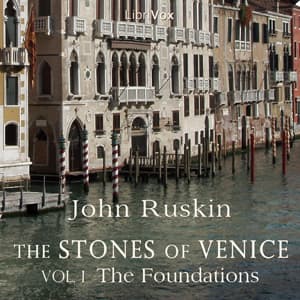
Three AM. The unit is quiet - too quiet, the kind of quiet that makes you knock on every wooden surface in reach. I'm charting, but my brain needs something to chew on besides medication reconciliation. So I'm listening to John Ruskin describe Venetian architecture in exhaustive, obsessive, beautiful detail. And somehow? It works.
Let me be clear about what you're getting into here. This is 14 hours of Victorian art criticism. Ruskin doesn't just describe buildings - he dissects them like I'd dissect a complex patient history. Every column capital, every archway, every decorative flourish gets examined. The man spent years measuring and sketching Venetian churches, and you feel every one of those hours in his prose.
When a Victorian Polymath Meets Your Earbuds
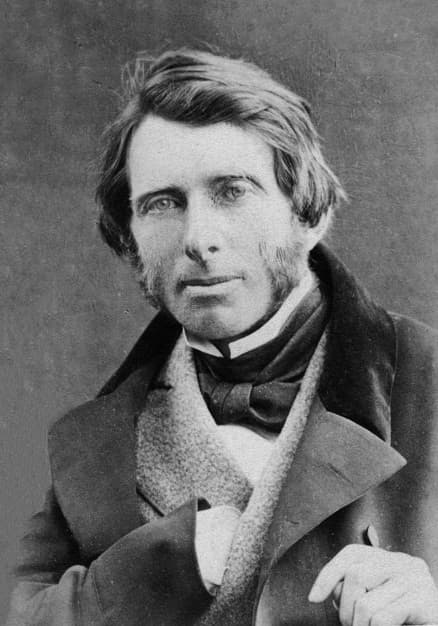
Ruskin writes the way some surgeons talk - absolutely certain of their expertise, occasionally insufferable, but undeniably brilliant. That same unshakable confidence radiates from 48 Laws of Power, though Robert Greene applies it to human behavior instead of stone arches. He'll spend twenty minutes explaining why a particular type of Gothic arch represents moral superiority over Renaissance alternatives. And you know what? By the end, you're nodding along. The man could convince you that a specific curve in a window frame reflects the spiritual health of an entire civilization.
Compared to modern nonfiction - your Malcolm Gladwells, your Mary Roaches - this is a different beast entirely. There's no narrative hook, no "let me tell you a story about a fascinating researcher." Ruskin assumes you're here for the architecture, and he delivers. If you've ever read academic art history and thought "this could use more passionate opinions," Ruskin is your guy.
The LibriVox Reality Check
Here's where I have to be honest. LibriVox is volunteer-produced, which means you're getting a rotating cast of readers with varying audio quality and delivery styles. This isn't a criticism - these people are donating their time to make classic texts accessible. But it does mean the listening experience is uneven.
Some chapters flow beautifully. Others have that slightly echoey home-recording quality. The transitions between readers can be jarring - you'll adjust to one person's rhythm and then suddenly someone new is handling the Byzantine period. For a text this dense, that inconsistency matters. You can't just zone out and absorb; you have to actively listen.
Is this the ideal way to experience Ruskin? Probably not. Is it free and accessible? Absolutely. And honestly, the variety of voices kind of works for a text that covers so much ground. Different readers bring different energy to different sections.
Why a Trauma Nurse Cares About Gothic Windows
My mom would love that I'm listening to this. (She still thinks I should've been a doctor, but "my daughter studies Victorian art criticism" would impress her church friends.) There's something about Ruskin's obsessive attention to detail that appeals to me professionally. He notices things. The way a carving shows tool marks. The specific angle where morning light hits a facade. The subtle differences between workshop styles.
In my work, details save lives. A slight change in skin color. A rhythm that's almost right but not quite. Ruskin applies that same intensity to stone and mortar. He's reading buildings the way I read patients - looking for what the surface doesn't immediately reveal.
The book also functions as a meditation on decay and preservation. Ruskin was documenting Venice partly because he knew it was crumbling. He was racing against time to record what would be lost. That urgency comes through, even in his most technical passages.
Who Should Listen (And Who Should Skip)
This is not for casual listening. Don't put this on during your workout or expect it to entertain you through traffic. This is for people who want to learn something specific - either about Venetian architecture, Victorian aesthetics, or the history of art criticism itself.
Perfect for: Art history students, architecture nerds, anyone planning a Venice trip and wanting to look at buildings differently, insomniacs who find dense Victorian prose soothing (no judgment, I'm one of you).
Skip if: You need narrative drive, you want polished production values, or the phrase "the nature of the Corinthian capital" makes you want to run.
Night Shift Prescription
I finished this over about six weeks of post-shift drives and quiet charting sessions. It's the kind of book that rewards patience. You don't binge it - you let it accumulate. By the end, I found myself actually noticing architectural details in the hospital. The way the light comes through the chapel windows. The pattern in the lobby floor tiles.
Ruskin would probably have opinions about modern hospital architecture. They would not be kind opinions.
Carlos asked why I was muttering about Byzantine influences while making breakfast. I told him it was work stress. He didn't believe me, but he also didn't ask follow-up questions. Fifteen years of marriage teaches you when to let things go.
This isn't a polished audiobook production. But the text itself? Still influential 170 years later for good reason. If you're in the right headspace - patient, curious, willing to work - there's real treasure here. Just maybe listen at 1.25x speed unless you're specifically trying to fall asleep.








![Steve Jobs [unabridged audiobook] audiobook cover](/_next/image?url=https%3A%2F%2Fcovers.audiobooks.com%2Fimages%2Fcovers%2Ffull%2F9788499923406.jpg&w=1920&q=75)