
How many investment books have you finished that actually changed how you invest? For me, the number is embarrassingly low—maybe three in the last decade. The rest? Abandoned somewhere between chapter 4 and the author's third humble-brag about their hedge fund returns. Diary of a CEO had similar moments where I couldn't tell if I was getting wisdom or a LinkedIn post.
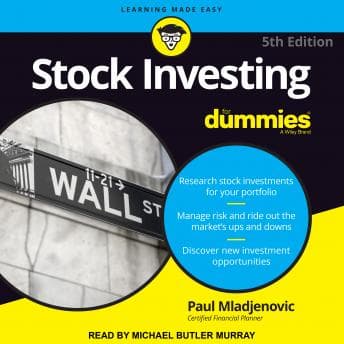
Stock Investing For Dummies sits in an interesting middle ground. It's not going to change your life. But it might actually teach you something, which is more than I can say for 80% of my Audible library.
The Dummies Paradox
Here's the thing about the "For Dummies" format that nobody talks about: it works precisely because it doesn't try to impress you. Paul Mladjenovic isn't flexing his CFP credentials every chapter. He's not name-dropping Warren Buffett every twelve minutes like some finance bros I've encountered. The guy spent 21 years as a financial planner, and it shows in the practical, almost boring way he explains things.
I was reviewing quarterly reports for a client at 11 PM—one of those startups that thinks "burn rate" is just a suggestion—and I had this playing in the background. Mladjenovic's breakdown of P/E ratios and dividend analysis is exactly what my parents did instinctively with their dry cleaning business. They didn't call it "fundamental analysis." They called it "not being stupid with money." Now it has a TED talk. 50th Law strips away similar corporate jargon to get at the same street-smart principles.
12 Hours Is Too Long (But Not How You Think)
There's maybe 4-5 hours of genuinely useful content stretched across 12.5 hours. The sections on ETFs, market orders versus limit orders, and the risk management chapters? Solid. Worth your time. The European debt crisis material? Dated. This is the 5th edition, and you can feel the layers of updates sitting awkwardly on top of each other like a poorly merged PowerPoint deck.
My 2.0x speed couldn't save some of these chapters. The tax implications sections drag particularly hard—not because the information is bad, but because tax law from whenever this was recorded has shifted enough to make me nervous about following it blindly.
Michael Butler Murray: The Honda Civic of Narration
Murray's narration is... fine. Competent. He reads like a professional who's done fifty-five audiobooks and knows exactly how to pace educational content without putting you to sleep. No accent quirks, no weird pronunciation of financial terms (you'd be surprised how many narrators butcher "amortization"). But there's also no energy. It's the audio equivalent of a reliable Honda Civic—gets you there, won't excite you.
What Actually Lands
The real value here is in Mladjenovic's framework for evaluating individual stocks. He breaks down how to read annual reports, what red flags to watch for in company financials, and—this is the part I actually bookmarked—how to think about sector allocation beyond the generic "diversify your portfolio" advice that every finance book regurgitates.
I've seen the strategies he outlines work at actual companies. I've also seen them fail, but usually because people ignored the risk management parts. Which, credit where it's due, Mladjenovic hammers repeatedly. Maybe too repeatedly. But better than the opposite.
For someone who's never bought individual stocks before? This is genuinely useful. For someone who's been investing for a decade? Skip to chapters on options and advanced strategies. The basics will bore you, and life's too short.
Who Gets Value Here (And Who Doesn't)
Perfect for: Complete beginners who want a systematic education, not a get-rich-quick fantasy. People who learn better through audio than reading. Anyone who needs to understand investing for professional reasons but isn't planning to become a day trader.
Skip if: You've read more than two investing books already. You want current market analysis (this ain't it). You're looking for entertainment value—Jenny would say I'm being harsh, but this is reference material, not a page-turner.
The Consulting Partner's Take
I recommend this to about one in four clients who ask me about personal investing. The ones who are starting from zero and need structure. That framework for stock evaluation? Worth the listen. The other 7 hours? Not so much. Use the chapter navigation aggressively, treat it like a reference guide rather than a narrative experience, and you'll extract real value.
Is it worth a credit? Probably not at full price for most people. But if you catch it on sale, or you're genuinely starting from scratch with investing? It'll serve you better than most of the flashier alternatives. My parents would've found it too slow. But they also built a business without ever reading a single business book, so maybe that's not the right benchmark.