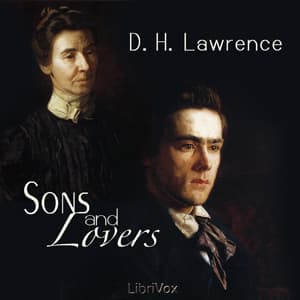

"She loved him. All her soul went out to him." Around hour three, Mark F. Smith delivers this line about Mrs. Morel and her son Paul with such quiet devastation that I had to stop grading sophomore essays on The Great Gatsby and just... sit there. Denise asked if I was okay. I wasn't, really. I was thinking about my own mother, about the way love can become a kind of beautiful suffocation.
This is why we still read the classics.
The Oedipal Weight Lawrence Refuses to Apologize For
Lawrence wrote this in 1913, and here's the thing my students never believe when I teach excerpts: he wasn't being subtle. He wasn't hiding the psychological complexity behind metaphor. The man looked at the coal-mining families of Nottinghamshire and said, "I'm going to write about a mother who loves her sons too much, and I'm going to make you understand why." Nearly nineteen hours of audiobook, and Lawrence never flinches from that uncomfortable truth.
Paul Morel cannot love Miriam properly because his mother has already claimed that space in his heart. He cannot love Clara properly either—not because they lack passion, but because passion without emotional availability is just... friction. (My students would hate that observation. I love it.)
The prose deserves to be savored. Lawrence writes nature descriptions that feel almost erotic—flowers, moonlight, the industrial landscape—everything becomes charged with the same frustrated desire that Paul carries. Smith reads these passages at exactly the right tempo, letting the language breathe. I listened at 1.0x because the author chose those words, and rushing through Lawrence is like speed-walking through the Art Institute. You're missing the point entirely.
What Smith Understands About Working-Class Dignity
Here's where I need to be honest: the research I found didn't give me much on Smith's specific technique. This is a LibriVox recording, which means volunteer narration, which means you're getting someone who chose this book out of love rather than paycheck. And you can hear that.
Walter Morel—the drunken, sometimes violent father—could easily become a cartoon villain in lesser hands. Smith gives him something else. There's a weariness in his voice when Walter speaks, a sense that this man was broken by the mines before he ever broke his marriage. It reminds me of what Hemingway said about writing: the dignity of movement of an iceberg is due to only one-eighth of it being above water. Smith finds that submerged dignity in Walter.
The women are trickier. Mrs. Morel's voice doesn't shift dramatically from Miriam's or Clara's—this is single-narrator territory, not full cast. But Smith differentiates through pacing rather than pitch. Mrs. Morel speaks with certainty, with the clipped efficiency of a woman who has made peace with her disappointments by redirecting them into ambition for her children. Miriam is slower, more hesitant, spiritual where Mrs. Morel is practical.
At eighteen hours and fifty minutes, this is a commitment. I finished it across two weeks of lakefront walks with Denise, late-night grading sessions, and—yes—one particularly tedious faculty meeting about standardized testing. (Worth pausing the budget presentation for. Sorry, Principal Martinez.)
The Uncomfortable Mirror Lawrence Holds Up
If you loved Middlemarch—and I just finished that one, so it's fresh—this is its spiritual successor in terms of psychological excavation. That same unflinching character study shows up in Outlander, where Claire's choices are messy and human in ways that defy easy judgment. George Eliot and Lawrence share that willingness to show characters who are simultaneously sympathetic and infuriating. Paul Morel is not a hero. He's not really a villain either. He's a man shaped by circumstances he didn't choose, making choices that hurt people he genuinely loves.
The narrator understands that pause is punctuation. There's a scene late in the book—I won't spoil the specifics—where Paul makes a decision about his mother that is either mercy or murder depending on your reading. Smith lets the silence after that moment stretch just long enough for you to feel the weight of it.
Let's talk about what Lawrence is really asking. Whether love can be too much. Whether mothers who pour themselves into their children's success are giving a gift or placing a burden. Whether breaking free from that love is betrayal or survival. He doesn't answer these questions. He just makes you live inside them for nineteen hours.
Who Should Spend Nineteen Hours Here (And Who Shouldn't)
This is for readers who want literature that hurts in productive ways. If you're looking for plot momentum, for things to happen quickly, you'll be frustrated. Lawrence is interested in the slow accumulation of emotional damage, the way resentments calcify over decades.
Skip this if you need likeable characters. Mrs. Morel is controlling. Paul is passive-aggressive. Walter is a drunk. Miriam is suffocating in her own way. Clara is using Paul as much as he's using her. Lawrence loved these people anyway, and the audiobook asks you to do the same.
Perfect for: English teachers who need to remember why they fell in love with literature in the first place. Anyone who's ever had a complicated relationship with a parent. Listeners who understand that "difficult" and "rewarding" aren't opposites.
The Lesson Plan I'll Never Assign
I can't teach this book to high schoolers. Too long, too psychologically dense, too much that would require explaining Freud to teenagers who think "daddy issues" is the height of psychological insight. But I'm grateful it exists in audio form, grateful that Smith volunteered his time, grateful that I can walk along Lake Michigan with Denise and feel Paul Morel's particular loneliness echoing in my chest.
The production is clean—no distracting audio issues, no awkward edits. It's not a Hollywood production, but it doesn't need to be. Lawrence's prose is the performance. Smith is smart enough to get out of its way while still giving it shape.
This is a free LibriVox recording, so the "worth a credit" question doesn't quite apply. But if you have Audible credits to spare, there are professional versions out there. What I can tell you is that Smith's interpretation is honest, unhurried, and deeply felt. For a book about the impossibility of pure love, that feels exactly right.