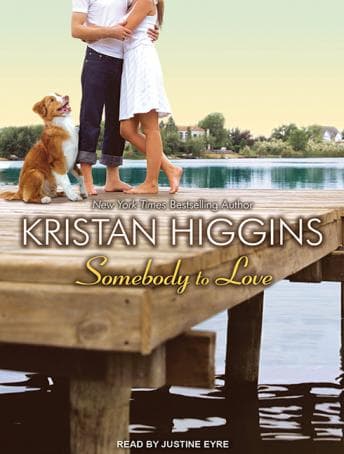

I was three hours into a logo redesign for a brewery client — the kind of project where you're staring at kerning until your eyes cross — when Parker Welles lost everything. Her dad's insider trading scheme gutted the family fortune, and suddenly this woman who'd never had to think about money was standing in front of a crumbling house in coastal Maine wondering how to hold a paintbrush. And I just... stopped designing. Put my stylus down. Because Kristan Higgins had me by the throat in the gentlest possible way.
This book felt like sitting on your best friend's porch while she tells you about the worst year of her life, except she's funny about it, and you're laughing even when your chest hurts.
Parker Welles Is Not Who You Think She Is
Here's what I love about Higgins compared to, say, a Susan Elizabeth Phillips heroine — Parker doesn't get a glow-up montage. She doesn't suddenly discover she's secretly competent at everything. She's genuinely bad at being poor. She doesn't know how to budget groceries. She's humiliated buying discount shampoo. And Higgins doesn't play that for cheap laughs. There's this moment where Parker is working as a florist's assistant and she arranges something beautiful, and it hits her that she's never actually made anything with her hands before. Never earned praise she didn't buy. I had to pause the audio because — okay, first-gen kid who dropped out of art school to teach herself design? That scene wrecked me. The idea that your worth is tied to what you can create, not what you inherited? My heart. MY HEART.
And then there's her kid, Nicky. Five years old, on the autism spectrum, and Higgins writes him with such specific tenderness. He's not a plot device. He has his own rhythms, his own fixations. When Parker has to fight for his needs while simultaneously learning to unclog a toilet, it's both hilarious and devastating.
James Cahill and the Slow Art of Proving Yourself
The romance is a slow burn, and I mean slow. If you're coming from something like a Talia Hibbert book where the chemistry crackles from page one, you might get antsy. Own the Wind scratched that immediate-heat itch for me when I needed it, though I'll admit the emotional payoff here runs deeper once you get through the circling. James is Parker's father's former protégé — so there's this whole layer of guilt and association and "are you my dad's spy?" tension that keeps them circling each other for a long time. Honestly? Around hour seven I was muttering "just KISS already" while Frida stared at me from the bookshelf like I'd lost it.
But when it finally clicks between them, it's earned. James fixing things around the house isn't just handy-man wish fulfillment (though, fine, it is a little bit of that). It's him showing up. Consistently. Without being asked. And for a woman whose father and ex-husband both disappeared when things got hard — that quiet reliability is the sexiest thing in the book. The chemistry is chef's kiss once you get there. You just have to be patient.
I will say — and this is where Higgins loses me slightly compared to her best work like The Best Man — the middle section drags. There's a stretch around hours five through eight where the small-town side characters get a lot of airtime, and some of their subplots feel like filler. Gideon's Cove is charming but I didn't need that much time with the quirky neighbor and the lobster boat drama. It's a 13-hour listen, and it probably should've been 10.
Justine Eyre Made Me Stay
Justine Eyre's narration is the reason I didn't bounce during that saggy middle. She's got this warmth that feels like afternoon sun through a window — not showy, not dramatic, just... present. Her Parker voice has this clipped, slightly defensive edge that softens gradually over the book, and you can literally hear the character changing. Her Maine accents for the townspeople are distinct without being cartoonish, and she gives James this low, steady tone that makes his patience feel real instead of passive.
She's not Julia Whelan — nobody is Julia Whelan — but she's in that same family of narrators who understand that the pause before a line can hit harder than the line itself. There's a scene near the end where Parker finally tells her father what she really thinks of him, and Eyre's delivery cracked. Not melodramatically. Just this tiny fracture in Parker's voice. I ugly-cried at that chapter. Frida left the room. Diego stayed but looked concerned.
Who This Is Really For
This is a rainy Sunday book. It's for you if you've ever had to rebuild yourself after someone else's choices blew up your life. It's for you if you like your romance wrapped in real emotional stakes — financial anxiety, single motherhood, the slow unlearning of who you thought you were. Skip it if you need heat early and often, or if a 13-hour contemporary romance feels like a commitment. Because it is one.
Abuela would have loved this one. She'd have called Parker "tonta" for the first half and then cried into her cafecito by the end.
The Arrangement That Grew On Me
Not Higgins's best, but still better than 80% of contemporary romance audiobooks I listened to last year. Justine Eyre elevates good material into something that sticks with you. I finished it two days ago and I'm still thinking about Parker standing in that gutted house, realizing she could fill it with something new. That image lives in me now. And that's pretty much all I ask from a book.