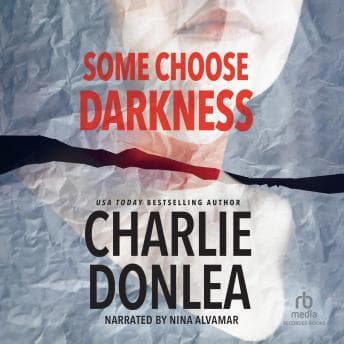

Look, I have a type. Give me a cold case, a protagonist who sees what others miss, and a timeline that jumps between past and present? I'm already reaching for my headphones. I Am Pilgrim worked the same dark magic on me—another obsessive investigator, another case that refuses to stay buried. Charlie Donlea's Some Choose Darkness hit every single one of those buttons, and honestly, I'm a little mad about how well it worked on me.
Rory Moore is the kind of character I wish we saw more in thrillers. She's a forensic reconstructionist—basically, she pieces together crime scenes that everyone else has given up on. She's also neurodivergent, and Donlea doesn't treat this as a quirk or a superpower. It's just... part of who she is. The way her mind works differently is what makes her brilliant at her job, but it also isolates her. That tension runs through the whole book, and Nina Alvamar's narration captures it beautifully.
The Dual Timeline That Actually Works
Okay, so here's the thing about dual timelines in thrillers—they're either brilliant or they're a mess. Rarely an in-between. Donlea manages to pull off something genuinely clever here. In 1979, five women disappear in Chicago. A mysterious woman named Angela Mitchell gets close to identifying the killer—and then she vanishes too. Forty years later, Rory finds herself tangled in her late father's connection to the case.
The way these timelines weave together? Chef's kiss. Every time I thought I had it figured out, Donlea would drop another piece of information that recontextualized everything. I was listening during my morning shelving at the library (yes, I'm that person with one earbud in), and I literally stopped mid-stack at one of the reveals. Just stood there holding a copy of The Shining and staring at nothing.
Shirley (my cat) was unimpressed. I was shook.
Nina Alvamar's Steady Hand
Alvamar's narration is interesting. She's got this clinical precision that some listeners might find too reserved—I've seen reviews calling it emotionally flat. But honestly? I think it works for Rory. This is a character who processes the world differently, who keeps people at arm's length, who approaches horror with the analytical eye of someone reconstructing a crime scene. Alvamar's measured delivery mirrors that.
Where she really shines is in the transitions. Moving between 1979 and present day, between Rory's perspective and Angela's, could have been disorienting. Instead, you always know exactly when and where you are. That's harder than it sounds, and Alvamar makes it look effortless.
Is it the most emotionally expressive performance I've ever heard? No. But she commits to a specific interpretation of this character, and that consistency carries you through nine hours without ever losing the thread. That's rare.
The Slow Burn That Earns Its Payoff
I'm not going to pretend this is a fast-paced thriller. It's not. There are procedural stretches—forensic details, legal maneuvering, the methodical way Rory approaches her investigation. If you need constant action, you might get antsy. But if you're the kind of listener who appreciates watching a puzzle come together piece by piece? This is your jam.
The ending is... look, I've seen mixed reactions. Some people found it unsatisfying. I get that. Without spoiling anything, I'll say this: it serves the story Donlea is telling. It's not the ending I expected, and it's definitely not the neat bow some readers want. But it felt true to the world he'd built. Sometimes the darkness doesn't get tied up cleanly. Sometimes it just... lingers. That same unresolved tension haunts Affair, where Reacher walks away from answers that would destroy him.
My podcast listeners are going to have opinions about that ending. Strong ones.
Who's This For?
This is for the people who love psychological suspense over action. If you're into character studies wrapped in mystery, if you appreciate forensic detail without it feeling like a textbook, if you want a protagonist who's genuinely different from the usual thriller template—you need this.
Skip it if you want emotionally charged narration. Skip it if procedural pacing makes you impatient. And definitely skip it if you're sensitive to violence against women as a central plot element—the missing women are treated respectfully, but the subject matter is inherently dark.
I listened to most of this during evening shifts at the library, after closing. Empty stacks, dim lights, just me and Rory and forty years of buried secrets. Perfect atmosphere for this kind of slow-building dread. Not quite horror, but adjacent enough that I felt right at home.
Closing the Case File
Finally, a thriller that respects the genre without relying on cheap twists. Donlea understands that real suspense comes from investment in characters, not just shock value. And Alvamar's steady, controlled performance lets that investment build naturally.
Would I listen again? Probably not immediately. But would I recommend it to every true crime and cold case enthusiast I know? Already texting them.