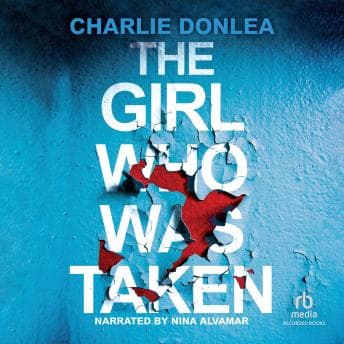

It's 11:45 PM on a Tuesday. I should be reviewing my grad students' thesis proposals on attachment theory. Instead, I'm three-quarters of the way through a bottle of Pinot Noir and listening to Charlie Donlea. My mother would say I'm wasting my education. I say I'm conducting "field research" on trauma responses. (Okay, fine, I just love a messy thriller.)
I picked this up because the premise is basically catnip for behavioral psychologists. Two girls taken, one comes back, one doesn't. The survivor writes a book and becomes famous. The other sister becomes a forensic pathologist to find the body. It's morbid. It's dark. It's exactly what I needed after a week of listening to undergrads explain why they missed the midterm.
The Psychology of the "Survivor"
Let's talk about the characters, because honestly, plot is nothing without people making terrible decisions. Megan McDonald—the one who escaped—is fascinating. Usually, fiction treats trauma survivors like fragile glass. Donlea does something different. He shows the commodification of tragedy. Megan wrote a bestseller about her abduction. She's famous. She's a hero. But psychologically? She's a mess.
And then there's Livia. The sister left behind. She's studying dead bodies to find her sister. That is a level of sublimation (look it up) that screams "I need therapy." But it makes for a compelling listen. I found myself analyzing their choices, thinking, "Okay, that's a classic avoidance behavior," or "textbook survivor's guilt." The dynamic between them—the girl who returned vs. the girl who is still waiting—is the anchor here. It's not just a whodunit; it's a study in how ambiguity rots you from the inside out.
Nina Alvamar's Pitch (And Why It Works)
Okay, we need to address the elephant in the room. Or rather, the narrator in the headphones. Nina Alvamar.
Here's the thing: Her voice is high. Like, young high. If you're used to those gravelly, noir-detective narrators, this is going to be a shock to the system. At first, I was annoyed. I was literally adjusting the treble on my speakers. But—and stick with me here—about an hour in, I realized it actually works.
We're dealing with characters whose lives stopped in high school. That arrested development? The anxiety? Alvamar captures that frantic, youthful energy perfectly. When the tension ramps up, her higher register makes the panic feel visceral. It's breathless. It's uncomfortable. It's supposed to be.
The production team also made a choice to include atmospheric music and sound effects. Usually? I hate that. It feels cheap. But here, when the creepy music swelled during the bunker flashbacks? I got chills. Actual chills. (Don't tell my colleagues, I have a reputation to maintain.)
Does the Mystery Hold Up?
I was raised on Agatha Christie. I usually spot the killer by Chapter 4. It's a curse, really. It ruins movies for everyone who dates me.
I had a similar experience with Paris Apartment: A Novel—another thriller that kept me guessing longer than my ego would like to admit.
Donlea... he almost got me. There are red herrings here that are genuinely clever. The pacing drags a little in the middle—the classic "muddled middle" where everyone just drives around asking questions—but the ending? The twist? It's solid. It relies on a specific psychological break that actually tracks with the literature. It's dark, though. This isn't a cozy mystery you listen to while knitting. It's a "check the locks twice" kind of book.
Who Should Listen (And Who Should Skip)
If you're drawn to character psychology over pure plot mechanics—or if you've ever analyzed a thriller protagonist's coping mechanisms instead of just enjoying the ride—this one's for you. Skip it if high-pitched narration genuinely bothers you, or if you need your forensic professionals to behave ethically.
So, is it perfect? No. Alvamar's pitch might grate on you if you have sensitive ears, and Livia makes some professional choices that would get her license revoked in the real world. But as a study in obsession? It's gripping.
Now, if you'll excuse me, I need to go to sleep. I have an 8 AM lecture on cognitive dissonance, and I need to figure out how to explain why I stayed up all night listening to fictional murder.