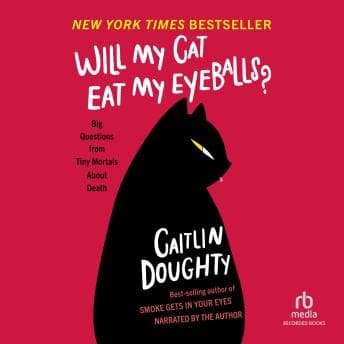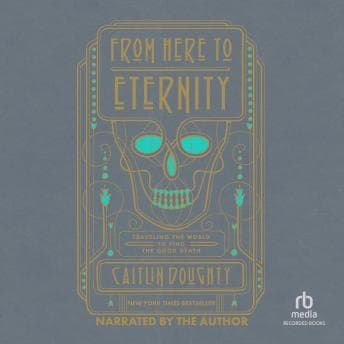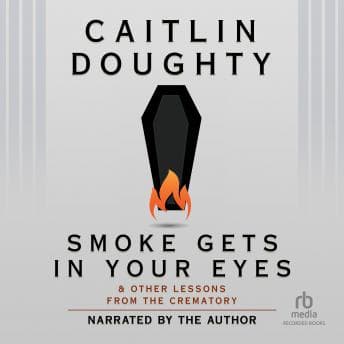

Look, I don't usually listen to memoirs about crematoriums during my morning commute. But here I am, stuck on the 405, learning about the proper technique for breaking down a body that's too large for the retort. And somehow - somehow - I'm not horrified. I'm... entertained?
That's the Caitlin Doughty effect.
The ROI on Confronting Your Own Mortality
Here's what my parents' generation never talked about: death. It was bad luck. You didn't discuss it, you didn't plan for it, and you certainly didn't laugh about it. So when Doughty casually describes her first day at the crematory - sweeping bone fragments off the floor while her coworker eats a sandwich - I felt something shift.
This isn't a business book. I know that. But stay with me. Same vibe as I'm Glad My Mom Died - not what you expect, but exactly what you need to hear.
Every consultant worth their day rate knows that the problems nobody wants to discuss are usually the ones costing you the most. Doughty applies this to an entire industry. The American death industry is a $20 billion business built on our collective terror of looking at a dead body. She breaks down how funeral homes exploit grief, how embalming became the bizarre default (spoiler: it's not required by law in most states), and how we've outsourced the most human experience of all to strangers in suits.
The key takeaway is worth the listen. The other 7 hours? Actually, also worth it. Which never happens.
When the Author IS the Narrator
Doughty reads her own book, and this is one of those rare cases where that's exactly right. Her voice has this dry, almost deadpan quality that makes the gallows humor land perfectly. When she describes accidentally getting cremated remains on her lip gloss, the delivery is so matter-of-fact that you laugh before you can be grossed out.
She sounds like your smartest friend who happens to work in the weirdest industry imaginable. Not performative, not overly dramatic. Just... honest. That same raw honesty shows up in I'm Glad My Mom Died, another memoir where the narrator refuses to sanitize the hard parts. The intimacy works because she's telling you about HER journey - from a death-obsessed kid who witnessed a child fall to her death at a mall (yeah, that's how the book opens) to a full-fledged mortician on a mission.
I listened at 1.5x instead of my usual 2.0x. That should tell you something. Her pacing is already efficient - she respects your time, doesn't meander, doesn't pad.
The Business Case for Death Positivity
Okay, here's where my consulting brain kicked in.
Doughty isn't just writing a quirky memoir. She's building a movement - The Order of the Good Death - and this book is essentially her manifesto disguised as personal narrative. Smart. She's doing what every startup founder should do: telling a story that makes her mission undeniable.
The historical research is solid. Medieval history degree, remember? She weaves in how different cultures handle death - the Zoroastrian sky burials, the Torajan people who keep corpses in their homes for years - and suddenly American practices look... weird. Expensive and weird.
My parents spent a small fortune on my grandmother's funeral. Traditional Korean customs, American funeral home markup, the whole production. Nobody questioned it because you don't negotiate when you're grieving. Doughty would argue that's exactly the problem. And she's right.
Who Should Listen (And Who Should Skip)
If you're squeamish about bodily descriptions, skip this one. She doesn't shy away from the physical realities - decomposition, the sounds bodies make, the logistics of cremating someone who weighs 400 pounds. It's not gratuitous, but it's not sanitized either. But if you've ever wondered why we do death the way we do - or if you're the type who'd rather face hard truths than pay someone to hide them from you - this delivers.
Also, if you want pure business content, obviously look elsewhere. But honestly? I got more actionable insight about confronting uncomfortable truths from this than from the last three leadership books I forced myself through.
Jenny would say I'm being dramatic. Jenny hasn't listened to this yet. I'm making her.
Bottom Line
This is what my parents did instinctively - facing hard things head-on, no pretense - but applied to the one thing we all pretend isn't coming. Doughty's built something genuinely useful here: a framework for thinking about death that's practical, historical, and weirdly comforting.
Seven hours and forty-six minutes. I finished it in three days. Would listen again, which I almost never say.
The crematory metaphor writes itself: burn away the bullshit, see what remains. What remains here is pretty damn good.







![Steve Jobs [unabridged audiobook] audiobook cover](/_next/image?url=https%3A%2F%2Fcovers.audiobooks.com%2Fimages%2Fcovers%2Ffull%2F9788499923406.jpg&w=1920&q=75)