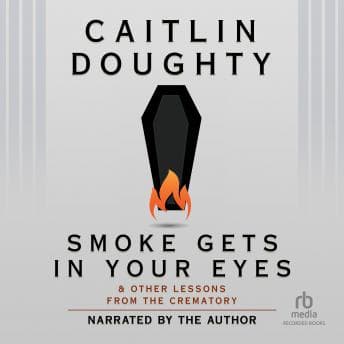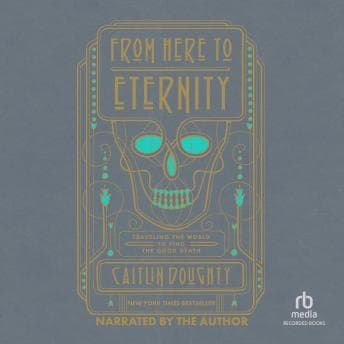

I was up at 2 AM finishing a logo rebrand for a mezcal company — Frida asleep on my keyboard, Diego doing that creepy cat thing where he just stares at the dark hallway — and Caitlin Doughty was in my ears talking about a family in Indonesia who kept Grandpa's mummified body in the house for two years. Dressed him. Changed his clothes. Talked to him. And I just... stopped designing. Set down my stylus. Because something about the tenderness of it wrecked me in a way I wasn't prepared for from a book about death.
This book felt like sitting across from the most interesting person at a dinner party — the one who's funny and a little macabre and somehow makes you feel less afraid of the thing you're most afraid of.
She Talks About the Dead the Way My Abuela Talked About the Saints
Here's what got me: Doughty doesn't approach these cultures like a tourist gawking at the weird death stuff. When she describes the Japanese kotsuage — family members using chopsticks to carefully pick their loved one's bones from cremation ashes, passing fragments person to person — there's this reverence in her voice that's almost devotional. She's not performing respect. She actually gets it. The intimacy of touching the remains of someone you loved with your own hands.
And God, the Bolivian natitas. Decorated human skulls that people bring cigarettes and gifts to, like they're still alive and have preferences. Doughty describes them with this bemused affection, like she's talking about eccentric neighbors. Her dark humor never punches down at the cultures she's visiting — it's always aimed at American squeamishness, at OUR weirdness for being so terrified of the bodies of people we claim to love. The only other narrator voice I've encountered with that same quality — laughing AT the institution, never at the people inside it — was in My Hunt After 'The Captain', which has no business being as emotionally alive as it is.
Abuela would have loved this one. She kept a shrine to my grandfather in her bedroom for thirty years — photos, his watch, his favorite cup. The American funeral industry would call that unhealthy. Doughty would call it human.
When the Author IS the Narrator and It Actually Matters
Look, I'm a Julia Whelan devotee. I believe professional narrators earn their craft. But this is one of those rare cases where the author narrating is the only right choice. Doughty wrote these experiences from inside them — she was the one standing in that Indonesian home, she was the one at the open-air pyre in Crestone, Colorado (America's only one, which is wild). When her voice gets quiet describing decomposition, or cracks slightly when connecting someone else's grief ritual to universal loss, that's not a performance choice. That's memory.
Her delivery is conversational in the best way — like she's telling you this over coffee and keeps catching herself going on tangents, then pulling back with a joke. The humor lands because you can hear her smiling. She's genuinely delighted by death, and not in an edgy way. In a "this is sacred and beautiful and also kind of hilarious" way.
Is she a trained voice actor? No. There are moments where you can tell she's reading, where the cadence gets a little too even. But honestly? For a five-and-a-half-hour listen about mortality, I'd rather have her real, slightly imperfect voice than a polished performance that misses the soul of the thing.
The Chapter That Made Me Text My Mom at 3 AM
The section on the glowing-Buddha columbarium in Japan — this enormous, surreal space where cremated remains are stored and families can visit their loved ones in this softly lit, almost futuristic temple — it broke something open in me. Doughty describes it as both awe-inspiring and deeply comforting, this marriage of technology and grief that somehow works. And I thought about my abuela's funeral, how sterile it felt, how I stood in that funeral home in San Antonio and thought "she would hate this carpet."
I didn't ugly-cry (only teared up twice, so this one didn't make the spreadsheet's top tier), but the emotion here is different. It's not a gut-punch. It's a slow shift — like your whole orientation toward death quietly rearranges while you're listening. By the end, I felt... lighter? Less afraid? Which is a weird thing to say about a book that describes vividly decomposed bodies.
At 5 hours 38 minutes, it's a perfect length. Doesn't overstay. Each chapter is a different country, a different practice, so the pacing resets naturally. I listened at my usual 1.0x and finished it across two late-night design sessions.
Who Needs This in Their Ears
If you've ever felt like American funeral culture is bizarrely sanitized and emotionally bankrupt — yes. If you're grieving and want to feel less alone in it without reading a self-help book — absolutely yes. If you're squeamish about bodies, honestly, still yes, because Doughty will hold your hand through it with a joke.
Skip if you want deep academic analysis of death anthropology. This is personal and experiential, not scholarly. And if you need trigger warnings for frank descriptions of decomposition and human remains — they're here, and they're vivid.
The Book I Didn't Know I Needed Two Years Too Late
I wish I'd listened to this before Abuela died. Not because it would've changed anything about losing her, but because it would've given me permission to grieve differently. To touch her face one more time. To keep her closer. Caitlin Doughty didn't write a book about death — she wrote a book about all the ways love refuses to let go. And my heart. MY HEART.





![Steve Jobs [unabridged audiobook] audiobook cover](/_next/image?url=https%3A%2F%2Fcovers.audiobooks.com%2Fimages%2Fcovers%2Ffull%2F9788499923406.jpg&w=1920&q=75)