
What happens when the person you trust most becomes the person you can't trust at all?
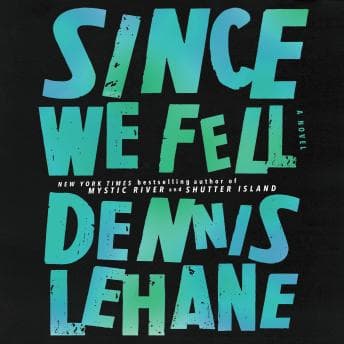
I was making my mother's dal recipe—the one that takes three hours and requires constant stirring—when Rachel Childs shot her husband. Not metaphorically. Actually shot him. And I stood there with my wooden spoon suspended over the pot, completely forgetting about the cumin seeds that were definitely burning, because Lehane had just pulled the rug out from under everything I thought this book was about.
The Slow Burn That Almost Lost Me
Let me be honest: the first third of Since We Fell tested my patience. We spend considerable time in Rachel's backstory—her complicated relationship with her emotionally distant mother, her search for an absent father, her career as a journalist before the on-air breakdown that made her a shut-in. This is where Lehane loses some listeners, and I understand why. It feels like setup for a different book entirely.
But here's the thing. Psychologically, this doesn't track as a flaw. It tracks as deliberate architecture. Lehane is doing something sneaky: he's making you feel Rachel's agoraphobia by trapping you in her past. You're as stuck as she is. By the time her "perfect" marriage starts unraveling, you've been so thoroughly conditioned to see the world through her anxious, hypervigilant lens that the betrayal hits differently. You're not just watching Rachel fall apart—you're falling apart with her.
My therapist would have thoughts about this character. The way Rachel's childhood abandonment issues manifest in her adult relationships? Classic attachment pattern. The way she constructs an "ideal" life as a fortress against uncertainty? Textbook avoidance strategy. I saw similar defensive patterns in Edge, where characters build elaborate systems to manage their fears. Lehane understands human nature in a way that makes the thriller elements land harder because the psychology is sound.
Julia Whelan and the Art of Controlled Collapse
I've listened to Whelan before, and she's typically excellent. Here, she's doing something more difficult than just "good narration"—she's embodying a woman whose grip on reality is actively loosening. The subtle tone shifts between Rachel's public composure and private terror create this constant low-grade tension. You can hear the cracks forming.
That said, she does stumble on a few words. "Atheneum" gets mangled. "Demurred" sounds uncertain. These are minor complaints in a twelve-hour performance, but they pulled me out of the narrative at odd moments. (Though honestly, given Rachel's mental state, maybe mispronouncing things is method acting at this point.)
What makes this character compelling is how Whelan handles the transition from victim to something else entirely. The last third of this novel moves at breakneck speed, and Whelan keeps pace without losing the psychological texture. When Rachel starts making choices instead of having choices made for her, you can hear it in the voice. Less tremor. More steel.
Lehane's Departure—And Whether It Works
If you're coming to this expecting Mystic River or Shutter Island, recalibrate. This is Lehane writing a female protagonist, writing agoraphobia, writing a conspiracy that might be real or might be the product of a fractured mind. It's a departure. Some fans found it less compelling than his best works, and I get that criticism—the plotting in the final act requires some suspension of disbelief that his tighter crime novels don't demand.
But I found myself asking: why does Rachel really stay in this marriage? Why does she really accept the life her husband has constructed for her? The answers Lehane provides are uncomfortable and true. People stay in situations that aren't good for them because leaving requires confronting fears that feel worse than staying. Rachel's journey from paralysis to action isn't just thriller plotting—it's a case study in how trauma keeps us stuck and what it takes to break free.
The protagonist exhibits classic patterns of learned helplessness that gradually transform into something more dangerous. And Lehane earns that transformation by spending all that time in the slow first third establishing exactly what Rachel is afraid of.
Who This Is For (And Who Should Skip)
This is for thriller fans who want their suspense served with psychological depth. If you need action from page one, you'll struggle—skip this one. If you appreciate character-driven tension that builds to a genuinely surprising payoff, this is your book. The content warnings are real—violence, psychological distress, some sexual content—but nothing gratuitous. Don't listen to this as background noise. This is a "sit in your driveway for twenty extra minutes" kind of audiobook.
Diagnosis: Worth the Patience
I finished the dal. It was overcooked. I didn't care. I was too busy thinking about Rachel Childs and the ways we construct prisons for ourselves out of fear and call them safety. Lehane wrote a thriller about a woman who learns to stop being afraid, and Julia Whelan made me believe every terrified, furious, ultimately triumphant step of that journey.
Not his best work. But a fascinating case study in what happens when a crime writer turns his attention inward. Worth your time if you're willing to be patient with the setup.