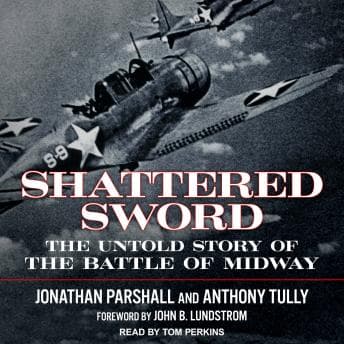

Let me cut to the chase: everything you think you know about Midway is probably wrong. And I say that as someone who spent twenty-five years in the Army, read every account I could get my hands on, and thought I had this battle figured out.
I didn't.
Parshall and Tully just handed me my hat. Nearly 25 hours of listening later, and I'm genuinely irritated at how many previous books got this wrong. Including some I recommended to people. (Sorry about that, by the way.)
The Japanese Side of the Story - Finally
Here's the thing that sets this apart from every other Midway book on your shelf: these guys actually read the Japanese sources. Primary sources. Not translations of translations filtered through decades of American victory narrative. The real documents.
And what they found? Mitsuo Fuchida - the guy whose account basically shaped every Western understanding of this battle - got a lot of it wrong. Some of it spectacularly wrong. The famous "five minutes that changed the war" narrative? Oversimplified to the point of fiction. The Japanese weren't caught with bombs on deck in some perfect moment of American luck. The reality is messier, more complex, and honestly more interesting.
The authors walk you through Japanese carrier doctrine, their aircraft handling procedures, their command structure - all the stuff that actually explains why things happened the way they did. It's not about luck or fate. It's about systems and decisions and the kind of institutional failures that, frankly, I've seen play out in real life more times than I'd like to admit.
Tom Perkins Behind the Mic
I couldn't find much about Perkins online, but based on this performance? The man knows how to handle dense material. This is not a light listen - we're talking technical details about ordnance handling, flight deck operations, radio communications. Stuff that could put you to sleep in the wrong hands.
Perkins keeps it clear. Not dramatic, not trying to turn it into an action movie. Just steady, professional narration that lets the material breathe. I listened at 1.25x (because life's too short for slow narrators) and never lost the thread. That's saying something for a 25-hour military history.
The only real complaint I've heard - and I get it - is the lack of visual aids. When you're tracking four Japanese carriers, multiple American strike groups, and about a dozen different decision points, a map would help. I ended up pulling up diagrams on my phone a few times during the more complex tactical sequences. Not ideal, but manageable.
Who's This For (And Who Should Stand Down)
If you want the quick version of Midway, go watch the movie. But if you want to actually understand what happened - why the Japanese lost, how close it really was, what decisions mattered and which ones didn't - this is the book. Casual listeners looking for a breezy war story should skip it. Serious students of the Pacific War? Required reading.
The authors aren't trying to diminish American courage or skill. They're trying to tell the complete story. And the complete story includes a Japanese Navy that was operating under flawed assumptions, using procedures that couldn't adapt fast enough, and making command decisions that look obvious in hindsight but weren't at the time.
Ranger and I covered this one over about three weeks of morning runs and evening drives. He's heard a lot of military history at this point. Pretty sure he approved - didn't once try to change the channel.
Mission Debrief
The 2005 John Lyman Book Award wasn't handed out for nothing. This is scholarship that actually changes how you understand the battle. Heart of Everything That Is does similar work for Red Cloud—primary sources, challenging the accepted narrative, the whole nine yards.
Just maybe keep your phone handy for those tactical diagrams. Mission accomplished.






![Steve Jobs [unabridged audiobook] audiobook cover](/_next/image?url=https%3A%2F%2Fcovers.audiobooks.com%2Fimages%2Fcovers%2Ffull%2F9788499923406.jpg&w=1920&q=75)