
So here's the thing. It's 11:47 PM on a Tuesday, I've been staring at distributed tracing dashboards since 3 PM trying to figure out why our p99 latency spiked, and instead of doom-scrolling Twitter I'm writing about a trauma psychology textbook I just finished on audiobook. Because apparently this is who I am now.
Kevin recommended this one after I went on a three-day spiral reading about attachment theory on Wikipedia. He said, "If you're going to hyperfixate on psychology, at least do it properly." Fair point.
The NARM Framework Is Basically Kubernetes for Your Nervous System
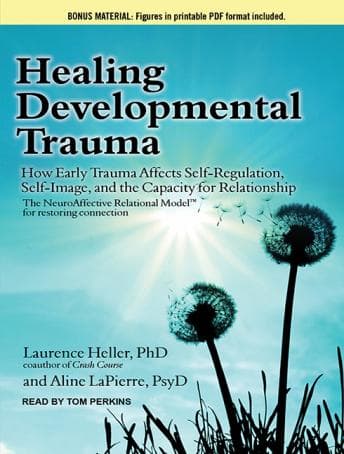
Okay, hear me out. Heller and LaPierre's NeuroAffective Relational Model maps five core survival styles - Connection, Attunement, Trust, Autonomy, and Love-Sexuality - and each one corresponds to a developmental need that got disrupted. Each style has its own set of identity distortions, coping mechanisms, and somatic patterns. It's basically a diagnostic framework with clear taxonomy. My engineer brain ate this up.
The book spends serious time on each survival style, breaking down how early relational failures create adaptive strategies that made total sense as a kid but become the exact source of dysfunction in adulthood. The Connection style, for example, describes people who fundamentally disconnected from their bodies as infants - and the book maps out how that shows up decades later as intellectualization, spiritual bypassing, or chronic dissociation. That specificity is what separates this from the hundred other "trauma is stored in the body" books. I've waded through enough vague, hand-wavy entries in this space — Chemical Phenomena in Life had some of that same ambitious reach toward explaining human biology through systems thinking, but it never quite landed the clinical specificity that makes a framework actually usable.
What I genuinely appreciated: NARM explicitly pushes back against regression-based therapies that keep dragging you into childhood narratives. Instead, it's present-moment focused - working with how survival patterns show up right now in your body and relational dynamics. As someone who optimizes systems for a living, the emphasis on current-state observation over archaeological digs into the past just... clicked.
Where It Bogs Down (And It Does)
Let's be real: this is a clinical text adapted for audio. It was written for therapists. There are stretches - particularly the sections heavy on case formulation theory in the middle third - where I had to rewind because my 6 AM brain just could not track the conceptual layering while sandwiched between someone's oversized backpack and a guy eating an egg sandwich on the Caltrain.
At 10.5 hours, there's significant repetition. The five survival styles get explained, then re-explained, then illustrated with case studies, then re-contextualized. For a clinical training context? Probably pedagogically sound. For an audiobook listener? It's the equivalent of a 10-page README that could've been 4 pages with better formatting. Not quite "could've been a blog post" territory - the framework is genuinely deep - but a tighter edit would've landed harder.
Tom Perkins does the job. Clear, measured, professional. He's reading clinical prose and he reads it like clinical prose. No complaints, but also no moments where the narration elevated the material. This isn't a Ray Porter situation where the narrator becomes part of why you recommend the book. Perkins is a reliable production deployment - nothing breaks, nothing surprises.
Who This Is (and Isn't) For
Perfect for: therapists, people actively in therapy who want to understand their own patterns at a systems level, or fellow engineer-brained weirdos who find comfort in taxonomies and frameworks applied to human behavior. If you liked The Body Keeps the Score but wanted something more structured and less memoir-adjacent, this is your next listen.
Skip for: casual self-help browsers. This is not a "5 tips to heal your inner child" book. It's dense, clinical, and assumes you're willing to sit with uncomfortable material about how early relational failures wire your nervous system. Also skip if you need a dynamic narrator to carry you through - Perkins is steady but won't keep you engaged through the drier theoretical passages on pure charisma alone.
I listened at 1.25x, which is slow for me. But bumping to 1.5x during the case study sections meant losing the thread on concepts that actually matter. The density demands patience.
The Commit Message
The ROI on this audiobook is high but backloaded. The first few hours feel like setup, and then somewhere around the detailed survival style breakdowns, things start connecting in ways that made me pull out my phone and take notes on the platform at Mountain View station like a weirdo. It gave me a framework - an actual diagnostic mental model - for patterns I've been vaguely aware of in myself and people I care about. That's rare for a psychology book. Most of them give you vibes. This one gives you architecture.
Not an easy listen. But a useful one. And on the commute-worthiness scale, it's a "dedicated focus morning, not a Friday afternoon" kind of book. Save it for when your brain is actually online.





![Steve Jobs [unabridged audiobook] audiobook cover](/_next/image?url=https%3A%2F%2Fcovers.audiobooks.com%2Fimages%2Fcovers%2Ffull%2F9788499923406.jpg&w=1920&q=75)