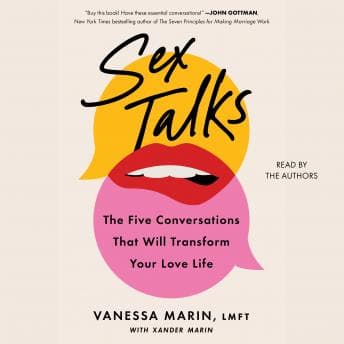

So here's the thing. I expected this to be another self-help book that could've been a blog post. You know the type - one decent insight stretched across 8 hours with enough anecdotes to fill a swimming pool. I queued it up on a Saturday morning while doing laundry (Kevin was still asleep, which felt weirdly appropriate given the subject matter), fully prepared to bump it to 1.75x and zone out.
I did not bump it to 1.75x.
The Framework Actually Compiles
Vanessa Marin is a sex therapist with 20 years of experience and degrees from Brown in human sexuality and sociology, and you can tell. The book is structured around five conversations - Acknowledgement, Connection, Desire, Pleasure, Exploration - and each one builds on the last in a way that feels genuinely architectural rather than arbitrary. It's basically a communication protocol spec, but for your relationship. And I mean that as a compliment.
What surprised me is how much of this book is NOT about sex. The Connection conversation, for instance, spends a lot of time on how couples stop being curious about each other - how you start treating your partner like a known quantity, a resolved ticket, when they're actually a running process that's constantly changing state. (Sorry. I debug distributed systems. The metaphors leak.) Vanessa breaks down why "how was your day" is a garbage prompt and offers actual alternatives that don't feel like you're conducting a therapy session at the dinner table.
The Desire section hit different too. There's this concept about responsive vs. spontaneous desire that I'd vaguely heard about on podcasts, but Vanessa explains it with enough clinical backing AND real-couple examples that it actually clicked. She doesn't just say "some people need to warm up" - she walks through the specific environmental and emotional conditions that affect arousal and gives you concrete scripts for talking about it without making your partner feel like a lab subject.
Two Narrators, One Relationship Dynamic
Vanessa and Xander narrate together, and this is where the audiobook format genuinely adds something over print. Xander jumps in periodically with the "here's what this looked like from my side" perspective, and his delivery is disarmingly honest - a little self-deprecating, a little awkward in that way real humans are when they're talking about vulnerable stuff. There's a section where he describes his own defensiveness early in their relationship around sexual feedback, and you can hear the genuine retrospective cringe in his voice. That's not something you get from text on a page.
Vanessa's narration is warm but precise - therapist energy without the clinical detachment. She has this way of preempting your "but what if my partner gets offended" anxiety before you even fully form the thought. The pacing between them is natural, like eavesdropping on a couple who've actually done the work they're teaching you to do.
No sound effects, no music, just clean audio and two people talking. Which is exactly right for this content.
Where It Gets a Little Verbose
Okay, it's not perfect. Around the 6-hour mark, the real-couple anecdotes start to blur together. There are SO many "meet Jake and Melissa" scenarios that by Conversation 4, I was losing track of which couple had the mismatched libido and which one had the communication shutdown pattern. Some editing discipline would've tightened this from 8h43m to maybe 6.5 hours without losing anything essential. I had a similar experience with Science of Living, where the core insights were genuinely solid but the padding started to feel like they were billing by the hour somewhere around hour five.
Also - and this is minor - the book skews pretty heavily toward long-term heterosexual couples. Vanessa acknowledges other relationship structures exist, but the examples and scripts are almost exclusively het and monogamous. If that's not your situation, you'll need to do some mental translation.
Who Should Actually Listen to This
Perfect for: anyone in a long-term relationship who's better at debugging production systems than asking their partner what they actually want in bed. (Just me? Cool.) Also genuinely useful if you're in a newer relationship and want to build good communication patterns before they calcify.
Skip if: you're looking for a spicy manual of techniques. This is about the talking, not the doing. The ROI on this audiobook is entirely in the conversation frameworks, not in any physical how-to.
I finished this over a weekend of chores and one Monday commute. Then I texted Kevin a screenshot of the Audible page and said "we should listen to this together." He said "is this because of the podcast thing I said?" It was not. But also maybe a little.
Commit and Push
This is one of those rare self-help audiobooks where the advice is both clinically grounded and actually implementable without a therapist sitting next to you. The five-conversation framework gives you a legit structure instead of vague encouragement to "just communicate more." Author-narrated with real vulnerability. Worth your time - just maybe not at 1.75x.