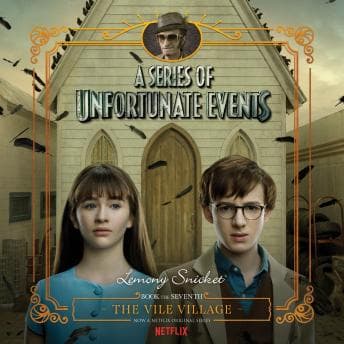

"It takes a village to raise a child, and it takes a village to do all sorts of other things to a child, too."
That line hit me somewhere around the forty-minute mark while I was chopping onions for a dal that was going to be way too ambitious for a Tuesday night. And I just stood there, knife hovering over the cutting board, thinking: Lemony Snicket just described the entire field of developmental psychology in one sentence. The man doesn't need a research grant. He has a pen name and zero chill.
The Council of Elders as a Case Study in Groupthink
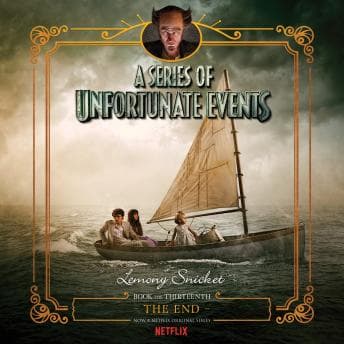
Here's what I keep coming back to with The Vile Village: this is a book for children that contains one of the most psychologically accurate depictions of mob mentality I've encountered in any medium. The village of V.F.D. operates under a system where the Council of Elders — a group of hat-wearing, rule-obsessed authoritarians — governs through an absurd number of regulations. No mechanical devices. Crows must be treated as the town's most important citizens. The Baudelaires are essentially adopted by an entire village, which sounds heartwarming until you realize that "it takes a village" here means "diffusion of responsibility on a municipal scale."
The research actually shows that bystander effects intensify in communities with rigid hierarchical structures, and Snicket nails this. It's the opposite of what How To Win Friends And Influence People preaches about social influence — there, conformity is a tool for connection, but here it becomes a weapon of collective cruelty. When the Baudelaires are falsely accused and thrown into the Deluxe Cell (which is, predictably, anything but deluxe), not a single villager questions it. Not one. Because when everyone is responsible, nobody is. My therapist would have thoughts about this entire village.
And the Quagmire triplets leaving coded messages? The protagonist exhibits classic problem-solving under duress — Klaus decoding, Violet engineering, Sunny... biting things. But what makes this installment different from earlier books is that the children start actively pushing back against the cycle. They stop waiting to be rescued. Psychologically, this tracks perfectly with what we'd expect from repeated trauma exposure in resilient children: eventually, learned helplessness gives way to agency. Or it doesn't, and you get a very different kind of story.
Tim Curry's Voice Is Chocolate-Covered Dread
I need to talk about Tim Curry, because the man turns a four-hour children's audiobook into something that feels like a gothic bedtime story told by a very intelligent, very disturbed uncle. His voice has this quality — rich, warm, but with something slightly off underneath — that perfectly mirrors Snicket's narrative tone. The humor lands because Curry doesn't oversell it. When he reads Snicket's vocabulary definitions (a hallmark of the series), there's this dry patience to his delivery, like a professor who's genuinely enjoying explaining something terrible to you.
His character differentiation is solid without being cartoonish. The Council of Elders sound appropriately brittle and self-important. Count Olaf's disguise voice has just enough theatrical menace. But what I found myself asking: why does Curry's narration work so much better here than some listeners claim it does in other volumes? I think it's because The Vile Village is the most procedural book in the series — there's a trial, an arrest, institutional bureaucracy — and Curry's measured, slightly sardonic pacing suits that energy. He's not rushing. He trusts the darkness to arrive on schedule.
The Gothic Archies' morose guitar interludes between sections are a nice touch. They function like a palate cleanser between courses of despair. (Maa would appreciate that metaphor.)
Some listeners swear by Daniel Handler reading his own books, and I get it — the author-as-narrator creates a different intimacy. But Curry brings something Handler can't: distance. And distance is exactly what a narrator named "Lemony Snicket" — who constantly warns you not to keep reading — requires. The character of the narrator IS distance. Curry embodies that.
Who This Is Really For (And It's Not Just Kids)
If you're a parent looking for something to play on a road trip — this works, but be prepared for questions. "What does 'mob mentality' mean?" is a conversation you'll be having. If you're an adult who grew up on these books, the audiobook rewards revisiting. The psychological architecture is more visible now than it was when I was twelve, reading under the covers with a flashlight in our house in Edison.
Skip this if you need your children's literature to resolve neatly. The Baudelaires don't get a break. They never get a break. That's the point, and it's either brilliant or exhausting depending on your tolerance for fictional suffering.
The File Stays Open
This is a fascinating case study in how you teach children that authority can be wrong, that institutions fail, and that sometimes the village that's supposed to raise you will put you in jail instead. Snicket knows that kids already suspect this. He's just confirming it — with vocabulary words and impeccable comic timing, delivered through Tim Curry's chocolate-and-dread voice at four hours and twenty minutes. The dal burned, by the way. Worth it.