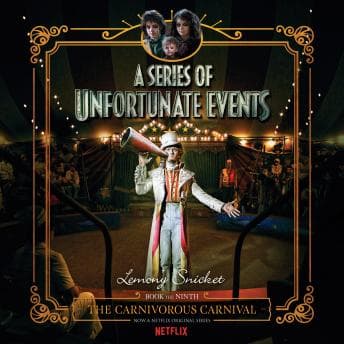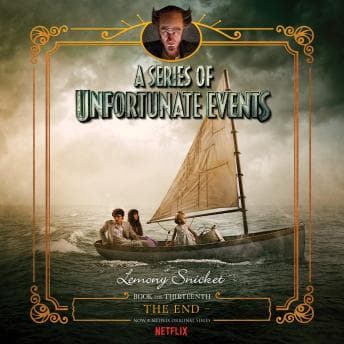

Look, I came into this expecting closure. Thirteen books. Thirteen increasingly terrible things happening to three orphans. Surely, SURELY, Lemony Snicket would give us something resembling answers. And here's the thing - he does. Sort of. In the most psychologically fascinating way possible.
I finished this on a Sunday morning jog through Cambridge, and I actually stopped running to process what had just happened. Just stood there on the path like a weirdo while joggers streamed around me. The protagonist exhibits classic ambivalent attachment patterns, I found myself thinking. Which is probably not what most people think about a children's book, but here we are.
Tim Curry Is Doing Something Brilliant Here
Some reviewers find his narration too dramatic. Too over-the-top. And honestly? I get it. There are moments where Curry is REALLY going for it - his Count Olaf is practically operatic in its menace and absurdity. But that's the point, isn't it? This entire series has been about the theatrical nature of villainy, about how evil often announces itself loudly while everyone pretends not to notice.
Curry understands the assignment. His pacing gives you room to breathe during Snicket's philosophical tangents (and there are many), then tightens beautifully during the genuinely tense moments. The character differentiation is solid - you always know who's speaking, even when the Baudelaires are surrounded by the island's inhabitants.
Is it a bit much sometimes? Sure. But I'd rather have a narrator who commits fully than one who phones it in. (My therapist would have thoughts about why I feel so strongly about commitment, but that's a different conversation.)
The Ending That Refuses to End Cleanly
This is a fascinating case study in narrative psychology. Most children's literature - most ADULT literature, frankly - gives us resolution. The bad guy loses. The good guys win. Questions get answered.
Snicket does something far more interesting and, I'd argue, far more honest. The Baudelaires make choices that are morally complicated. Count Olaf's final moments are... not what you'd expect. And the ending itself is deliberately, almost aggressively ambiguous.
I found myself asking: why does this frustrate some readers so much? The research actually shows that humans crave narrative closure - it's hardwired into how we process information. Snicket denies us that dopamine hit on purpose. He's teaching kids (and adults, let's be real) that life doesn't wrap up neatly. That sometimes you never get the answers. That you have to live with uncertainty.
Psychologically, this tracks perfectly. It's just uncomfortable.
Where It Dragged (Because It Did)
I'm not going to pretend this is a perfect audiobook. At just under six hours, there are stretches - particularly in the middle section on the island - where the pacing gets sluggish. The philosophical digressions, while thematically rich, sometimes feel like Snicket is stalling. I caught myself zoning out during one particularly long meditation on the nature of stories.
And the lack of concrete answers about V.F.D., the sugar bowl, the parents' history - some listeners will find this maddening. I've seen reviews calling it a cop-out. I don't think it is, but I understand the frustration. When you've invested in thirteen books, you want SOMETHING definitive. That same frustration with ambiguity shows up in Dostoevsky's The Idiot, where he refuses to give us a hero who makes sense in conventional terms.
What makes Snicket compelling as a character - and I'm talking about Snicket himself here - is that he's been warning us from the beginning. Don't read this. It won't end well. We didn't listen. That's on us.
Who Should Listen (And Who Should Skip)
If you've made it through twelve books, obviously you're finishing. But beyond that:
This is for you if: You appreciate stories that treat children as intelligent beings capable of handling moral complexity. If you're okay with ambiguity. If you've ever wondered what it would be like if Kafka wrote children's literature. If you want something to discuss with your kids that goes beyond "good guys win."
Skip it if: You need closure. Like, really need it. If dramatic narration grates on you. If you're looking for light, easy listening. This isn't that.
I'm already planning to listen to this with my niece during a road trip next month (she's eleven, very into dark humor), and I'm genuinely curious what conversations we'll have afterward. She'll probably be frustrated by the ending. We'll talk about why stories don't always give us what we want. That feels more valuable than a neat bow ever could.
Tim Curry's performance elevates material that could feel preachy in lesser hands. Is it everyone's cup of tea? No. But for a series that's always been about the gap between what we expect and what we get, it's pretty much perfect.