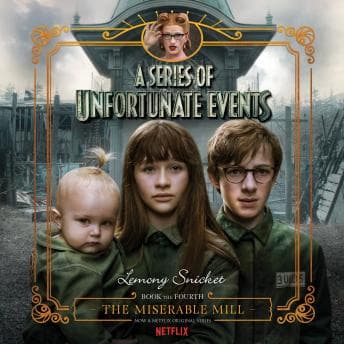

Look, everyone told me these books are for kids. And yeah, they are. But I was sitting in my apartment at 1 AM, surrounded by unpainted minis from a campaign I keep telling myself I'll run, and I needed something short to fall asleep to. Three hours? Perfect. I'll be out by the hypnotist scene.
I was not out by the hypnotist scene. I was fully awake and grinning like an idiot.
Snicket's Voice Is Its Own Magic System
Here's what people get wrong about this series — they think it's just quirky vocabulary lessons wrapped in gothic window dressing. And sure, Snicket (the character, the narrator, the whole meta-fictional construct) does stop the story to define words like "inordinate" for his young audience. But the way he reads those definitions — with this bone-dry, almost mournful delivery, like he's apologizing for the inconvenience of educating you — that's where the comedy lives. It's not Jim Carrey mugging for the camera. It's not Neil Patrick Harris doing theatrical grief. It's this quiet, resigned sadness that somehow loops back around to being genuinely funny.
The narration itself is… interesting. Snicket doesn't really do character voices in the way I usually demand. (Steven Pacey walked so other narrators could run, and Snicket is doing neither — he's sort of sitting in a leather armchair and sighing.) The Baudelaire orphans kind of blur together vocally, especially Violet and Klaus. Sunny's baby babble gets a slight shift, but it's minimal. And honestly? For this specific book, I think it works. The whole point is that Snicket is telling you this story, not performing it. He's a chronicler. The flatness is the bit.
But I won't pretend it doesn't get a little monotone through the middle stretch at the lumber mill. There's a section where the kids are just... doing miserable labor and eating terrible casseroles, and Snicket's pacing dips into a rhythm that had me reaching for the speed controls. At 1.25x it tightened right up.
The Hypnotist Subplot Is Low-Key Brilliant Storytelling
Okay so the actual plot — the Baudelaires get shipped off to work at Lucky Smells Lumbermill in Paltryville, where the foreman is a guy named Sir who literally has a permanent cloud of cigar smoke obscuring his face (Snicket describes this with zero explanation, which is perfect), and there's a hypnotist named Dr. Orwell who's working with — surprise — Count Olaf in yet another disguise. The hypnosis angle is what got me, though. Klaus gets hypnotized and starts operating dangerous machinery in a trance, and there's this moment where Violet realizes her brother isn't just being weird, he's been compromised, and Snicket narrates her panic with this understated dread that actually landed harder than I expected from a kids' book.
My D&D group would love this, honestly. The whole series has this energy of — your players keep getting sent to increasingly awful locations by a patron who's clearly working against them, and no adult NPC will believe the villain is the villain because he put on a different hat. It's a railroaded campaign run by a DM who keeps apologizing for the encounters.
The coupons-as-payment gag is also genuinely sharp satire? The mill workers get paid in coupons instead of money, and Snicket treats this with the same documentary seriousness as everything else. It's funnier than it has any right to be.
Who This Is Actually For (It's Not Just Kids)
If you're a parent looking for something to play on a road trip — yes, absolutely, this is great for that. Sub-three hours, clean content, vocabulary building baked in. But if you're a grown adult who appreciates dry humor, meta-narrative tricks, and gothic absurdity delivered at a gentle pace? This still hits. It's not Sanderson-level world-building (the world-building is deliberately thin and weird, and that's the aesthetic), but there's a serialized mystery threading through the whole 13-book series that rewards patience. I ran into the opposite problem with Eldest, where the world-building is so dense it starts to feel like homework — sometimes thin and weird is genuinely the better call.
If you need distinct character voices and high-energy performance from your narrator, this will frustrate you. Snicket's narration is a mood piece, not a voice acting showcase. And at under three hours, I can't tell you it's worth a full credit when you could knock it out on a library app in an afternoon.
But I read this instead of writing my thesis, and I regret nothing.
Roll for Nostalgia, DC 5
It's comfort food disguised as misery. The Baudelaires suffer, Snicket apologizes, and somehow you come out the other side smiling. I'm already queuing up book five. Dr. Patel can wait.