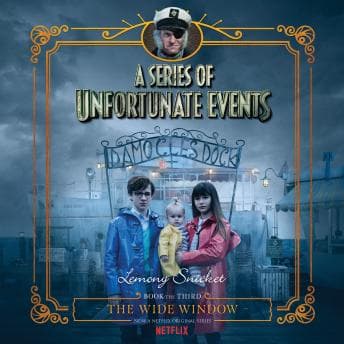

So here's the thing about Lemony Snicket narrating his own work: it's either going to feel like the author whispering directly into your brain, or like someone reading their own grocery list with mild disdain. I went in expecting the former. What I got was... somewhere in between.
Let me back up. I listened to this during a particularly tedious data analysis session—the kind where you're staring at SPSS output and questioning every life choice that led you here. The Wide Window seemed like the perfect antidote: dark humor, clever orphans, a villain so obvious that even the adults in the story should notice. (Spoiler: they don't. They never do. It's a fascinating study in willful blindness, actually.)
The Psychology of Deliberate Misery
What makes this series work—and I mean really work, from a developmental psychology perspective—is how it validates children's frustration with incompetent adults. The Baudelaire orphans are smarter than everyone around them, and the narrative doesn't pretend otherwise. Klaus uses research. Violet invents. Sunny bites things. They're coping with trauma through competence, which, honestly? That's a healthier response than most adults manage.
Aunt Josephine is a brilliant character study. She's paralyzed by irrational fears—doorknobs, realtors, the lake—while remaining completely blind to the actual danger standing in her living room wearing a terrible disguise. Anxiety often works this way: we fixate on controllable small fears to avoid confronting the massive ones. Snicket gets this. Whether he intended it as commentary or not, it tracks psychologically.
The leeches, the hurricane, the rickety house hanging over the lake—it's all Gothic excess in the best way. But underneath the absurdity, there's genuine grief. These kids have lost everything. Multiple times. And they keep going. That's not nothing. Sing, Unburied, Sing explores that same kind of generational grief and resilience, though in a completely different register—less Gothic absurdity, more Southern magical realism.
When the Author Becomes the Voice
Okay, let's talk about the narration situation. Because I've seen the discourse. Tim Curry's versions are legendary—theatrical, distinct voices, the whole production. Snicket's narration is... not that.
Here's what it is: dry. Literary. Detached in a way that actually matches the narrator character's whole deal. He's supposed to be this melancholy chronicler, forever documenting tragedy while warning you to look away. The neutral tone with those rises and falls during plot twists? It works for the material. It's consistent with the voice on the page.
But—and this is a real but—the character differentiation is weak. I lost track of who was speaking a few times. The volume inconsistency some listeners mention? I noticed it too. Had to adjust my headphones more than once during my jog the next morning. (Yes, I finished it while running. The pacing is brisk enough that three hours flew by.)
If you're coming from the Tim Curry versions expecting that same energy, you will be disappointed. Full stop. But if you've never heard those and you want the author's intended interpretation? This delivers something different. More intimate, maybe. Less entertaining, definitely.
Why the Vocabulary Lessons Work (For Me, Anyway)
Some listeners hate the vocabulary definitions and narrative asides. I found myself asking: why does this bother people so much? It's literally the series' signature move. Snicket stops to define words, to warn you about upcoming tragedy, to remind you that you could be reading something happier.
Psychologically, it's a distancing technique. It keeps the horror at arm's length while simultaneously making you lean in closer. It's Brechtian, almost. (Don't tell my students I compared a children's audiobook to Brecht. Actually, do tell them. It would annoy them.)
For kids, these interruptions teach vocabulary in context. For adults, they're either charming or insufferable depending on your patience levels. I'm in the charming camp, but I recognize I'm biased toward anything that treats children's literature as worthy of real craft.
Who Should Queue This Up (And Who Should Look Away)
Best for: fans of the books who want the author's voice in their ears, parents listening with kids who appreciate dark humor, anyone who finds Tim Curry's version too theatrical (yes, these people exist), commuters who want something clever but not demanding.
Skip if: you need distinct character voices, you've already imprinted on Tim Curry's narration, you're sensitive to volume inconsistencies, or you find narrator interruptions annoying rather than endearing.
My Clinical Assessment
The book itself remains excellent. The audiobook is... adequate? Authentic? It's the author reading his own work with the exact energy you'd expect from someone whose pen name is "Lemony Snicket." Whether that's a feature or a bug depends entirely on what you're looking for.
I'll keep listening to the series. Probably during more data analysis sessions. It's become a strange little ritual—orphan tragedy and regression tables. My therapist would have thoughts about this pairing, I'm sure.