
Everyone told me Daniel Silva writes the gold standard of modern espionage thrillers. My podcast listeners have been pushing Gabriel Allon on me for years - "Jordan, you love dread, you'll love Allon" - and honestly? I expected either to be completely converted or completely bored. The truth landed somewhere more interesting than either.
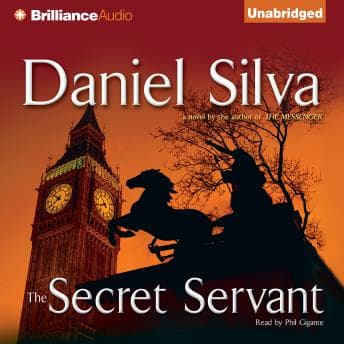
I was shelving returns at the library on a slow Tuesday afternoon, earbuds in, when The Secret Servant really clicked into place. Not with a bang. With a quiet, creeping sense that Silva knows exactly how terror actually works - not the cinematic version, but the bureaucratic, human-failure version. The opening setup in Amsterdam, where Gabriel is sent on what should be a boring archival cleanup after a Dutch analyst is murdered, reads like a horror setup. You know how I always say the best horror isn't about the monster, it's about the door you shouldn't open? Silva gets that. Gabriel opens the door. He finds a conspiracy growing in Amsterdam's Islamic underground like mold behind drywall - invisible until it's everywhere.
The Art Restorer Who Can't Stop Breaking Things
Gabriel Allon is a fascinating protagonist for someone like me who lives in genre fiction. He's an art restorer. His day job is literally about preservation, patience, careful hands. And then his other job is... the opposite of that. Silva plays this tension constantly - Gabriel arrives seconds too late to prevent Elizabeth Halton's kidnapping in London, and there's this gut-punch quality to it because you've been watching a man who fixes things fail to fix the one thing that matters. The chase that follows, from Amsterdam through Germany to the tip of Denmark, has real geographic texture. Silva doesn't just name-drop cities; you feel the cold, the flatness, the institutional gray of European counterterrorism spaces.
What surprised me - and this is where the discovery happened as I kept listening - is that Silva isn't afraid to make Gabriel morally uncomfortable. There's a subplot involving an unlikely alliance with a man who's lost everything because of his Islamic faith, and it doesn't play like cheap "both sides" rhetoric. It actually interrogates the tactics Gabriel uses. For a mainstream bestselling thriller, that's... more than I expected. It's not Shirley Jackson-level psychological excavation (nothing is, fight me), but it's doing real work.
Phil Gigante Knows What He's Doing - Within Limits
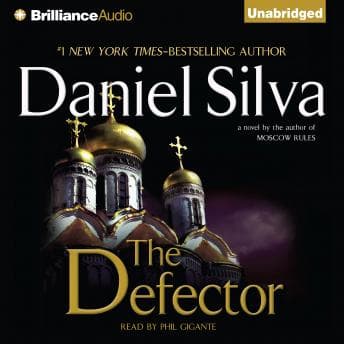
Here's where I have to be honest. Phil Gigante is a three-time Audie winner. The man has credentials. And his reading style is exactly what the research says - easy, smooth, holds your attention without demanding it. He's the narrative equivalent of a reliable sedan. Gets you there. Comfortable ride. No breakdowns.
But - and this is the thing - for a book about terrorism, kidnapping, and a man questioning his own morality, I wanted more. I wanted the narrator to commit to the dread the way the text commits to it. Gigante reads Gabriel's moral crisis the same way he reads Gabriel ordering coffee. There's a steadiness that works for the procedural spy stuff (the tradecraft passages, the surveillance sequences) but flattens the emotional peaks. When Gabriel discovers the conspiracy in Amsterdam, I wanted to hear something shift in the voice. A tightening. An edge. Instead, I got competence. Which is fine. But competence isn't the same as performance.
The narrator commits. That's rare. Except here, I'd say the narrator... shows up reliably. Not quite the same thing.
Who Needs This (And Who Should Keep Walking)
If you're already deep in the Allon series - this is book seven - you know what you're getting and you're going to enjoy it. Silva's plotting is tight, the geopolitical stuff feels researched rather than invented, and there's a ticking-clock structure in the back half that genuinely had me walking past my reshelf cart without noticing.
If you're looking for horror-adjacent thriller territory - the kind of book that makes you feel genuinely unsafe - this isn't quite it. It's more cerebral than visceral. The violence exists but Silva doesn't linger on it the way a horror writer would. He's interested in systems, not suffering. That's a valid choice, just not always my preferred flavor.
At 10 hours 50 minutes, the pacing is mostly solid but there are stretches in the middle - particularly the German leg of Gabriel's search - where the procedural detail outweighs the tension. I found myself bumping to 1.25x during those passages and dropping back to normal when things heated up again.
Shelving This One in the Right Section
Silva writes smart, politically aware espionage fiction that respects its audience's intelligence. This understands that horror isn't about gore - it's about dread. And terrorism IS dread. Silva gets that even if he's not technically writing horror. Gigante delivers it cleanly if not electrifyingly. It didn't keep me up at night the way my usual fare does, but it kept me in the library parking lot for an extra twenty minutes to finish a chapter. That counts for something. The parking lot sit-and-stare is actually my highest compliment — Good Girl did the same thing to me, though that one had me genuinely checking my backseat before driving home.
Shirley (my cat) was unimpressed. But she's unimpressed by everything that isn't wet food, so her critical opinion is suspect.