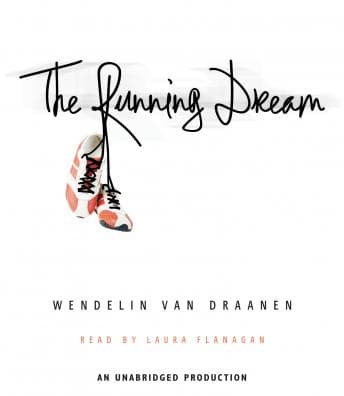

Look, I'm going to be honest about something mildly embarrassing: I picked up a YA book about a teenage runner and ended up tearing up on a 7:12 AM Caltrain surrounded by people in Patagonia vests pretending not to exist. This was not the plan. The plan was a light palate cleanser between a 40-hour hard sci-fi series and whatever Brandon Sanderson drops next. Instead Wendelin Van Draanen emotionally ambushed me somewhere around hour three and I had to pretend I was having allergies. In February.
Here's the thing that actually bothered me going in, though: the premise sounds like it could be the most after-school-special book ever written. Girl loses leg, girl gets prosthetic, girl learns to run again, girl discovers what really matters. You can practically see the Hallmark movie poster. And yeah - the arc hits basically every beat you'd predict. But the execution? Way better than it has any right to be.
The Debug Log on Jessica's Recovery
TL;DR: Worth your commute, but maybe not your most sleep-deprived one.
Van Draanen clearly did her homework on prosthetics and the physical reality of losing a limb. The early chapters where Jessica is dealing with her first prosthetic - the phantom pain, the way the socket fits wrong, the raw frustration of relearning how to walk when your identity is built around sprinting 400 meters - the science actually holds up. Or at least it passes the sniff test for someone who's read a decent amount about biomechanics and sports science. There's this specificity to how Jessica describes the mechanical feel of her running leg versus her walking prosthetic that kept me from dismissing it as inspiration porn.
And Rosa. Rosa is the character that makes this book more than a sports recovery story. She has cerebral palsy, she's brilliant at math (which, as someone who spent four years grinding through CS at UW, I respect deeply), and the book doesn't turn her into a prop for Jessica's growth. Their relationship has this genuine awkwardness to it - Jessica realizing she'd been one of those people who just... looked away when she saw Rosa in the halls. That hit different. We've all been that person about something, and Van Draanen doesn't let you off the hook about it. Big Lies in a Small Town pulled the same move on me - that quiet, uncomfortable moment where a character has to reckon with who they've been choosing not to see.
The math tutoring scenes are actually kind of charming? Rosa's patience with Jessica's frustration mirrors Jessica's coach's patience with her physical rehab. It's a neat parallel that the book doesn't beat you over the head with.
Flanagan's Performance: Mostly Compiles, Some Warnings
Okay, Laura Flanagan. She's... fine? She does genuinely good work in the emotional heavy-hitter scenes - when Jessica first sees her leg (or where her leg used to be), when she's alone and the reality crashes in. Flanagan's voice cracks in these moments in a way that feels earned, not performative. The running scenes also land surprisingly well in audio - she captures that breathless, in-the-zone rhythm that anyone who's ever pushed through a hard interval will recognize.
But - and this is a real but - there's a valley-girl inflection that creeps in during the lighter dialogue sections that kept pulling me out. It works for a California teenager, sure, but it makes some of the more serious conversations feel tonally off. And the male voices? Pretty goofy. Jessica's dad and her coach both sound like they're being voiced by someone doing an impression of "a man" rather than playing an actual character. It's not dealbreaking but it's noticeable, especially if you're used to narrators like Ray Porter who can shift between genders without making you wince.
Narrator rating: solid 3 out of 5. Gets the job done for the emotional core but won't make anyone's "best narrations" list.
Perfect For: Morning Commutes When You Need to Feel Something
This is basically Murderbot but for emotional rehab instead of social anxiety. (Stay with me.) Both are stories about a protagonist rebuilding their sense of self after trauma, told in tight first-person, with dry humor covering genuine vulnerability. The ROI on this audiobook is actually pretty solid - 7 hours, no bloat, no padding. I finished this in 3 commutes and didn't feel like any of it was filler, which is more than I can say for most business books twice this length.
Perfect for: train, gym (especially if you run - fair warning, it will make you want to run). Skip for: deep work or anything where you need zero emotional interruption.
Who should listen: If you've ever rehabbed an injury and know the specific hell of watching your body not do what it used to do, this book will gut you. If you want hard sci-fi or complex worldbuilding, this is not that. If valley-girl narration makes you want to throw your AirPods into the Bay, maybe grab the print version instead.
Kevin texted me "are you crying on the train again" while I was finishing this. I told him it was a production outage. He did not believe me.
Ship It
Not going to change your life, but it might change your morning. And honestly? After a week of pager alerts and distributed systems that refuse to distribute correctly, sometimes you need a 7-hour story that reminds you humans are capable of being decent to each other. The Jessica-Rosa friendship alone is worth the listen. Just... brace yourself for the male character voices.