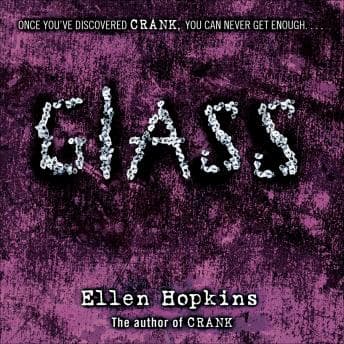

People talk about addiction like it's a possession. A "monster" taking the wheel. But listening to Glass, I didn't just hear a monster. I heard a failing CEO making catastrophic strategic pivots, one after another.
I usually avoid "issue books." They tend to be 80% melodrama and 20% substance. But my wife Jenny put this in my queue after I complained that modern business biographies lack "real stakes." (Be careful what you wish for.) This isn't just a story about drugs; it's a case study in self-deception. And unlike the Q3 earnings reports I usually listen to, you can't just optimize your way out of this mess.
The ROI of Free Verse (and Laura Flanagan)
Here's the thing: this book is written in verse. Poetry. My immediate instinct was to roll my eyes. In the business world, extra white space on a page usually means you don't have enough data to fill the slide. I expected it to be inefficient—style over substance.
I was wrong.
Laura Flanagan narrates this, and she understands something crucial: the silence is part of the data. I tried listening at my standard 2.0x speed—big mistake. Sounded like a frantic auctioneer selling off a human life. I had to dial it back to 1.25x. (Yes, that physically hurt me, but the material demanded it.)
Flanagan doesn't overact. She doesn't need to scream to show you Kristina is spiraling. She delivers the lines with this terrifying, lucid calmness that reminds me of founders pitching me their startup while I know—and they know—they have two weeks of cash left. She captures that specific tone of a liar who has started to believe their own pitch deck. Uncomfortably effective.
Kristina Snow: A Case Study in Bad Management
Kristina, the protagonist, is operating under the delusion that she can manage a meth addiction like a side hustle. She thinks she's the one "calling the shots."
Watching her logic unfold is like watching a slow-motion train wreck where the conductor is convinced the train can fly. She has a baby—a clear stakeholder she's responsible for—and she keeps leveraging her future for short-term liquidity (the high).
My parents ran a dry cleaning business in Koreatown for thirty years. They understood that you sacrifice the present for the future. Kristina does the exact opposite. She liquidates her assets—her trust, her body, her family—for a momentary gain. It's the Sunk Cost Fallacy on steroids. Literally. Every time she hits a bottom, she pivots to a worse strategy instead of cutting her losses.
It frustrated the hell out of me. I found myself shouting at my car speakers on the 405. "The math doesn't work, Kristina! The burn rate is too high!" But that's the point, isn't it? Addiction isn't a logic problem. It's a solvency problem.
Who Gets Value Here (and Who Should Pass)
Skip this if you need your protagonists to make rational decisions or want a clean redemption arc with a high-valuation exit. But if you want to understand the terrifying economics of addiction—where the cost of goods sold is your soul and the margins are non-existent—it's worth your time. Tweak: Growing Up on Methamphetamines put me through a similar wringer—same brutal honesty, same refusal to offer easy answers.
The Bottom Line, Over Espresso
This isn't a "fun" listen. It's a stress test for your empathy. Just maybe don't queue it up right before a board meeting. It puts "bad quarterly performance" into a very sharp, very depressing perspective.