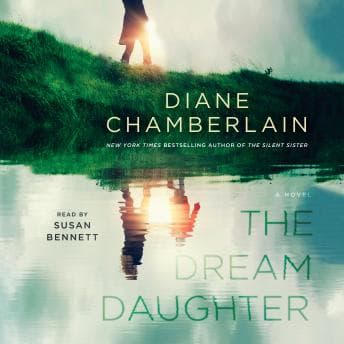

Diane Chamberlain has written essentially the same book as every high school English student who's ever discovered that parallel structure is a thing. Two women. Two timelines. Two artistic journeys. One mystery connecting them across decades.
And you know what? It works.
I finished this one grading a stack of sophomore essays on The Great Gatsby - which, before you ask, is its own kind of horror story. But here's the thing: Chamberlain's dual narrative structure reminded me of something I tell my students about Fitzgerald. The best stories aren't about what happens. They're about what gets revealed.
The Art of Restoration (And I Don't Just Mean the Mural)
Morgan Christopher takes a deal to get out of prison: restore a WPA-era mural in small-town North Carolina. She knows nothing about art restoration. This is, objectively, a terrible plan. The kind of plan that only works in fiction because the author needs it to.
But Chamberlain earns it. Morgan's desperation feels real - that specific flavor of "I will agree to literally anything to escape this cage." And as she scrapes away decades of grime from this post office mural, she's also excavating her own buried trauma. (My students would call this symbolism. They'd be right. Sometimes the obvious choice is the correct one.)
The 1940 timeline follows Anna Dale, a young artist who wins a national contest to paint this mural. She arrives in Edenton, North Carolina expecting an artistic opportunity. What she finds instead is a town where being an outsider - being different in any way - carries consequences that range from social ostracism to something far darker.
Susan Bennett Understands That Pause Is Punctuation
This is where the audiobook earns its Earphones Award. Bennett's Southern accent work isn't the broad, cartoonish drawl that makes me wince (and I've heard plenty of those - Denise and I drove through Georgia last summer and I kept comparing everyone to bad audiobook narrators, which she found significantly less amusing than I did).
Bennett's performance captures something essential: the way Morgan's voice carries the weight of incarceration, the guardedness of someone who's learned that trust is a luxury. When she shifts to Anna in 1940, there's a different quality - more open, more naive, gradually hardening as the town reveals its true nature. The contrast is subtle but effective. You feel the decades between these women even as their stories converge.
The pacing stays brisk. At 13 hours, this could have dragged in lesser hands. Bennett keeps it moving without rushing the emotional beats that need room to breathe.
The Small Town Gothic Chamberlain Does Best
If you've read Chamberlain before, you know her territory: secrets buried under Southern politeness, the violence that communities commit through silence and complicity. The racism Anna encounters in 1940 isn't sensationalized - it's the ordinary, systemic kind that's almost more chilling. That same institutional gaslighting shows up in Bitten, though in a completely different supernatural context. The "madness" the description mentions is really the town's collective decision about who gets to be considered sane, who gets to tell their own story.
This reminds me of what Faulkner said about the past not being dead, not even being past. The mural becomes a palimpsest - layers of paint over layers of lies, and Morgan has to scrape through all of it to find something like truth.
Where the book stumbles slightly is in its mystery plotting. Some of the reveals feel telegraphed if you're paying attention. I called one major twist around hour six, which - okay, maybe I've just read too many novels with this structure. But the emotional payoff still lands even when the plot mechanics are visible.
Who Should Listen (And Who Should Skip)
If you loved The Book Woman of Troublesome Creek or anything by Kate Quinn, this is your next listen. Historical fiction with a contemporary frame, women artists fighting against the constraints of their time, small-town secrets that refuse to stay buried.
Skip it if you need your mysteries to be genuinely surprising, or if dual timelines make you impatient. One of my students would call this "predictable" - but I'd argue that's missing the point. Chamberlain isn't trying to shock you. She's trying to make you understand how the past shapes the present, how art can be both witness and record.
Drive-time listening works well here. The chapters alternate cleanly between timelines, so you won't lose the thread if you have to pause for traffic. (Not that I was listening during the faculty parking lot backup last Thursday. That would be irresponsible.)
Worth Pausing the Faculty Meeting For
This is solid, well-crafted historical fiction that does exactly what it promises. Bennett's narration elevates material that could have been merely competent into something genuinely affecting. Chamberlain writes about art and creativity with real understanding, and Bennett delivers those passages with appropriate reverence.
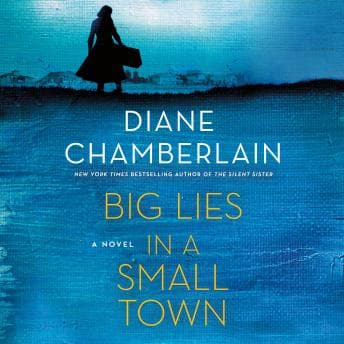
Not every book needs to reinvent the wheel. Sometimes you want a story that executes familiar elements with skill and heart. Big Lies in a Small Town is that book. My students would probably find it "boring" - no vampires, no dystopian governments, no one texting. I love it.