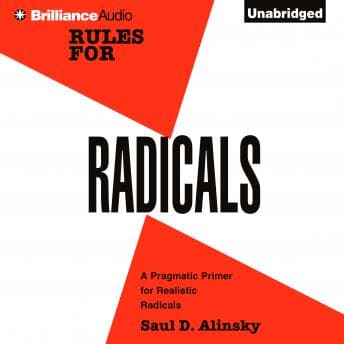

This is the playbook. I mean that literally. Whether you agree with Alinsky's politics or want to throw the book across the room, you need to understand what's in here because these tactics have shaped American political organizing for fifty years on both sides of the aisle.
Look, I spent 25 years watching how influence actually works - in combat zones, in negotiations, in the messy business of getting people to do what you need them to do. Alinsky understood power dynamics at a gut level that most academics never touch. That's what makes this book dangerous and essential in equal measure. Promised Land wrestles with similar questions about how power actually moves through American institutions, though Obama's writing comes from inside the machine rather than outside it.
The Operator's Manual for Political Warfare
Here's the thing about Rules for Radicals - it's not really about left or right. It's about leverage. Alinsky breaks down community organizing the same way we'd break down an operational plan: identify the objective, assess the terrain, exploit weaknesses, maintain initiative. His thirteen rules for tactics? That's doctrine. Pure and simple.
I listened to this during a long drive from Austin to El Paso - six hours of West Texas nothing giving me plenty of time to chew on what Alinsky was selling. And yeah, some of it made my blood pressure spike. But I've seen his playbook used by everyone from union organizers to Tea Party activists to corporate PR teams. If you want to understand how movements get built and how institutions get pressured, this is your primary source document.
The writing holds up better than I expected for something from 1971. Alinsky had a talent for cutting through academic garbage and getting to the point. He writes like someone who's actually done the work, not just theorized about it. That practical edge - the war stories, the specific examples - that's what separates this from most political theory books that put me to sleep.
Scott Lange Gets the Assignment
Scott Lange's narration is clean and professional. No theatrics, no over-the-top dramatic readings. He lets Alinsky's words do the heavy lifting, which is the right call here. This isn't a thriller that needs vocal pyrotechnics - it's a manual, and Lange treats it like one.
The pacing works well for the material. Alinsky's prose can get dense when he's laying out his philosophical framework, but Lange keeps it moving without rushing past the important bits. I bumped it up to 1.25x during some of the more theoretical sections and it handled that fine.
Couldn't find much about Lange's background, but based on this performance, he understands that political nonfiction requires restraint. You're not trying to convince the listener - you're presenting the argument and letting them wrestle with it themselves.
Where It Shows Its Age
Let me be straight with you: some of this feels dated. The language, certain cultural references, the assumption that labor unions are the primary vehicle for working-class power - 1971 was a different world. Alinsky died in 1972, so he never saw how his ideas would evolve, get co-opted, or get weaponized by people he probably wouldn't have recognized as allies.
But here's why that doesn't matter as much as you'd think. The underlying principles - the psychology of power, the mechanics of pressure campaigns, the importance of understanding your opponent's self-interest - that stuff is timeless. I've watched these exact tactics play out in corporate boardrooms, in city council meetings, in international negotiations. Journey of Crazy Horse shows what happens when one side has all the institutional power and the other has to rely on asymmetric tactics just to survive - different context, same brutal calculus. The packaging changes. The fundamentals don't.
The final chapters on the middle class and his hopes for "responsible investment" are actually kind of poignant. Alinsky was trying to figure out how to bring his organizing model to a changing America. He didn't live long enough to see if it would work, but you can hear him grappling with the problem in real time.
The Debrief
If you're in politics, activism, corporate strategy, or just trying to understand why American institutions respond to pressure the way they do - this is required reading. Or listening, in this case. Skip it if you need your political theory wrapped in comfortable neutrality; Alinsky doesn't do neutral. I don't agree with half of what he advocated, but I respect that he was honest about what he was doing and why.
Ranger slept through most of this one, which is fair. Not exactly an action-packed listen. But for anyone who wants to understand the mechanics of power and influence in American life, this seven hours is time well spent. Just don't expect to feel comfortable the whole way through.
Mission accomplished - with reservations.







![Steve Jobs [unabridged audiobook] audiobook cover](/_next/image?url=https%3A%2F%2Fcovers.audiobooks.com%2Fimages%2Fcovers%2Ffull%2F9788499923406.jpg&w=1920&q=75)