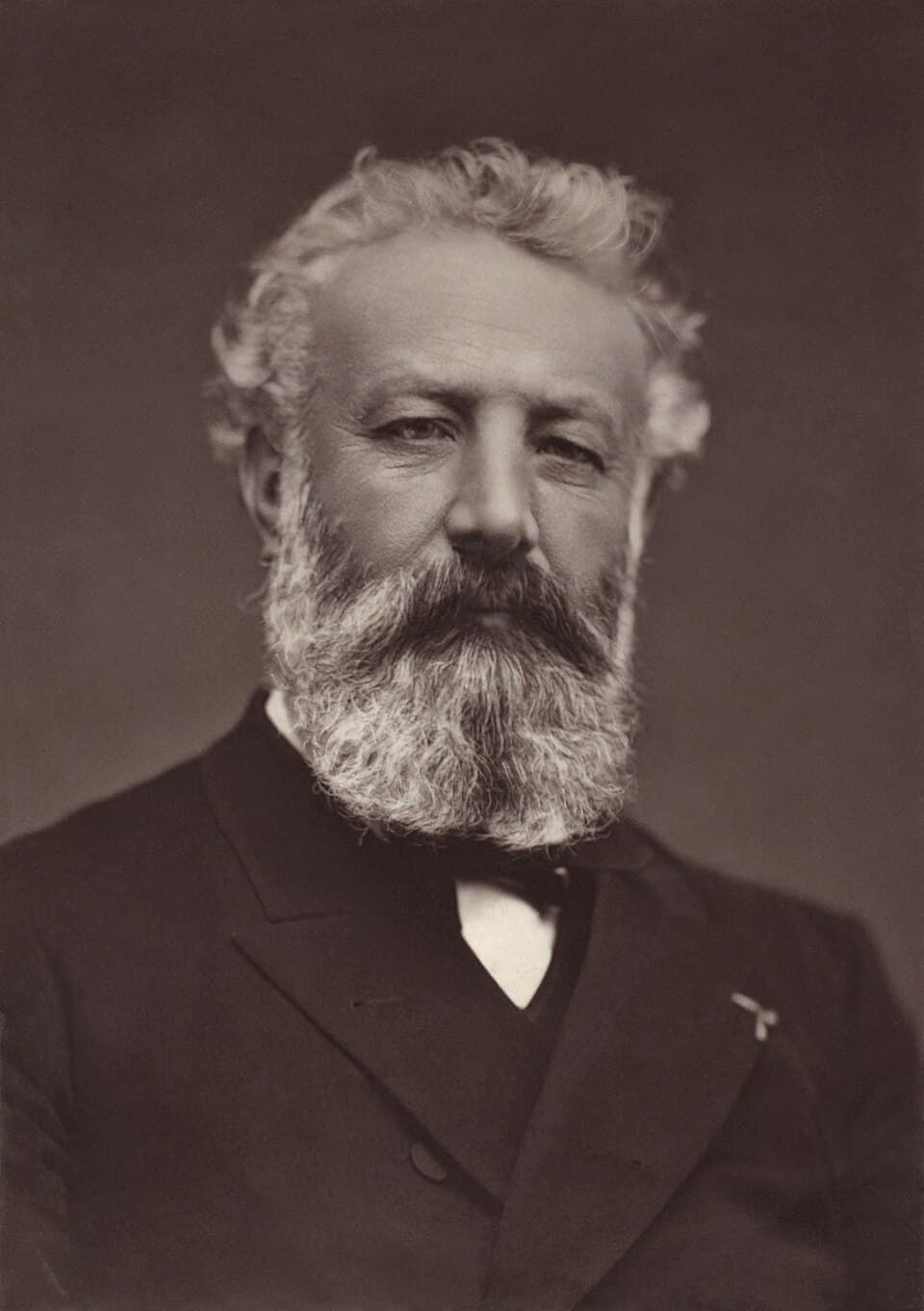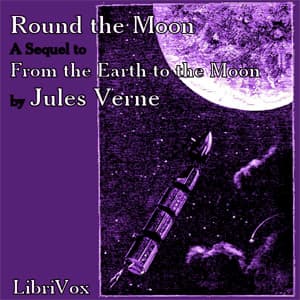

Jules Verne wrote this in 1870 and somehow predicted that Americans would be the first to attempt a moon mission, that it would launch from Florida, and that the spacecraft would splash down in the Pacific Ocean. The man was basically running simulations in his head a century before we had computers. But did he have to include what feels like an entire physics textbook in the middle of his novel? I'm listening to this at 6:47 AM on the Caltrain, half my brain still debugging yesterday's memory leak, and Verne wants me to follow along with orbital mechanics calculations.
I finished this across maybe four commutes, and I have thoughts.
The 19th Century Hard Sci-Fi Problem
Bottom Line: This is basically The Martian but written 150 years earlier, with all the meticulous science and approximately 10% of the pacing. Battlefield Earth has that same obsessive world-building energy, though Hubbard at least breaks up the technical exposition with more action sequences. Verne's three astronauts—Barbicane, Nicholl, and the wonderfully chaotic Michel Ardan—are trapped in their projectile, orbiting the moon, doing what any good engineers would do: taking measurements, making observations, and arguing about trajectory corrections.
The science actually holds up surprisingly well. Not perfectly—Verne thought the moon might have a thin atmosphere and some of his physics is pre-Einstein—but his orbital mechanics reasoning is solid. The problem is that he explains EVERYTHING. Every calculation. Every observation. Every theory about lunar craters. There's a stretch in the middle that one reviewer accurately described as "a 19th century textbook narrated by Sheldon Cooper and Leonard Hofstadter," and honestly? That's generous. At least Sheldon has comedic timing.
Michel Ardan saves this book. He's the French artist who basically talked his way onto the mission, and he spends most of the journey being delightfully unscientific while Barbicane and Nicholl geek out over selenography. When everyone else is calculating, Michel's asking if the moon has good wine. He's the chaos agent this story desperately needs.
The LibriVox Lottery
Here's the thing about LibriVox productions—they're free, they're volunteer-driven, and the quality varies wildly. This one is... fine? The readers are clearly dedicated and handle the scientific passages with admirable clarity. But there's a monotone quality that doesn't help when you're already fighting to stay engaged through dense exposition at 1.5x speed.
The character name pronunciation inconsistency drove me slightly insane. "Michel Ardan" gets pronounced differently depending on which volunteer is reading, and once you notice it, you can't un-notice it. No music, no sound effects, just straightforward reading—which is typical for LibriVox but means the production can't carry sections where the text drags.
I bumped it to 1.75x for the heavy science chapters. Helped a lot.
First Book vs. This One
If you read "From the Earth to the Moon," you might remember it had this fun narrator voice—almost journalistic, describing the Gun Club's insane project with dry wit. This sequel shifts to mostly dialogue between the three travelers, and something gets lost in translation. The adventurous, satirical edge dulls when it's just three guys in a tin can discussing lunar topography for chapters at a time.
That said, when the tension ramps up—when they're trying to figure out if they'll crash into the moon or miss it entirely—it genuinely works. Verne knew how to build stakes. He just also knew a LOT about astronomy and couldn't resist sharing.
Who's Got the Bandwidth for This
This is for you if: You're fascinated by what people imagined space travel would be like before we actually did it. You want to appreciate how prescient Verne was. You're okay with slow burns and can appreciate the charm of Victorian scientific optimism.
Skip if: You want plot momentum. You need strong narration to stay engaged. You're looking for something you can half-listen to while coding—this requires actual attention during the technical sections or you'll completely lose the thread.
The ROI Calculation
Six hours of your life for a piece of science fiction history that predicted the Apollo program with eerie accuracy, wrapped in prose that occasionally reads like a lecture. It's free on LibriVox, so the financial ROI is infinite. The time ROI? Depends entirely on your tolerance for 19th century pacing and your interest in watching Verne's brain work through orbital mechanics problems.
I'm glad I listened. I probably won't revisit it. But every time someone mentions the Apollo 11 splashdown coordinates, I'll think about Jules Verne sitting in France in 1870, somehow getting it right.