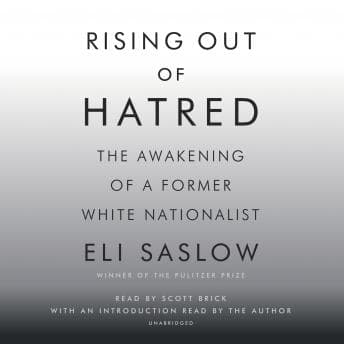

This book made me pull into my driveway and sit in the car for twenty minutes with the engine off. Carlos texted asking if I was okay. I was. I just couldn't stop listening.
I've read a lot of memoirs about people changing — addiction recovery stories, prison reform narratives, the whole redemption arc genre. The memoir shelf is crowded, and most of it doesn't earn the weight it's reaching for — Love, Pamela was one of the rare ones that actually surprised me with how raw it was willing to get. But Rising Out of Hatred isn't really a redemption arc. It's slower, messier, and more honest than that. Eli Saslow doesn't give you the tidy Hollywood version where Derek Black has one big epiphany and walks away from white nationalism with swelling music. What he gives you instead is something that looks a lot more like how people actually change — gradually, painfully, with a lot of backsliding and silence and awkward dinners.
The Shabbat Dinners That Did More Than Any Protest Sign
The center of this book isn't Derek Black. Not really. It's Matthew Stevenson, the Orthodox Jewish student who looked at a known white nationalist on his campus and decided to invite him to Friday night dinner. Not to debate him. Not to shame him. Just... dinner. Week after week. And the other students at that table — some who knew exactly who Derek was, some who didn't — just kept showing up too.
As someone who works with people at their worst moments every single night, I know something about what it takes to sit with someone whose reality you can't understand. It takes a kind of patience that most people romanticize but few actually practice. Saslow captures that patience without making it saccharine. He shows you the students who were furious — rightfully — that this guy was on their campus. He shows you the ones who thought engaging with him was a betrayal. And he shows you the ones who pulled up a chair anyway. None of them are wrong, and Saslow is smart enough not to tell you which approach was "right."
Saslow Reads His Own Reporting Like He's Still in the Room
Here's where the dual narrator setup gets interesting. Saslow narrates portions of his own work, and you can hear his reporter's restraint — the way he holds back judgment even when describing Don Black's Stormfront empire or David Duke's influence on a child. It's controlled. Precise. Then Scott Brick handles other sections with a steadier, more traditional audiobook cadence that keeps the pacing from getting too journalistic.
Honestly? I wanted more of Saslow. There's something about hearing a journalist read his own deeply reported material that hits different — you catch inflections that tell you where his emotions were while writing. When he describes Derek's childhood, learning to parrot talking points about "white genocide" before he could drive a car, Saslow's voice gets quieter. Not dramatic. Just... careful. Like he knows how easy it would be to turn this kid into a caricature and he's refusing to.
Brick is solid — he's a pro, and his voice has the kind of gravity this subject demands. But the contrast between the two narrators is noticeable, and at nine hours, I occasionally wished for more consistency in tone.
What It Gets Right About How Minds Actually Change
I work with families in crisis. I've watched people get the worst news of their lives and then watched them slowly, over days and weeks, either accept it or refuse to. Changing your mind about something fundamental — something your entire identity is built on — doesn't happen because someone yells at you with the right facts. It happens because someone makes you feel safe enough to be wrong.
That's what this book understands. The students who debated Derek with data about racial IQ myths and immigration statistics — they mattered. But they mattered because the relationship came first. The Shabbat dinners came first. And Saslow documents this with the kind of precision that made me trust him completely. He doesn't skip the ugly parts: Derek's radio show continuing in secret, the emails he wrote, the beliefs he clung to long after he should've known better.
My mom — who still thinks I should've been a doctor — would love this. She'd call it a story about family, about what you owe the people who raised you versus what you owe yourself. And she'd be right. Derek Black didn't just leave an ideology. He left his father. His godfather. His community. His entire identity.
Carlos asked why I was crying in the car. I blamed allergies. In August. In Phoenix. He didn't buy it.
Who Needs This in Their Ears
If you think people can't change, listen to this. If you think people change too easily in books, listen to this — because Saslow will disabuse you of that notion fast. Skip it if you want a polemic or a takedown of the alt-right. This isn't that. It's quieter and more devastating because of it.
Night shift approved. The kind of book that makes your commute feel important.