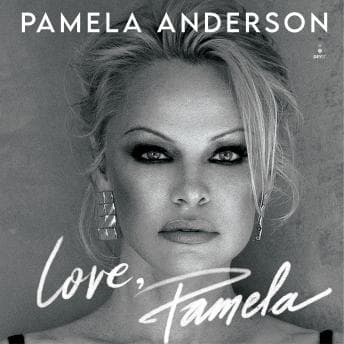

"I was not a dumb blonde. I was just a blonde who was underestimated."
That line hit me somewhere around hour two, walking the lakefront with Denise while the November wind off Lake Michigan tried to steal my earbuds. I'd started this memoir expecting—I don't know what, exactly. Something glossy. Something that confirmed every assumption I'd ever made about Pamela Anderson from seeing her on magazine covers in the faculty lounge back in '95.
I was wrong. Spectacularly, humblingly wrong.
The Poet We Didn't Know We Were Ignoring
Here's what nobody told me: Pamela Anderson writes poetry. Real poetry. Not celebrity vanity-project poetry, but raw, fractured verse that interrupts her prose like memory itself interrupts a conversation. Some listeners apparently hate this structure—find it "distracting." And look, I teach juniors who think semicolons are aggressive, so I understand the impulse toward straightforward narrative.
But the poetry isn't decoration. It's armor. It's the space between what she can say directly and what she can only approach sideways. When she writes about her childhood on Vancouver Island—the abuse, the isolation, the imaginary friends that became more real than the adults who should have protected her—the shift to verse isn't evasion. It's the only honest way to hold those memories without being destroyed by them.
This reminds me of what Hemingway said about writing: you have to leave things out to make the reader feel them more. Anderson does this instinctively. The poetry covers what prose would make too clinical, too easy to dismiss.
Why She Had to Read This Herself
She narrates this herself, and thank God she does. There's a quality to her reading—earnest, sometimes hesitant, occasionally trembling on certain passages—that no professional narrator could replicate. When she talks about the stolen sex tape, about watching her most intimate moments become public property, her voice doesn't perform outrage. It just... gets quieter. Smaller. Like she's still protecting herself from the memory.
At 5 hours and 28 minutes, this isn't a long listen. But it's dense. The alternating structure means you can't zone out during the poetry sections and expect to catch up—they're doing real work. I found myself rewinding more than usual, not because I'd missed something, but because certain lines deserved a second pass. "The prose deserves to be savored," I always tell my students. Turns out that applies to Baywatch actresses too. (My students would hate this. I love it.)
The vulnerability in her narration isn't performed. You can hear when she's reading something that still costs her. There's a section about motherhood—about fighting to be taken seriously as a parent while the tabloids reduced her to body parts—where her voice gains this fierce, protective edge. It's the sound of someone who's done being underestimated.
What the Tabloids Stole
I came of age professionally during the era Anderson describes. I remember the jokes. I made some of them, probably, in graduate school. We all did. She was the punchline before we knew punchlines had victims.
This memoir is a reclamation project, but not in the way I expected. She's not interested in revenge. She's interested in context. That same fierce reclamation of self is what makes Untamed so powerful—another woman refusing to let others define her story. Anderson shows us the girl from Vancouver Island who loved nature and books before she became the image on a million posters. She explains how losing control of your own story—having it written for you by photographers hiding in bushes and editors who'd never met you—does something to your sense of self that takes decades to repair.
The supplemental PDF that comes with the audiobook includes some of her poetry in written form, which I appreciated. Hearing verse and reading verse are different experiences, and Anderson's work benefits from both.
Class Dismissed (But Do the Reading)
Look, I'll be honest: if you're expecting a tell-all about rock stars and the Playboy Mansion, you'll find some of that here. But it's not the point. The point is watching someone use art—real, imperfect, deeply personal art—to rebuild a narrative that was stolen from her.
Who should listen? Anyone who's ever reduced a public figure to their most visible attribute. Anyone interested in how women in the spotlight survived the '90s tabloid machine. Anyone who, like me, needs to be reminded that the people we think we know are almost always more complicated than we imagined. Who should skip? If you genuinely can't handle poetry interrupting prose, you'll struggle. If you want linear chronology, this isn't it. And if you're looking for gossip without substance, you'll be disappointed—Anderson's interested in meaning, not scandal.
I finished this on a Sunday morning, grading papers long since abandoned, coffee going cold. Denise asked what I was listening to. "Pamela Anderson's memoir," I said, and watched her eyebrows rise. "It's actually literature," I added, and meant it.
That's the highest compliment I know how to give.