
I've been teaching Montgomery for two decades now, and every time I assign Anne of Green Gables to freshmen, I get the same question: "Mr. Williams, why do we have to read old books about some random orphan?" And every time, by chapter ten, those same kids are crying in class. Montgomery does that to people.
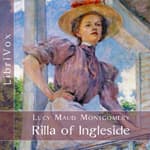
But here's the thing nobody tells you about the Anne series—the final book isn't really about Anne at all. Rilla of Ingleside belongs to her youngest daughter, and it's set against the backdrop of World War I. This is Montgomery at her most mature, her most devastating, and honestly? Her most relevant.
When Montgomery Stopped Writing Fairy Tales
Look, I love the earlier Anne books. The whimsy, the raspberry cordial incident, the slate-breaking scene—classic stuff. But Rilla of Ingleside is a different animal entirely. Montgomery wrote this in 1921, when the wounds of the Great War were still bleeding fresh, and you can feel that rawness in every chapter.
Rilla starts as a vain, silly fifteen-year-old obsessed with her first dance and whether boys notice her. By the end, she's raising a war orphan and watching her brothers march off to a conflict that might swallow them whole. The transformation isn't neat or Hollywood-pretty. It's messy and gradual and achingly real.
What struck me most—and I listened to this while grading a stack of sophomore essays on The Great Gatsby, so I was already in a contemplative mood—is how Montgomery captures the home front experience. The waiting. The telegrams. The way ordinary people keep living ordinary lives while the world burns. My students would probably find it slow. I found it devastating.
Karen Savage Gets Montgomery's Rhythm
Here's where I need to talk about the narration, because Karen Savage absolutely nails something that lesser narrators miss entirely: Montgomery's prose has a specific music to it. Those long, rolling sentences that build and crest like waves? You can't rush them. Savage doesn't.
Her character voices are genuinely excellent—and I don't say that lightly. Savage brings that same vocal precision to Railway Children, another period piece where character differentiation makes or breaks the experience. She gives each Blythe child a distinct personality without veering into caricature. Susan Baker, the family's devoted housekeeper, becomes a scene-stealer in Savage's hands. There's this running bit about "the Huns" that could've been grating but instead becomes darkly funny because of how Savage delivers it.
The emotional moments hit hard. There's a scene involving a telegram—if you know, you know—and Savage's restraint there is remarkable. She doesn't oversell it. She lets Montgomery's words do the work. That's what separates good narration from great narration. (My podcast listeners know I harp on this constantly. All 47 of them.)
One caveat: some listeners have mentioned the pacing feels slow, particularly during the sections heavy with war facts and dates. I get that. Montgomery was writing for readers who lived through these events, who knew the significance of Vimy Ridge and the Somme. For modern listeners, especially those unfamiliar with WWI history, these sections might drag. I listened at 1.0x because—you know my position on this—but if you're tempted to speed up during the war bulletins, I won't judge. Much.
The Canadian Home Front Nobody Talks About
This is something I wish more people knew: Rilla of Ingleside offers a uniquely Canadian view of WWI that you won't find in Hemingway or Remarque. Montgomery's characters aren't in the trenches—they're reading about the trenches in newspapers, sending socks and letters, praying their boys come home.
It's a perspective that feels remarkably contemporary. How many of us have watched wars unfold on screens, feeling helpless and connected and distant all at once? Montgomery understood that particular anguish a century ago.
Denise and I listened to the final chapters during a lakefront walk last week. Neither of us spoke for about ten minutes afterward. That's the kind of book this is.
Who This Is (and Isn't) For
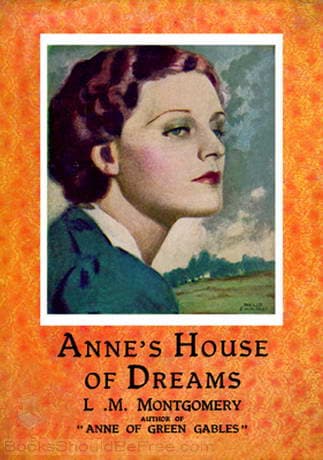
Skip this if you're new to Montgomery—start with Anne of Green Gables first. I recommend Anne of Green Gables in any format, though fair warning, it's lighter fare than what Rilla delivers. But for those who've followed Anne from Green Gables to Ingleside, this is the culmination you didn't know you needed. Also skip if you need constant action; this is a book about waiting, about the spaces between news. If that sounds unbearable, this isn't your listen.
Karen Savage's narration elevates already beautiful prose into something genuinely moving. The production is clean, the pacing deliberate, and the emotional payoff substantial.
Mr. Williams's Final Grade
Would I listen again? I already have. Twice.
(Don't tell my students I cried during an audiobook about a girl named Rilla. I have a reputation to maintain.)