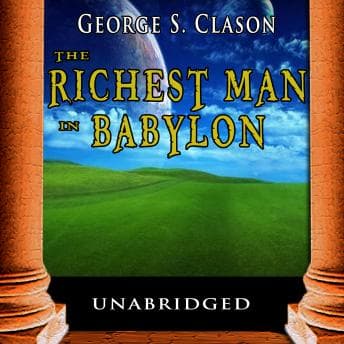

Everyone and their LinkedIn guru has told you to read this book. It's on every "Top 10 Finance Books" list next to Rich Dad Poor Dad, and your uncle who just discovered index funds won't shut up about it. So here's the thing - they're not wrong. But they're also not telling you the whole story.
I was waiting for Jenny at the dentist's office - she had a crown replacement, I had 90 minutes to kill - and I figured this was the perfect time to finally knock out a book I'd been dodging for years. Three hours. At 2.0x, that's basically a long podcast episode. No excuses left.
Your Parents Already Knew This. Arkad Just Said It Fancier.
The core advice in The Richest Man in Babylon is painfully simple: save at least 10% of what you earn, avoid debt, invest wisely, and don't trust your money to people who don't know what they're doing. That's it. That's the book. Clason wraps these principles in parables set in ancient Babylon - a chariot maker who can't save, a spear maker who gambles his gold away, a slave who earns his freedom through financial discipline.
And look, I respect the format. These were originally pamphlets distributed by banks in the 1920s, and the parable structure is genuinely clever. The story of Arkad teaching the "Seven Cures for a Lean Purse" is basically a masterclass in making boring advice sticky. "A part of all you earn is yours to keep" - my parents ran a dry cleaning shop in Koreatown and lived this exact principle without ever reading a single personal finance book. They called it "don't spend everything." Revolutionary stuff.
But here's where I give Clason credit: the tale of Dabasir, the former slave who claws his way out of debt by committing to a repayment plan while still living - not just surviving - actually hit different. There's a moment where Dabasir describes the shame of owing money to every merchant in Babylon, and his wife standing by him anyway. That landed. (Jenny would say I'm projecting. Jenny might be right.)
Jason McCoy Narrates Like He's Motivating a Sales Floor
Some listeners have called McCoy's narration "a bit too shouty," and I get it. There's an intensity to his delivery that works when Arkad is lecturing a room full of broke Babylonians but feels like overkill during quieter narrative moments. It's clear, it's engaged, and he kept me listening through the whole thing - but there's a thin line between "passionate" and "your manager doing morning announcements." At 2.0x speed, the shouty moments become almost comedic. Like a TED speaker who's had three espressos.
That said, for a single-narrator production with no sound effects and no bells and whistles, it does the job. The audio is clean, the pacing is consistent, and McCoy reads with enough conviction that the parables don't feel like bedtime stories. They feel like lectures from someone who genuinely believes you're one decision away from financial ruin. Which, for a lot of people, isn't far from the truth.
McCoy channels that same urgent intensity in How I made $2,000,000 in the Stock Market, where the stakes are a real trader's fortune instead of ancient parables.The 3-Hour Problem (That's Actually a Feature)
At three hours, this is one of the few business books that actually respects your time. No padding. No "let me tell you about the time I was at a cocktail party in Davos" anecdotes. No 40-page chapter on the author's morning routine. Clason wrote pamphlets, not a memoir, and the audiobook inherits that efficiency.
The flip side? The advice IS simple. If you've read literally any personal finance book published in the last 20 years, you already know everything in here. The 50/30/20 rule, pay yourself first, compound interest - all of it traces back to Clason's parables, but you've probably absorbed these ideas through osmosis at this point. The value isn't in the novelty of the advice. It's in the framing. Ancient Babylon strips away the modern noise - no crypto, no side hustles, no "passive income" fantasies. Just: earn, save, invest, protect.
I've seen founders burn through Series A funding because they never internalized "live upon less than you could earn." I've watched senior consultants with $300K salaries living paycheck to paycheck. This book isn't for people who need new information. It's for people who need old information to finally stick.
Who Gets the Most From This
If you're 22 and haven't started thinking about money yet, this is genuinely useful. The parable format makes the lessons memorable in a way that a Ramit Sethi spreadsheet doesn't. If you're 40 and already maxing your 401(k), you'll finish this in an afternoon and feel mildly validated. Both are fine outcomes.
Skip this if you want tactical, modern financial advice - stock picks, real estate strategies, tax optimization. That's not what this is. This is philosophy dressed in sandals and chariot dust.
If you want tactics instead of philosophy, Never Split the Difference is the book I hand operators who need to win in the moment.The Bottom Line on Your Next Credit
Bottom line: it's a 100-year-old book that still gets recommended because the fundamentals haven't changed. Saving money is boring. Boring works. At three hours, the commitment is minimal and the ROI on the time investment is solid - especially if you're the kind of person who knows what to do with money but keeps not doing it. This is what my parents did instinctively. Now it has a TED talk. And an audiobook. And a thousand LinkedIn posts. The original is still worth hearing once.