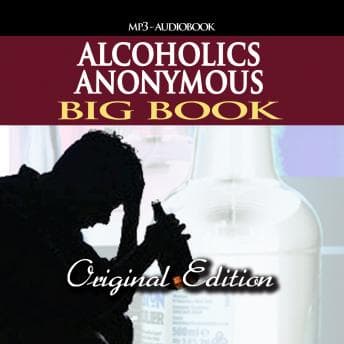

There's something almost paradoxical about listening to the Big Book of Alcoholics Anonymous—a text that has genuinely saved lives since 1939—while stirring dal at midnight because sleep won't come. The book itself is a fascinating artifact of early recovery psychology. The audiobook narration? That's where we need to have a conversation.
Let me be clear about what we're dealing with here: this is the original 1939 text, the foundational document of modern addiction recovery. From a psychological standpoint, it's remarkable. The twelve steps, the emphasis on community, the acknowledgment that willpower alone isn't enough—this was revolutionary thinking for its time. Research shows that peer-support models like AA remain among the most effective interventions for alcohol use disorder. So the content? Historically significant and still clinically relevant.
The Monotone Problem (And Why It Matters Here)
Here's where I have to be honest with you. Jason McCoy's narration is... flat. And I don't mean "understated" or "measured." I mean monotone in a way that makes a nearly six-hour listen feel considerably longer. One reviewer described it as "soul-less," and while that's harsh, I understand the frustration.
What makes this particularly problematic for THIS specific book: the Big Book works because it combines clinical information with deeply personal stories. The later chapters feature testimonials from people in recovery—raw, vulnerable accounts of hitting bottom and finding hope. Those stories need emotional variation. They need a narrator who understands that when someone describes losing their family to addiction, the delivery should shift. It doesn't, really.
The list-reading sections are especially rough. And yes, there are a lot of lists. Steps to take. Promises of recovery. Characteristics of alcoholism. McCoy reads them with the same energy he brings to everything else, which is to say: not much.
Who This Version Actually Serves (And Who Should Look Elsewhere)
So should you skip this entirely? Not necessarily. Context matters.
If you're someone in recovery who needs the Big Book for daily readings or step work, and you want audio for accessibility reasons—maybe you're driving to meetings, maybe you have visual impairments, maybe you just process information better auditorily—this exists and it's functional. Some listeners actually prefer the flat delivery for bedtime listening (you can close your eyes and follow along without being jolted by dramatic shifts). The production quality itself is clean.
If you're a psychology student or researcher interested in the historical development of addiction treatment models, this is primary source material. The monotone won't bother you as much if you're analyzing rather than absorbing.
But if you're new to recovery and hoping for something that will emotionally connect you to the material? If you want to feel the hope that these stories are meant to convey? This narration creates an unnecessary barrier. You might find yourself, like several reviewers, giving up halfway through. That's not ideal for a book designed to be a lifeline. Skip this version and find another recording—or better yet, read the physical book alongside a meeting community.
The Text Beneath the Voice
What frustrates me most is that the source material deserves better. The Big Book is essentially a collection of case studies in addiction and recovery, written by people who lived it. The protagonist of each personal story exhibits classic patterns of denial, rationalization, and eventual surrender—patterns I've seen documented in clinical literature for decades after this was written. Bill Wilson and the early AA members understood something fundamental about human nature: that shame isolates, and isolation kills.
The twelve steps themselves are a psychological framework disguised as spiritual practice. Cognitive restructuring. Behavioral activation. Social support networks. Big Leap explores similar territory—how we sabotage our own growth through unconscious patterns—though Gay Hendricks frames it through the lens of success rather than recovery.
I found myself asking: why does this particular text endure when so many self-help books fade? The answer is in the structure. Self-Reliance has that same staying power—Emerson's 1841 essay still hits because it addresses something fundamental about human autonomy and inner strength. The Big Book doesn't just tell you what to do. It shows you, through story after story, that recovery is possible for people who thought they were hopeless. That's powerful. That's what the narrator needed to convey.
My Clinical Take
Look, I'm not going to tell you this is a must-listen audiobook. It's not. The narration actively works against the material's emotional impact, and at nearly six hours, that's a significant commitment for a compromised experience.
But the content itself—the Big Book as a text—remains essential for anyone interested in addiction psychology, recovery frameworks, or the history of peer-support movements. If you can push through the delivery, or if you're using this as supplementary material for work you're already doing, it serves its purpose.
My therapist would probably say something about meeting resources where they are rather than where we wish they were. She'd be right. This audiobook exists. It's accessible. It's the Big Book. Sometimes that's enough. Sometimes it isn't. You'll know which applies to you.