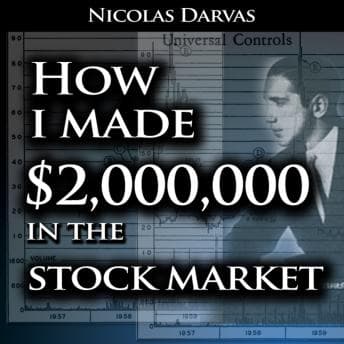

Look, I have a pet peeve with business book titles that promise specific dollar amounts. "How I Made $2,000,000" - really? Because adjusted for inflation from 1960, that's like $20 million today, and yet the book is under 4 hours. My parents made less than that running their dry cleaning business for 30 years, and their story would take way longer to tell.
But here's the thing - I finished this one. At 3 hours 34 minutes, Nicolas Darvas respects your time in a way that 90% of modern business books don't. And the guy's story is genuinely wild. Fled Hungary with fifty pounds and a forged visa, became a professional dancer, and taught himself stock trading by reading 200 books during his off hours. That's immigrant hustle I recognize.
The Box System Actually Makes Sense
Darvas's core idea is elegantly simple: stocks trade in "boxes" - price ranges where they consolidate before breaking out. You buy when a stock breaks above its box on high volume, and you set a stop-loss at the bottom of that box. That's it. No complicated indicators, no fundamental analysis paralysis.
I've seen variations of this at every growth-stage startup I've consulted for. The principle translates: find momentum, ride it with discipline, cut losses fast. My parents did this instinctively with inventory - they'd double down on items that were selling and clear out the slow movers immediately. Same logic, different asset class.
The core framework is worth the listen alone. The other 2 hours? Mostly Darvas's autobiography and the story of his specific trades. Which, honestly, I didn't mind. The guy has an interesting life. But if you're purely here for the system, skip to the middle section.
Jason McCoy Gets the Job Done
I couldn't find much about Jason McCoy's other work, but based on this performance, he's solid for instructional content. Clear articulation, appropriate pacing for material you might actually want to take notes on. He's not going to win any Audie Awards for drama, but that's not what this book needs.
The narration is... fine. It's the audiobook equivalent of a competent PowerPoint presentation. You're not here to be entertained - you're here to learn a trading system from a Hungarian dancer who figured out Wall Street in the 1950s. McCoy delivers the information without getting in the way. At 2.0x speed, it flew by during my morning commute.
The Dated Parts (And Why They Might Not Matter)
Some listeners complain the content feels old. And sure, Darvas is talking about Barron's Magazine and telegram communications with his broker. The mechanics are vintage. But the psychology? The discipline? That's timeless.
Here's what still applies: cut your losers, let your winners run, don't let emotions drive decisions, and for the love of God, have a system. I've watched three different startups fail because founders couldn't cut underperforming product lines. They'd keep throwing resources at something because of sunk cost fallacy. Darvas would've killed those products in week two.
What doesn't translate as cleanly: the specific box breakout patterns. Modern algorithmic trading has changed market microstructure. You're not going to replicate his exact approach with a Robinhood account. But the framework for thinking about momentum and risk management? Still valuable.
Who This Is For (And Who Should Skip It)
New investors who need a crash course in trading discipline and loss management - this is your 3.5-hour education. Skip it if you're looking for modern technical analysis or specific strategies that work with today's trading platforms. The mechanics are 1960s vintage; the mindset is evergreen.
The ROI Calculation
This is a 3.5-hour education in trading discipline from someone who actually made the money he's talking about. Not theoretical, not backtested simulations - real trades, real profits, real losses. Darvas lost money too, and he's honest about it.
Jenny would say I'm being generous because I have a soft spot for immigrant success stories. Jenny is right. But I'm also being practical - there are maybe 45 minutes of genuinely useful mental models here, wrapped in a pretty engaging autobiography. For a book written in 1960, that's a solid hit rate.
Would I recommend it to every aspiring trader? Honestly, yes. Not because the specific techniques will make you rich, but because the mindset will save you from being stupid. And in investing, not being stupid is 80% of the game. Millionaire Next Door hammers home that same principle—wealth isn't about being brilliant, it's about being disciplined.
My 2.0x speed made this a two-commute listen. Yours should too.