
What happens when you take a genuinely influential self-help classic and hand it to a narrator who apparently didn't do a single read-through before hitting record?
You get this audiobook. And it's a problem.
The Source Code Is Solid, the Compiler Is Broken
TL;DR: Worth your commute? The book is. This version is not.
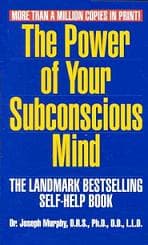
Look, Joseph Murphy's The Power of Your Subconscious Mind is one of those mid-century self-help books that basically spawned an entire genre. It's the OG of "your thoughts shape your reality" - decades before The Secret turned it into a viral phenomenon with worse citations. Murphy was a minister and researcher who drew on case studies, biblical references, and early psychology to argue that your subconscious mind is essentially a programmable system. As a software engineer, I can appreciate the metaphor even when the science gets hand-wavy. Think of it as configuring your mental environment variables.
The core ideas - visualization, affirmation-based reprogramming, the relationship between belief and outcome - are repeated in practically every modern self-help book. Reading Murphy is like reading the original whitepaper that every subsequent blog post borrowed from without attribution. The same dynamic shows up in Rich Dad Poor Dad - another book that's been so widely digested and repackaged that reading the source feels almost archaeological. At 6 hours, it's relatively tight for the genre, though Murphy does the classic mid-century thing of hammering the same point with seventeen different anecdotes when three would've done the job. Could parts of this have been a blog post? Honestly, parts of it are blog posts now - just written by other people who read Murphy first.
But here's the thing: the repetition actually works in audio format. When you're half-conscious on a 6:15 AM Caltrain and someone keeps restating the core principle in slightly different ways, it functions almost like the very affirmation technique Murphy is describing. Accidental genius, maybe.
Except this narrator torpedoes the whole experience.
Jason McCoy vs. the English Language
I don't say this lightly - I've listened to hundreds of audiobooks, including narrators I'd charitably call "fine" - but Jason McCoy's performance here is genuinely bad. And not in a subjective "I prefer a different style" way. He mispronounces words. Constantly. We're talking about a book centered on psychological and philosophical concepts, and the narrator stumbles over the terminology like he's sight-reading it for the first time.
Worse than the mispronunciations is the comprehension issue. There are passages where the emphasis falls on the wrong words, where pauses land in places that fracture the meaning of a sentence. It's the audio equivalent of code that compiles but produces wrong output - syntactically present, semantically broken. You can tell McCoy doesn't fully grasp what he's reading because the natural rhythm of understanding just isn't there. When Ray Porter narrates nonfiction (yes, I'm bringing him up, I always bring him up), you can hear that he gets the material. He adjusts his delivery to signal when an idea is building toward a point. McCoy reads like he's processing text one word at a time.
And apparently the cover of this particular edition misspells "subconscious." Which - I mean, that tells you everything about the production quality control here.
(Kevin pointed out that maybe I'm being harsh. Kevin has also never tried to absorb philosophy while someone mispronounces "psychosomatic" on a packed train at rush hour. Context matters.)
Who Should (and Shouldn't) Bother
If you've never read Murphy and you're curious about the roots of modern self-help and manifestation thinking, the book is genuinely worth your time. It's historically significant, surprisingly practical in spots, and short enough that you won't resent the commitment. Perfect for: commute, background listening while doing chores.
But not this version. Just... not this version.
Grab the print book, find a different audio edition, or honestly, read a detailed summary and then go straight to the exercises. The ROI on this specific audiobook is negative because the narrator actively interferes with comprehension. I kept rewinding sections not because the ideas were complex but because McCoy's delivery made me unsure I'd heard them correctly. That's a dealbreaker for audio.
If you want a solid self-help audiobook in this vein, Think and Grow Rich (the Earl Nightingale narration) covers adjacent territory with a narrator who actually understands emphasis. Or if you want the modern iteration, Atomic Habits does the "reprogram your defaults" thing with better science and James Clear's own narration.
Save Your Credit, Read the PDF
I finished this in about 4 commutes at 1.5x. I wish I'd spent those commutes on literally anything else in my queue. The underlying ideas earned an extra half-star because Murphy genuinely influenced an entire field. But a self-help audiobook where the narrator doesn't understand the self-help? That's a production failure, not a listening experience.