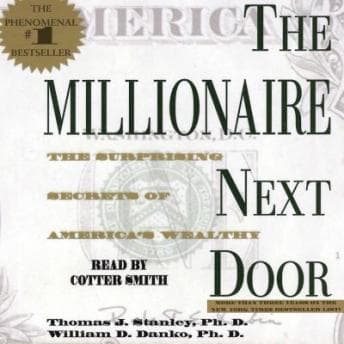

The Psychology of "Looking Rich" vs. Being Rich
I was jogging past a massive brownstone in Cambridge the other morning—you know the type, immaculate landscaping, probably a Tesla in the driveway—and listening to Cotter Smith narrate The Millionaire Next Door. And I couldn't help but laugh. Because according to Thomas Stanley and William Danko, the guy living in that brownstone is statistically likely to be drowning in debt, while the person in the rusted Honda Civic behind me is the actual millionaire.
(My mother has been telling me this for years, by the way. "Priya, why buy new car? Old car goes vroom too." Turns out, Ma was right. Don't tell her I admitted that.)
I picked this up because I treat financial behavior like a character study. Why do we buy things? To signal status. To fill a void. To construct an identity. This book strips all that away and looks at the raw data of wealth. And let me tell you, it is a fascinating, if somewhat dry, look at the human ego.
The "Eat Your Vegetables" Narration
Let's talk about Cotter Smith. I looked him up—he's got Earphones Awards, he's a pro. And you can tell. His voice is deep, rich, and incredibly steady.
But here's the thing—it's almost too steady.
He reads this book like a nightly news anchor delivering a serious report on the economy. Which, to be fair, is exactly what this book is. There are no characters here. No dialogue. Just data, case studies, and lists. Smith's delivery is "dead-on" (as the reviews say), but it's also the audio equivalent of a stern father figure telling you to stop buying lattes.
If you listen at 1.0x speed, you might zone out. I certainly did. I found myself thinking about my dissertation defense instead of net worth equations. I bumped it up to 1.25x, and suddenly Smith sounded less like a lecture and more like a brisk, informative podcast. Highly recommend the speed boost.
Behavioral Patterns of the Wealthy
From a psychological perspective, this book is gold. The authors distinguish between PAWs (Prodigious Accumulators of Wealth) and UAWs (Under Accumulators of Wealth).
Basically, UAWs are people with high status anxiety. They need the suit, the car, the watch to prove they exist. That internal vs. external validation dynamic shows up in 12 Rules for Life too, though Peterson approaches it from a different angle. The PAWs? They don't care. They have what we call an internal locus of control. They derive value from security, not display.
It's fascinating to hear the case studies of people who look totally average but are sitting on millions because they just... didn't spend it. It challenges the entire American narrative of success.
However—and this is a big however—listening to someone read statistical charts is painful. There are sections where Smith is literally reading numbers from a table. "Column A: ten percent. Column B: twelve percent."
My brain glazed over. This is the flaw of the audiobook format for data-heavy books. You can't skim the charts. You just have to endure them. (I may have skipped forward 30 seconds a few times. Sue me.)
Is It Dated? Yeah, A Bit.
The numbers are from the 90s. A million dollars isn't what it used to be. And the advice feels a bit repetitive. We get it, don't buy a new car. Frugality is key.
But the core psychological truth remains relevant. Maybe even more so now in the age of Instagram where everyone is performing wealth they don't have.
It's a reality check. It's dry, it's repetitive, but it's also weirdly comforting. It validates every boring, responsible choice you've ever made.
Who Should Listen (And Who Should Skip)
If you're curious about the psychology of spending and want a data-backed reality check on wealth, this is your book. Skip it if you need narrative drive or entertainment—go grab a thriller instead. Best for commutes and chores; it works better as background processing than focused listening.
Final Assessment
Unlike Power of Concentration, which demands your full attention, this one actually works better when you're multitasking. And seriously, speed it up. Cotter Smith is great, but life is short.