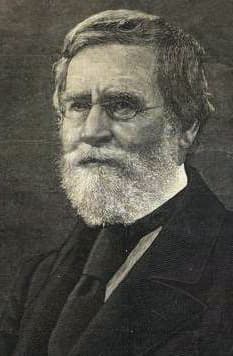
Five hours listening to a 19th-century author explain the Wars of the Roses while I was reorganizing my home office at midnight. Jenny was asleep. The dog was judging me. And I kept thinking: Jacob Abbott wrote this in the 1800s for what was essentially a general audience, and somehow it's more digestible than half the leadership books published this year.
Here's the thing that caught me off guard - I picked this up on a whim because a founder I advise keeps comparing startup board politics to medieval succession crises. I thought he was being dramatic. He was not.
Your Parents' Dry Cleaner Had Better Governance Than the House of York
Bottom line: this is a 170-year-old book about a 500-year-old king, and it reads like a case study in how organizations destroy themselves through internal power struggles. Abbott doesn't write like a modern historian - he writes like a storyteller who's slightly horrified by his own subject matter. Richard's climb to the throne involves eliminating rivals with the kind of systematic ruthlessness that would make a private equity firm blush. The imprisonment of the young princes in the Tower, the manipulation of Parliament, the strategic marriages and betrayals - Abbott lays it all out with this almost clinical clarity that somehow makes it more disturbing, not less.
What surprised me is how much Abbott editorializes. This isn't dry academic history. He's openly calling Richard treacherous, openly shaking his head at the moral bankruptcy of the entire era. For a book written in the 1800s, it moves. The Wars of the Roses section - the back-and-forth between Yorks and Lancasters - could easily bog down in genealogy and dates. Abbott keeps threading the human motivations through it. Who wanted what. Who killed whom to get it. Who rationalized the killing afterward.
At 5 hours, this is lean. No padding. I've seen this fail at three different companies - the inability to tell a complex story without drowning people in unnecessary detail. Abbott doesn't have that problem. He wrote this for curious readers, not academics trying to impress each other. That said, first-person accounts written for general audiences can swing wildly in quality - Journal of Submarine Commander Von Forstner is another public domain text that walks that same line between accessible and substantive, with similarly unvarnished results.
Cate Barratt and the LibriVox Question
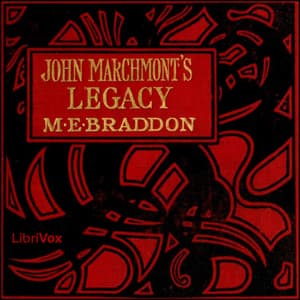
So here's where I have to be honest about the gaps. This appears to be a LibriVox recording - volunteer narration, public domain text. Cate Barratt reads it straight, no dramatic flourishes, no character voices, no production bells and whistles. It's one person reading a history book into a microphone.
And for this particular book? That's... mostly fine. Abbott's prose carries itself. You're not listening for vocal performance here - you're listening for the content. Barratt is clear and steady, which is what you need. But I can't pretend the audio production competes with a professionally produced Audible original. There are no sound effects, no music, no multi-narrator drama. It's a clean read of a clean text. If you're spoiled by high-production audiobooks, calibrate your expectations.
I ran it at 1.5x - my usual 2.0x felt too fast for the older prose style, which has longer sentence structures than modern writing. The syntax is 19th century even if the storytelling instincts are sharp. Give yourself a slightly slower speed than usual.
What My Parents Would've Called This: Just Common Sense
The part that stuck with me was Abbott's framing of Richard's fatal flaw - not cruelty exactly, but the belief that you can consolidate power purely through elimination of competitors. Richard removes every rival, secures the throne, and then discovers that fear is not loyalty. At Bosworth, the people who should have fought for him either switched sides or stood still.
This is what my parents did instinctively. Now it has a TED talk. They knew - from running a small business in Koreatown with zero formal education in management theory - that you can't lead through fear alone. Your employees leave. Your customers feel it. Richard III learned this at the cost of a kingdom. My dad learned it when his best presser quit in 1994 and took three clients with her.
Abbott wrote this for young readers, basically. The Makers of History series was educational. And yet it's more honest about power dynamics than most business biographies I've consumed this year. No hero worship. No "10 Leadership Lessons from Richard III." Just: here's what happened, here's how terrible it was, here's how it ended.
Who Gets Value Here (And Who Doesn't)
If you're a history buff who wants a quick, readable overview of Richard III's rise and fall - not Shakespeare's version, not a modern revisionist take, but a straightforward 19th-century account - this delivers at 5 hours. If you're in business and you've ever watched a leadership team eat itself alive through internal politics, the parallels will hit different.
If you want cutting-edge historiography or a production that sounds like it cost money to make, skip this. It's free content read by a volunteer. That's the deal.
The key takeaway is worth the listen. A clean 5-hour reminder that the oldest power plays in history keep repeating because humans don't change. My 2.0x speed couldn't save a bad book, but this one didn't need saving - just a slight slowdown.





![Steve Jobs [unabridged audiobook] audiobook cover](/_next/image?url=https%3A%2F%2Fcovers.audiobooks.com%2Fimages%2Fcovers%2Ffull%2F9788499923406.jpg&w=1920&q=75)