
Everyone I know who's made real money in real estate never learned it from a book with "financial freedom" in the subtitle. That's not a rule - it's a pattern I've observed across eight years of consulting and a lifetime watching my parents build actual wealth through 14-hour days at a dry cleaner in Koreatown. So when a book promises you can achieve financial freedom in five years through rental properties, my BS detector goes to DEFCON 1.
But here's the thing. I was wrong to dismiss this one entirely.
The Math Your Uncle at Thanksgiving Can't Do
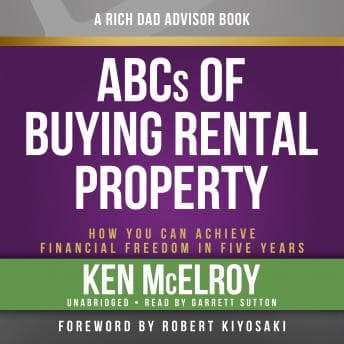
I was up late Saturday night stress-eating leftover japchae while reviewing cap rate projections for a client's real estate play. Figured I'd put this on as background noise. Ended up pausing my spreadsheet more than once. Ken McElroy (the actual author, though Garrett Sutton narrates - more on that weirdness in a second) does something most "get rich with property" books skip: he walks through the actual mechanics of analyzing a deal. Cash-on-cash returns, debt service coverage ratios, how to read a rent roll. Not sexy. Very useful. The section on finding positive-cash-flow properties and actually stress-testing your assumptions before buying - that's the stuff I wish my clients had internalized before they called me to fix their portfolios.
The opening claim that $35,000 invested in one $140,000 rental property gets you to a million in 19 years? I ran those numbers during my japchae break. They work - if you assume consistent appreciation, no major repairs, no vacancy nightmares, and a tenant who doesn't destroy your bathroom. That's a lot of ifs. McElroy acknowledges some of these risks, but the framing still feels like a late-night infomercial wearing a blazer.
At 5 hours, though, the padding is minimal. This is what my parents did instinctively. Now it has a TED talk. They bought the building their dry cleaner was in when their landlord tried to raise rent. No book, no advisor. Just survival math.
Why Is the Lawyer Reading Someone Else's Book?
Here's the part that kept bugging me. Ken McElroy wrote this book. Garrett Sutton narrates it. Both are Rich Dad Advisors - Sutton's the asset protection attorney, McElroy's the real estate guy. It's like having your tax lawyer deliver your surgeon's post-op instructions. Sutton's narration is fine - clear, conversational, one listener compared it to sitting in his law office getting advice. That tracks. His tone is measured, professional, almost too calm for a book trying to get you fired up about buying duplexes.
But there's a disconnect. When the book gets into property management war stories and deal-making instincts, you can feel that these aren't Sutton's stories. He's reading them competently, but there's no lived-in energy behind the anecdotes. It's the difference between a founder pitching their own startup and a hired presenter reading the deck. You notice.
For an audiobook where the narrator actually makes the story breathe, I was blown away by Daisy Jones & The Six—that full-cast production felt so real I forgot I was listening to actors.The companion PDF files (available on McElroy's site) are honestly where a lot of the real value lives - the checklists, the due diligence templates. An audiobook about spreadsheets and record-keeping has inherent limitations, and this one bumps into them repeatedly. "Refer to the chart on page..." doesn't translate to audio.
The Rich Dad Tax - You're Paying It
Let's address the elephant branded with Robert Kiyosaki's face. This is a Rich Dad Advisors product, which means you're buying into an ecosystem. The advice is generally sound - secure financing before shopping, analyze markets by job growth and population trends, treat property management like a real business. But it's also an on-ramp. The book references other Rich Dad titles, hints at further education, and operates within a framework that assumes you've already drunk the purple Kool-Aid about "assets vs. liabilities."
For a true beginner with zero real estate knowledge? Genuinely useful. The tax filing walkthrough alone - McElroy's step-by-step on depreciation, 1031 exchanges, and expense categorization - could save someone their first year's worth of CPA fees. That section is worth the listen. The other 3 hours? Solid B-minus material you could get from two good BiggerPockets podcast episodes.
I've seen the "buy rental properties" strategy work. I've also seen it destroy people who underestimated the management burden, the capital reserves needed, and the emotional toll of being a landlord. This book addresses the first two. It barely touches the third. My parents could've told you - owning the building didn't free them. It gave them a different kind of cage with better long-term returns.
Who Gets ROI on This Listen
If you've never analyzed a rental property deal and you need a structured, no-jargon starting point - this delivers. If you've already bought a property or two, skip to the tax chapter and save yourself three hours. If you're allergic to the Rich Dad brand or you've been burned by "financial freedom" promises before, your instincts are probably right. But the core tactical content here is more grounded than I expected.
Jenny would say I'm being harsh. Jenny is right. But Jenny also doesn't have to sit through client calls where someone bought four rental properties because a book told them they'd be free in five years and now they're hemorrhaging cash.
I've had a similar experience of a hyperbole-streaked subtitle giving way to real, usable content with Life in the Fasting Lane. Both books are better than their marketing screams.Bottom line: A surprisingly practical 5-hour primer trapped inside a marketing ecosystem I don't fully trust. Download the companion PDF, listen to chapters on deal analysis and taxes, and take the "financial freedom" timeline with a boulder of salt.