
You'd think after spending eight hours a day surrounded by hormonal teenagers in Chicago, the last thing I'd want is more teenage drama in my headphones. Especially the vampire kind. Most people assume I go home and listen to dusty recordings of T.S. Eliot reading The Waste Land to cleanse my palate.
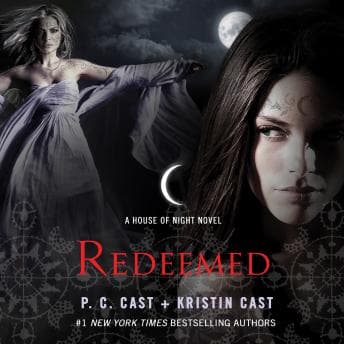
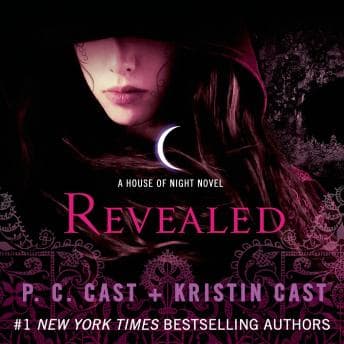
But let's be real for a second. Sometimes, after grading fifty essays on The Great Gatsby where half the class thinks Nick Carraway is "just a hater," I don't want high art. I want high stakes, messy relationships, and villains who are unapologetically evil. That's exactly where Revealed lands. I picked this up expecting to critique the prose structure—(old habits die hard)—but ended up ignoring my wife Denise for an entire evening because I needed to know if Zoey Redbird was going to survive Tulsa.
The Voice in the Hallway
I know, I know. The narrator switch. My students complain when I change the seating chart, so I get why fans of a long-running series panic when a new voice takes the mic. But Caitlin Davies? She actually nails this.
Here's the thing about narrating teenagers: it's a fine line between sounding authentic and sounding like a caricature. Davies manages to sound young without sounding childish. She gives Zoey this specific weight—the exhaustion of a girl who has been saving the world for eleven books straight.
(And honestly, her Neferet voice? Legitimately creepy. I was listening while walking the lakefront and actually shivered, though that might've just been the Chicago wind.)
Some folks online said she sounds "too young" for the mature themes. I disagree. The characters are young. If they sounded like 40-year-old chain smokers, it wouldn't work. Davies understands that for these kids, a breakup feels just as catastrophic as an impending war. She treats the emotional beats with the same gravity as the action scenes. My drama club students would kill for that kind of range.
When the Soap Opera Has Fangs
Let's talk about the pacing. This is the penultimate book—(a word I wish my juniors would learn to use correctly)—so it's doing a lot of heavy lifting to set up the finale. Because of that, it drags in spots. There were moments during the relationship drama scenes where I found myself zoning out and mentally rewriting my syllabus.
But when the plot pivots back to Neferet's chaos? It moves. The tension in Tulsa feels claustrophobic. It reminds me a bit of the pressure cooker atmosphere in The Crucible, just with fewer Puritans and more tattoos. World War Z nails that same claustrophobic tension—different monsters, same suffocating dread. The writing isn't trying to be Faulkner. It's accessible. It's fast. It's meant to be consumed like popcorn.
There's a specific rhythm to the dialogue that Davies captures well—the pauses, the unspoken teenage angst. It's the kind of stuff that usually drives me crazy in written form because the grammar is all over the place, but in audio? It flows. It sounds like the conversations I overhear in the cafeteria, just with higher stakes.
Who's This For (And Who Should Skip It)
If you're eleven books deep into the House of Night, you aren't here for a literary deconstruction of the vampire mythos. You're here to see if the good guys win. Grab this one. If you haven't read the series? Start at book one—jumping in here would be like walking into my classroom during Act V of Hamlet and asking why everyone's upset.
Class Dismissed
Is it perfect? No. The narrator change might jar you for the first chapter or two. But stick with it. It's a solid performance that respects the source material. And frankly, it was way more entertaining than the faculty budget meeting I was supposed to be paying attention to.