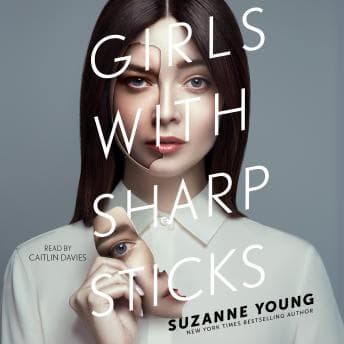

This book made me deeply uncomfortable. And I mean that as a compliment.
Look, I've read enough psychological thrillers to recognize conditioning when I see it. But *Girls with Sharp Sticks* hit differently because Suzanne Young doesn't just show you a dystopian nightmare—she makes you sit in the discomfort of watching it unfold through Mena's eyes. A protagonist who doesn't know she should be questioning anything. The research actually shows that victims of systematic manipulation often can't recognize their own oppression until something cracks the facade. Mena is a fascinating case study in exactly that.
The Psychology of Obedience (And Its Unraveling)
What makes this character compelling is how Young builds Mena's awakening. She's not secretly rebellious from page one. She genuinely believes the garbage Innovations Academy feeds her—that being "obedient" and "well-behaved" are the highest virtues a girl can achieve. I found myself asking: why does Mena really accept this? The answer is chilling. Because it's all she knows. Because the adults around her have systematically dismantled any framework she might use to question them.
Psychologically, this tracks perfectly. The Milgram experiments, the Stanford prison study—we know humans will accept horrifying norms if authority figures frame them as correct. Young clearly understands this, and she weaponizes that understanding to make you feel the slow creep of realization alongside Mena.
The plot twists? Yeah, Cosmopolitan wasn't kidding about the whiplash. But here's the thing—they work because they're rooted in character psychology, not just shock value. Each reveal recontextualizes what you thought you knew about these girls and their "education."
Caitlin Davies Made Me Want to Yell at My Phone
I listened to most of this during my morning jogs through Cambridge, and there were moments I literally stopped running because I needed to process what was happening. (My therapist would have thoughts about using exercise time for dystopian content, but she doesn't need to know.)
Caitlin Davies does something really smart with Mena's voice. She sounds sweet. Earnest. A little naive. And that sweetness becomes increasingly unsettling as you realize what's actually happening at Innovations Academy. The contrast between her determined, innocent delivery and the darkness of the content? Chef's kiss. She's not playing Mena as a victim—she's playing her as someone who genuinely believes she's in a good place. Which is way more disturbing.
The character differentiation is solid too. The other girls each have distinct voices, and the Guardian figures sound appropriately... off. Not cartoonishly evil, just wrong enough that your brain starts flagging them before Mena does.
Who This Is For (And Who Should Maybe Skip It)
I need to be honest: this book deals with heavy stuff. Violence, abuse, bodily autonomy violations. It's not gratuitous, but it's not subtle either. If you're sensitive to themes of control over women's bodies and minds—and honestly, who isn't these days—this might hit too close to home. Skip it if you're not in a headspace for that kind of darkness right now.
But if you're a fan of dystopian fiction that actually has something to say? If you want a feminist thriller that doesn't just pay lip service to girl power but actually interrogates how systems break down women's sense of self? This is the one.
I kept comparing it to *The Handmaid's Tale* in my head, but aimed at a younger audience. To Kill a Mockingbird operates in a completely different register—quieter, more grounded in historical reality—but it's another book that made me think hard about how systems condition people to accept injustice. Same DNA of examining how patriarchal control operates, but with a YA sensibility that makes it more accessible. Suzanne Young came from *The Program* series, and you can feel that experience in how she builds tension and drops revelations.
The pacing worked for me—10 and a half hours flew by faster than I expected. Though I'll admit the world-building takes its time in the early chapters. If you're impatient with setup, push through the first hour before you judge it.
Case Closed (For Now)
Probably won't listen again immediately—it's a lot to process. But I'm definitely grabbing the sequel. Young sets up enough questions that I need answers, and Davies made these characters feel real enough that I'm invested in their survival.
My mother would absolutely hate this book. "Why do you listen to such dark things?" Maa, because understanding how manipulation works is literally my job. And because stories like this—uncomfortable, unflinching, angry—are exactly what we need right now.