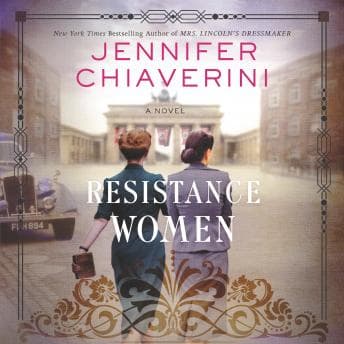

Look, I need to start with a complaint. Twenty hours. Twenty hours and ten minutes, to be exact. That's what Jennifer Chiaverini asks of you here, and I'll be honest—somewhere around hour twelve, grading papers at 11 PM with my third cup of coffee going cold, I thought: is this going to pay off?
It does. But we need to talk about the journey first.
The Weight of Knowing How It Ends
Here's the thing about historical fiction set in Nazi Germany—you already know the ending is going to hurt. You know it from the first chapter. Mildred Fish Harnack is a real person, an American woman who married a German economist and ended up running intelligence operations against Hitler from inside Berlin. The Nazis caught her. They executed her. This isn't a spoiler; it's history.
So why listen? Because Chiaverini understands something my students don't get when they complain about reading tragedies: the power isn't in the surprise. It's in watching ordinary people make extraordinary choices, knowing the cost. Mildred and her circle—Greta Kuckoff, Sara Weiss, the ambassador's daughter Martha Dodd—they're not superheroes. They're intellectuals, writers, literature students. They're us, basically. (Well, braver versions of us. I can barely stand up to Principal Martinez about the copier budget.)
The novel moves through multiple perspectives and time periods, which yes, can feel disorienting. Chiaverini is juggling a lot here—the intellectual salon culture of 1930s Berlin, the slow creep of fascism, the mechanics of actual espionage, and four distinct women's lives. Sometimes the pacing drags, especially in the middle sections where we're watching the noose tighten but nothing has snapped yet. That's the slow burn of history, though. Evil doesn't announce itself with trumpets. It seeps.
Saskia Maarleveld Makes This Work
I couldn't find much about Maarleveld's background before this, but based on her performance here? She's doing something remarkable. The accent work alone—flawless German, American, Russian when needed—but it's not just technical skill. She understands that each character needs a different emotional register.
Mildred is steady, careful, the kind of voice that makes you lean in. Martha Dodd gets this breathless, impulsive quality that made me want to shake her sometimes. Greta carries weight in her voice that builds as the years pass. Maarleveld isn't just reading—she's interpreting, and that's the difference between audiobook and performance art.
The pacing issues some listeners mention? I think that's partly the book's structure, not the narration. Twenty hours is a lot, and there are sections where the historical detail overwhelms the narrative momentum. But Maarleveld's delivery kept me anchored. She knows when to slow down for the quiet moments—a conversation between Mildred and Arvid about what they're risking, a letter that might be the last one—and when to push forward through the espionage mechanics.
I listened at 1.0x because the prose deserves it. My students would hate this take. They're not wrong about me being ancient.
Why We Still Read These Stories
This reminds me of what Hemingway said about courage—that it's grace under pressure. But Chiaverini is interested in something more complicated: the courage of people who had every opportunity to look away and didn't. Mildred could have gone home to Wisconsin. She stayed. She taught American literature to German students while secretly passing intelligence to anyone who might stop Hitler.
The author's note at the end (included in the audiobook, which I appreciated) lays out what's fact and what's fiction. Most of it is fact. That's the gut-punch. These women existed. They did these things. And most of them died for it.
If you loved All the Light We Cannot See or The Nightingale, this is their spiritual successor—but darker, more grounded in the bureaucratic horror of how resistance actually worked. For a completely different take on courage under pressure—the political kind rather than wartime—Things That Matter explores what it means to stand firm on principles when the stakes are your career instead of your life. Less romance, more committee meetings and coded messages and the slow terror of wondering if today is the day they come for you.
Who This Is For (And Who Should Skip It)
If you want a quick, escapist listen, keep scrolling. This demands patience and emotional investment. But if you're the type who lingers over WWII histories, who wants to understand how ordinary people become heroes—and you've got the commute time to spare—this one's worth every hour. Skip it if you need plot momentum to stay engaged; the middle third will test you.
Class Dismissed
Honestly? Yes, it's worth the twenty hours. But know what you're getting into. This isn't escapism. It's the kind of book that made me pause during a faculty meeting (sorry, Principal Martinez) just to sit with what I'd heard.
The ending is abrupt—history is abrupt—and some listeners found that jarring. I thought it was appropriate. These women didn't get closure. Neither do we.
Pack this for long commutes or weekend projects. You'll need the time, and you'll be glad you gave it.