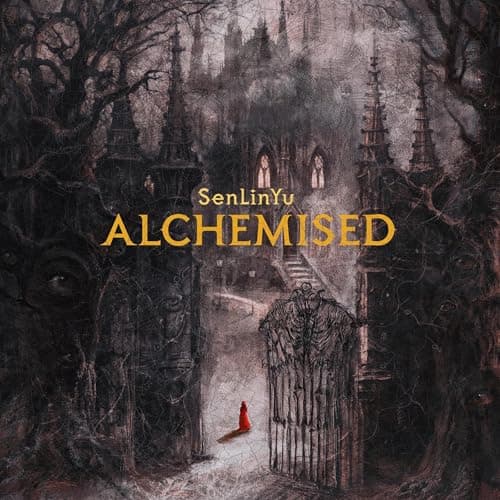

What do you do when the most dangerous thing left in a ruined kingdom might be a woman who can’t remember what she did? I started Alchemised while reorganizing a shelf of board games I absolutely did not need to buy during thesis season, and somewhere between stacking Forgotten Waters on top of Gloomhaven and hearing that opening setup about Holdfast dead, the Eternal Flame gone, and Helena Marino sitting in captivity with pieces of her mind missing, I just stopped moving. Box in hand. Brain fully hijacked. This book has that effect.
A prison built out of memory loss
The hook here is brutally efficient: Helena isn’t just trapped by the victorious regime, she’s trapped inside her own damaged recollection of the war. That changes the texture of everything. Every conversation becomes an interrogation. Every kindness feels suspect. Every answer creates two more questions.
And SenLinYu leans into the ugliest, most interesting parts of that setup. Paladia after the war isn’t some shiny dark-fantasy backdrop with a few skulls on the wallpaper. It’s a rotting political order run by corrupt guild families and necromancers who used undead creatures to win and now get to write the history books. That combo of alchemy, repression, and corpse-powered state violence is nasty in a very specific way. My D&D group would love this and then spend four hours arguing whether necromancy is inherently evil or just bad public policy. The nearest thing I've read to that kind of morally messy supernatural politics outside of LitRPG is The Radleys, which runs a similar trick of making the monstrous feel bureaucratic and exhausted rather than glamorous.
What really worked for me is how the mystery keeps changing shape. Helena is supposedly a healer of little importance in the Resistance. Sure. Fine. Except everyone around her keeps acting like the missing months in her mind might contain the final move of a dead rebellion. So the plot isn’t just “recover the memories.” It’s “figure out why so many powerful people are terrified of what those memories might mean.” That’s a much stronger engine than generic amnesia drama.
The High Reeve angle helps too. Sending her to a ruthless necromancer on a crumbling estate to have her mind pried open is exactly the kind of dark-fantasy premise that either becomes melodramatic sludge or absolutely locks in. Here, it locks in. The estate has that decayed, predatory atmosphere where the walls feel like they know things. And the dynamic between prisoner and captor is loaded from the jump - not because the book is trying to be edgy for its own sake, but because power, knowledge, and identity are all tangled together.
This audiobook asks you to pay attention
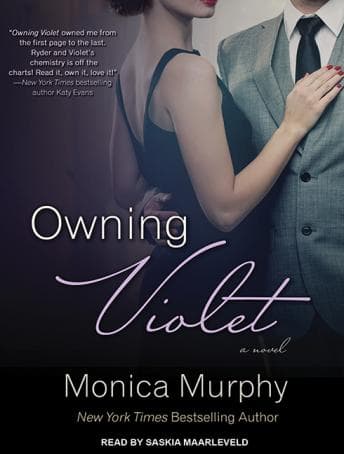
Saskia Maarleveld was a smart pick, but not an easy one. Important distinction.
Her performance is not breezy. It doesn’t smooth the book into something you can half-listen to while answering emails or grinding side quests. She gives Helena a controlled, bruised intensity that fits someone trying to preserve the last scraps of herself under captivity, and she uses subtle tonal shifts rather than cartoonish voice acting to separate characters. That choice matters in a story like this. A bigger, flashier read would’ve tipped parts of the book into camp.
Instead, Maarleveld plays the emotional pressure straight. You can hear the exhaustion and resistance in Helena without turning her into a constant whispering wreck. The darker scenes land because Maarleveld doesn’t oversell them. She trusts the material. And when the book starts digging into the ugliest emotional corners - trauma, abuse, the slow horror of realizing your own mind may have been altered into a weapon or a vault - she gives those moments weight without flattening everyone into the same bleak register.
That said: if you need instant momentum, Part 1 may test your patience. Some listeners bounced off the early pacing, and I get it. This is a 36-hour audiobook that withholds context on purpose. New characters don’t all arrive with immediate emotional stickiness, because the book is building distrust first and attachment later. I was into that. But I also read this instead of writing my thesis, so my tolerance for slow-burn world-building is frankly irresponsible.
Normal speed is the move here. Don’t 1.25x this unless you actively hate atmosphere. Maarleveld’s phrasing, accent work, and pauses are doing real labor, especially when the tension comes from what a character chooses not to say.
The part where it punches you in the throat
There are books that are “dark” because they want credit for mentioning trauma, and then there are books that actually sit with the cost of survival. Alchemised is firmly in the second camp.
I can’t spoil the late-game reveals, but I can say this: the emotional payoff people keep mentioning is real. There were absolutely moments near the end where I had to pause and just stare at my apartment wall like I’d failed a Wisdom save. Not because the book was trying to manipulate me with cheap twists, but because it earns the horror of recognition. When buried history starts surfacing, it recontextualizes the pain in a way that is both satisfying and awful. The progression is satisfying. The dread is worse.
And the ending? Yeah. I buy the reports of people crying and clapping, which sounds ridiculous until you get there. It’s not a triumph in the clean heroic-fantasy sense. It’s the kind of ending that leaves scorch marks. You crawl out of it more than you celebrate it.
A quick warning from your friendly neighborhood fantasy gremlin: check the content warnings and actually believe them. Violence, abuse, sexual content, trauma - none of that is decorative here. If you’re in the mood for a cozy magic academy, turn around. If you want dark fantasy that commits to the bit and then makes the bit emotionally expensive, now we’re talking.
You, specifically
Listen if you want a dense dark fantasy where memory itself is the battlefield, and you’re happy to give it full attention. Listen if prison politics, necromancy, ruined ideals, and a corrosive captor/captive dynamic are your catnip. Skip if you mostly use audiobooks as background noise, because this one will absolutely punish distraction. And skip if slow early investment makes you twitchy.
For me, this landed hard. The world-building is chef’s kiss, the emotional architecture is vicious, and Saskia Maarleveld understands that a book this bleak only works if the performance stays precise instead of melodramatic. Yes, it’s 40 hours. Yes, it’s worth it.