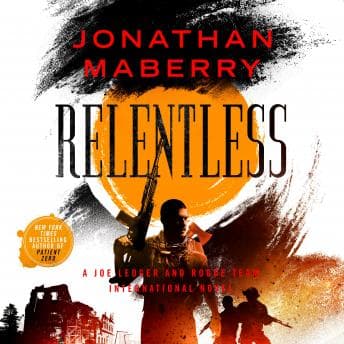

This book broke Joe Ledger, and honestly? It almost broke me too.
I've been chipping away at this one over two weeks of night shifts - earbuds in during 3 AM charting, the unit eerily quiet (knock on wood), just me and Ray Porter's voice describing a man coming apart at the seams. There's something deeply unsettling about listening to a character process the murder of everyone he loves while you're sitting under fluorescent lights in a trauma center where that kind of loss walks through the doors every week.
When the Darkness Isn't Metaphorical
Maberry does something gutsy here. He doesn't let Ledger bounce back. He doesn't give him a rousing speech and a mission briefing and send him off with a quip. The Joe Ledger in Relentless is genuinely, clinically shattered - and as someone who's watched patients and colleagues spiral after catastrophic loss, the way Maberry writes that fracture felt uncomfortably real. The dissociation. The rage that looks like calm. The part of your brain that just... goes quiet. I've seen that blank stare in the eyes of people sitting in our waiting room at 4 AM. Maberry nails it.
But here's where I have to be honest: 18 and a half hours of that darkness is a LOT. There were nights I had to switch to a podcast halfway through my shift because the weight of it was sitting on my chest. Previous Ledger books had this gallows humor - the kind I recognize from my own break room, dark jokes that keep you functional. Code Zero captured that same gallows humor perfectly, Porter's delivery practically winking at you even in the chaos. This one strips most of that away. Some listeners bounced after six chapters and I get it. I really do.
The cybernetically enhanced super soldiers? Fine. Cool action set pieces. The black market weapons stuff? Standard thriller fare, well-executed. But the heart of this book is a man drowning, and Maberry holds your head underwater with him.
Ray Porter Doesn't Read This Book - He Bleeds Through It
I've listened to Porter across this whole series, and something shifts in his performance here. The Joe Ledger voice has always had this sardonic edge, this guy who's seen too much but keeps cracking wise because what else are you going to do? In Relentless, Porter pulls that warmth back. Slowly. Like watching someone's vitals trend downward on a monitor. By the midpoint, his Ledger sounds like a different person - still recognizable, but hollowed out. That's not easy voice work. That's an actor understanding a character arc and committing to it.
His differentiation between the supporting cast is solid as always - you never lose track of who's talking even when I'm half-focused on charting - but it's the emotional register that earns the paycheck here. There's a scene dealing with the aftermath of the family murders where Porter's voice goes so quiet you'd think your earbuds died. Carlos asked why I looked shaken when I got home that morning. I blamed the coffee.
Who Needs This in Their Ears (And Who Should Maybe Not)
If you've been riding with Ledger since the beginning, you need to hear this. Full stop. It changes the character permanently, and Porter's performance makes it land in a way I don't think the print version could match.
If you're new to the series? Absolutely not. Start at the beginning. You need to know who Ledger was to understand what he becomes here.
If you're going through your own dark season? Maybe shelve this one for later. I mean it. This is not escapism. This is 18 hours of sitting with someone else's worst day, and some days you just don't need that. Night shift approved - but with a caveat. Have something lighter queued up as a chaser. I followed this with a cozy mystery and my blood pressure thanked me.
Charting Complete, Patient Stable (Barely)
Relentless earns its title the hard way. It's not relentless like a fun action movie. It's relentless like grief. Maberry and Porter built something that respects the cost of violence in a genre that usually treats it like set decoration, and I respect the hell out of that even when it made my quiet shifts feel heavier than they needed to be.
I found a similar respect for emotional weight in Rot & Ruin, his YA series that doesn't pull punches either.I yelled at my dashboard exactly zero times during this one. The medical details are accurate. Finally. But more than that - the psychological damage is accurate. And that's harder to get right.