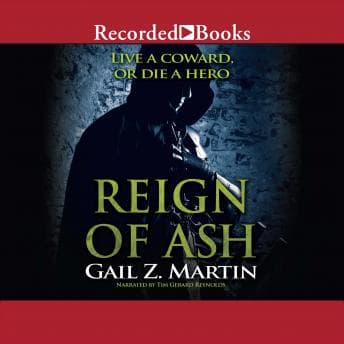

Look, I need to rant about something before we get into this. Twenty hours. Twenty hours and forty-nine minutes. That's how long Reign of Ash demands of your life, and Gail Z. Martin does not front-load the action to earn that commitment. I started this on a rainy Saturday while reorganizing the horror section at the library (yes, I get to do this, yes, it's as satisfying as it sounds), and by hour three I was still waiting for the post-apocalyptic fantasy wasteland to feel actually dangerous rather than just... described.
But here's the thing. I kept going. And I'm glad I did, even if Martin made me work for it.
The Slowest Apocalypse You'll Ever Sit Through (And Why That's Mostly Fine)
Blaine McFadden is an interesting protagonist on paper — convicted murderer, exiled to a brutal prison colony, comes home to find civilization has collapsed and magic has gone haywire. That's a killer setup. The problem is that book two of the Ascendant Kingdoms Saga spends an enormous amount of time on logistics. Who controls which ruined keep. Which warlord is allied with which noble remnant. How the broken magic interacts with ancient rituals that require specific bloodlines and locations and alignments of intent.
It's worldbuilding-as-plot, which either works for you or it doesn't. I'll be honest — I come from horror, where economy of dread is everything, so the pacing tested me. But Martin clearly knows her sandbox. The magic storms that tear across Donderath aren't just window dressing; they function as genuine environmental threats that reshape battle strategy and political maneuvering. When unrestrained magic bursts through at unpredictable intervals, it creates this underlying tension where nobody — not Blaine, not his ragtag group of exiles, not the warlords circling like vultures — can ever feel safe. That's the kind of worldbuilding anxiety I can respect. The slow dread of a world operating by rules that no longer hold reminded me of something L.E. Modesitt was doing in Towers of the Sunset — that same creeping sense that the scaffolding holding civilization together is older and more fragile than anyone wants to admit.
Shirley Jackson walked so... okay, Martin isn't doing Shirley Jackson things here. This is solidly epic fantasy, not psychological horror. But the concept of a world where the fundamental rules have broken and everyone's scrambling to reimpose order? There's something deeply unsettling about that if you sit with it. The ancient ritual Blaine has to chase down carries real stakes — fail, and an entire civilization just... ends. Not with a bang, but with a slow grinding descent into warlord fiefdoms and magic storms.
Tim Gerard Reynolds Carries Weight He Shouldn't Have To
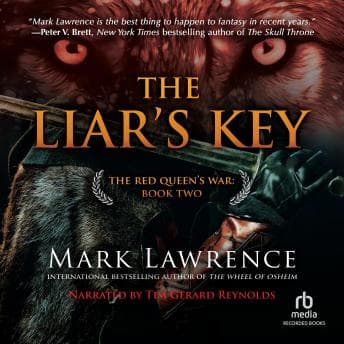
The narrator commits. That's rare, and Reynolds is genuinely one of the best working voices in epic fantasy right now. His approach to the sprawling cast is smart — he doesn't do wild accent gymnastics, but he shifts register and tone enough that you can track who's speaking in dialogue-heavy scenes without constant attribution. Blaine gets this grounded, slightly weary quality that sells the "I've survived prison and now I have to survive something worse" arc. The political players get crisper, more measured deliveries that signal calculation.
But here's where I push back on giving him a perfect score: Reynolds is essentially doing the heavy lifting that the prose sometimes doesn't. There are stretches — particularly in the middle third — where Martin's writing gets expository and repetitive, rehashing alliance structures and magical theory we've already absorbed. Reynolds reads through these passages with enough conviction to keep you from zoning out, but no narrator should have to be the reason you don't hit the skip-forward button. That's a writing problem, not a performance problem.
I listened to chunks of this at 1.25x during those middle sections. No shame. At normal speed, some of those strategic planning scenes feel like sitting in on a D&D session where the DM is explaining lore while the players check their phones.
Who Needs This (And Who Should Run)
If you're deep into epic fantasy — the kind where you want political complexity, a hard magic system in crisis, and a protagonist who earns his victories through endurance rather than chosen-one destiny — this delivers. Martin's strength is in making Blaine feel like a guy who's just trying not to die, surrounded by people with bigger ambitions and worse morals. The humor is dry and infrequent but lands when it shows up, and the ensemble cast (particularly the fellow exiles) has a lived-in quality that I appreciated.
If you scare easily — well, this won't scare you. But if you bore easily? The 20-hour runtime might be a barrier. This is a middle book in a series, and it has middle-book syndrome in places: setup for payoffs that won't arrive until later installments, character positioning that feels like chess pieces being moved rather than people making choices.
My podcast listeners who cross over into fantasy will find things to like here, but this isn't the gateway drug. Start with book one or don't start at all — Martin doesn't hold your hand with recap.
The Candle's Still Burning at 1 AM
I finished this at midnight, Shirley (my cat) asleep on my chest, rain still going outside. Not scared. Not shaken. But satisfied in the way a 20-hour commitment should leave you — like I'd invested in a world that has real weight to it, even when it takes its time showing you why. Reynolds is the reason this works as an audiobook rather than just a book you happen to listen to. Martin built the world; Reynolds makes you live in it.
Worth your time if you're already in the series. Worth your patience if you're not sure yet. Just maybe keep that 1.25x speed ready for the war councils.