
What happens when you take the chosen one trope and flip the power dynamics completely on their head?
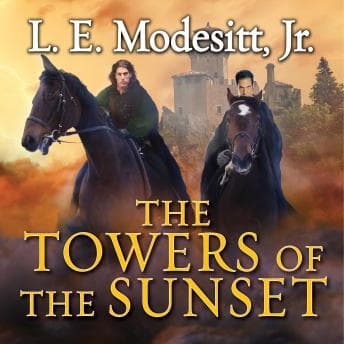
I was debugging a particularly nasty procedural generation algorithm at 2 AM—the kind where you've been staring at the same twenty lines of code for three hours and your brain has turned to mush—when Creslin's journey from pampered son of a matriarchy to exiled magic user started clicking in ways I wasn't expecting. Modesitt does something genuinely clever here that I don't see enough in fantasy: he takes a male protagonist and puts him in the subordinate position that female characters usually occupy. Creslin is essentially property to be married off for political advantage. His mother runs things. His magical abilities are considered lesser. It's a fascinating inversion that my D&D group would have an absolute field day with.
The Magic System is Chef's Kiss (Once You Get There)
Here's the thing about Modesitt that separates the faithful from the casual readers: the man does not hold your hand. The opening pages are genuinely confusing—I had to rewind twice during that first hour because I couldn't tell if I'd missed something or if the narrative was just... doing that. Spoiler: it was doing that. The order/chaos magic system unfolds gradually, almost frustratingly so, but when it clicks? When you finally understand how Creslin's abilities work and why the white wizards are such a threat? The progression hits that Sanderson-level satisfaction where you realize the author knew exactly what they were doing the whole time.
But I won't lie to you—this is a slow burn. Like, really slow. There are stretches where Creslin is just... traveling. Thinking about traveling. Recovering from traveling. If you're coming off something action-packed, the pacing will feel almost meditative. I found myself bumping up to 1.25x during some of the journey sections, which helped considerably.
Kirby Heyborne Walked So Other Narrators Could Run
Okay, slight exaggeration, but Heyborne does something interesting here. He's got this surprising variety of character voices—the political matriarchs sound genuinely different from the white wizards, who sound different from Creslin's internal monologue. There are these creatively rendered sound effects too, little touches that feel authentic to Modesitt's world rather than cheap production tricks. It took me maybe two hours to fully settle into his rhythm (his pacing is deliberate, matching the book's slower burn), but once I did, I couldn't imagine anyone else doing it.
The emotional delivery during Creslin's more character-driven moments—his frustration with being treated as a political pawn, his growing understanding of his own power—lands exactly right. Heyborne gets that this isn't an action-adventure story. It's a journey of self-discovery wearing fantasy clothes.
This Isn't For Everyone (And That's Fine)
Look, if you need constant action, skip this. If info-dumps make you break out in hives, this isn't for you (but you're wrong). Modesitt writes fantasy for people who want to understand how a world works, not just see cool stuff happen in it. Court of Wings and Ruin operates on similar principles—complex world mechanics over flashy spectacle. The political machinations, the gender dynamics, the slow revelation of the magic system—it's all building toward something, but it requires patience.
Yes, it's 18 hours. Yes, it's worth it—if you're the right reader. My D&D group would love this for the worldbuilding alone. My advisor would probably appreciate that I'm at least consuming something with complex power structures (Dr. Patel, if you're reading this, I'm definitely working on my thesis).
Who Should Queue This Up (And Who Should Pass)
This is for the fantasy readers who actually read Sanderson's appendices. The ones who pause audiobooks to think about magic system implications. If you loved the political intrigue of Game of Thrones but wished it had more structured magic and less gratuitous violence, Modesitt's your guy. If you're new to the Saga of Recluce, this works as a prequel—you don't need prior books, though knowing this is book two in publication order helps contextualize some references.
Skip if: you need fast pacing, you hate slow worldbuilding reveals, or you're not willing to give a narrator two hours to win you over.
Roll Initiative on Your TBR
I finished this at 4 AM, thesis still unwritten, but genuinely satisfied. Modesitt writes the kind of fantasy that rewards attention and punishes skimming. Heyborne's narration enhances rather than distracts. It's not flashy, it's not fast, but it's solidly built fantasy with a magic system that actually makes sense and a protagonist whose journey feels earned. Worth the credit if you know what you're getting into.