
Imaginary friends aren't just childhood whimsy. They're coping mechanisms.
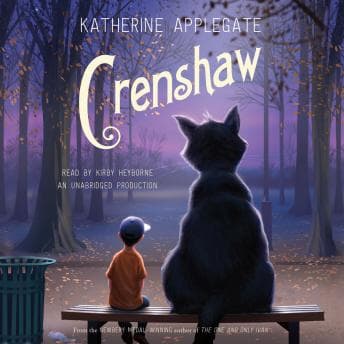
I was folding laundry when Crenshaw first appeared in my headphones—a six-foot-tall imaginary cat who walks upright and speaks with the kind of casual authority that only fictional beings can muster. I stopped mid-sock-pair because Katherine Applegate had just handed me a perfect case study in childhood dissociation wrapped in a middle-grade package.
The Psychology of Crenshaw (And Why It Actually Works)
Here's what Applegate understands that many authors don't: imaginary friends aren't random. They emerge when children need them. Jackson, our ten-year-old protagonist, first conjured Crenshaw during his family's previous bout with homelessness. Now, as they're sliding toward living in their minivan again, the cat returns.
The research actually shows that children create imaginary companions most frequently during periods of stress or transition. I've seen this same psychological mechanism explored in Bel Canto, where adults under extreme stress create their own forms of adaptive fantasy. Jackson's brain is doing exactly what it should—manufacturing a safe space to process unbearable truths. Crenshaw isn't magical thinking. He's adaptive psychology.
Kirby Heyborne narrates with this quiet, even delivery that initially struck me as almost too understated. But then I realized—that's Jackson. This is a kid who's learned to keep his voice steady, to not show how scared he is. Heyborne's restraint mirrors the emotional suppression Jackson has perfected. When Crenshaw speaks (and Heyborne voices him without going cartoonish), there's this contrast—the cat gets to say what Jackson can't.
When Children Become the Parents
What makes Jackson compelling is his hypervigilance. He counts the food in the refrigerator. He notices when his parents whisper. He's already learned that adults lie to protect children, and he resents it even as he understands it.
At just over three hours, this is a quick listen, but Applegate packs in some genuinely difficult moments. Jackson learning the full truth about his family's situation—that they're not just "between apartments" but genuinely facing homelessness again—lands hard. Heyborne's delivery made me tear up while sorting whites from darks, which is not a sentence I expected to write today.
The book doesn't offer easy solutions. There's no magical inheritance, no lottery win. Jackson's family applies for assistance, visits food banks, makes hard choices. Applegate respects her young readers enough to show that poverty isn't a character flaw or a temporary inconvenience you can wish away with positive thinking.
(My therapist would have thoughts about Jackson's parentification, by the way. This kid has taken on so much emotional labor.)
Two Audiences, One Giant Cat
Here's where I found myself asking: who is the intended audience? On the surface, it's middle-grade readers. But this book serves two populations.
First: children experiencing housing insecurity or poverty. Crenshaw validates their experience without condescension. Jackson isn't a victim to pity. He's a kid navigating circumstances beyond his control with the tools available to him—including a giant imaginary cat who likes to surf.
Second: children who've never experienced these things. Applegate builds empathy without trauma tourism. You understand Jackson's shame, his fierce protectiveness of his little sister, his complicated feelings about his parents. That delicate balance between showing hardship and respecting dignity reminded me of what Camp of the Dog attempts with its own vulnerable characters, though in a very different setting.
Adults listening alongside kids (or, like me, listening alone while doing housework) will catch the layers Applegate embeds for them. The parents' guilt. The impossible arithmetic of poverty. The way Robin, Jackson's little sister, is being shielded from truths she probably already senses.
Heyborne's Understated Approach
Heyborne has narrated other Applegate works, including The One and Only Ivan, and his familiarity with her voice shows. The production is clean—no sound effects, no music, just his steady narration carrying you through Jackson's first-person perspective.
If I have a critique, it's that the character differentiation isn't dramatic. You won't get wildly different voices for each family member. But honestly? That fits the intimacy of Jackson's perspective. We're in his head. Everyone else is filtered through him.
The pacing suits multitasking—I finished it across two laundry sessions and a morning jog. It's not demanding, but it rewards attention. You can listen at 1.25x without losing emotional beats.
The Priya Prescription
Listen with a child who needs to know that hard times don't mean broken families. Listen alone if you want a gentle gut-punch about resilience and the strange, beautiful ways children protect themselves.
Skip if you need plot-heavy action or if the premise of childhood homelessness feels too heavy for your current headspace. This is a quiet book about loud feelings.
Crenshaw isn't real. But what he represents—the mind's capacity to create comfort in chaos—absolutely is. Applegate knows this. And she's written a book that honors both the fantasy and the psychology behind it.
I finished folding laundry with slightly damp eyes and a renewed appreciation for imaginary friends. Not bad for three hours.