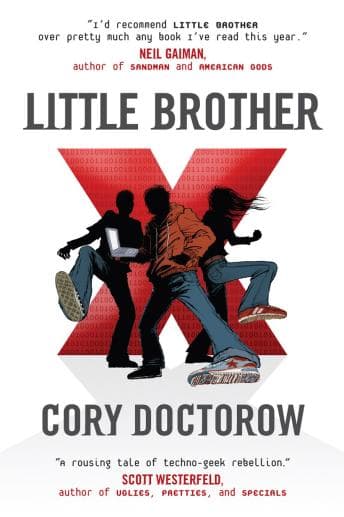

So everyone kept telling me this was a must-read for teens interested in tech and privacy rights. And yeah, I get it. But here's the thing - I'm a 38-year-old mom whose biggest tech challenge last week was figuring out why the iPad parental controls weren't working (Lucas had somehow bypassed them. He's FIVE). I wasn't sure this was going to be my jam.
Turns out? I was wrong. Really wrong.
When Your Minivan Becomes a Dystopian Thriller
I listened to most of this during school drop-off runs and that sacred 45 minutes in the garage before going inside. And let me tell you, there's something deeply unsettling about hearing a teenager describe being detained by Homeland Security while you're watching other parents wave goodbye to their kids. The juxtaposition hit different.
Marcus is seventeen, cocky, and thinks he's smarter than every adult in the room. So basically, he's every teenager I've ever met. But when he and his friends get caught up in the aftermath of a terrorist attack on San Francisco, that teenage arrogance crashes headfirst into something genuinely terrifying - a government that treats its own citizens like suspects.
Cory Doctorow wrote this book in 2008, and honestly? It feels more relevant now than it probably did then. The surveillance stuff, the erosion of privacy, the way fear gets weaponized - I found myself thinking about it while scrolling through my phone later. Which is probably the point.
Kirby Heyborne Nails the Teenage Ego
Okay, the narration. Kirby Heyborne was exactly right for this. He captures that particular blend of teenage brilliance and teenage stupidity that makes Marcus feel real instead of like some genius wish-fulfillment character. When Marcus is being smug, you can hear the smug. When he's scared - actually scared - it lands.
The book gets pretty tech-heavy in places. There are explanations of encryption and network security and how to build untraceable communication systems. Heyborne handles most of it well, keeping the pacing tight enough that even when I didn't fully understand the technical stuff, I stayed engaged. A few passages with strings of IP addresses got a little clunky, but honestly? I was usually trying to remember if I'd packed Lucas's lunch during those parts anyway.
What I really appreciated was how he handled the emotional beats. There's humor here, and some sweet romance stuff, and genuine moments of connection between characters. Heyborne shifts between all of it without missing a step. The thriller parts stay tense. The quieter moments breathe.
Would I Let My Kids Listen?
Emma's seven, so not yet. But in a few years? Absolutely. This is the kind of book that makes you think about things without being preachy about it. Doctorow clearly has opinions - strong ones - about surveillance and civil liberties and what we give up when we're scared. My Confession tackles similar questions about truth and power, though from a completely different angle. But he wraps them in a story that actually moves, with characters you root for.
There's some violence (terrorism, imprisonment, interrogation scenes that are genuinely uncomfortable). The language is appropriate for older teens. Nothing that would make me clutch my pearls, but it's not a light read either.
The tech explanations are actually really well done - accessible enough that non-techno-geeks can follow along, detailed enough that it doesn't feel dumbed down. I learned things. About cryptography. At 7:45 AM. While parked outside an elementary school. Not where I expected my morning to go.
Who's This For (And Who Should Skip It)
Perfect for parents with older kids who are starting to ask questions about privacy and technology and why the world is the way it is - this is a good conversation starter. Skip it if you need something light; the interrogation scenes are heavy, and the themes stick with you. Also maybe not ideal if tech talk makes your eyes glaze over, though Doctorow keeps it more accessible than you'd expect.
Mom's Final Word From the Garage
Look, I'm not the target audience here. I'm a tired mom whose idea of rebellion is eating the kids' Halloween candy after they go to bed. But this book grabbed me anyway. It's smart, it's fast, and it asks questions that matter.
At just under 12 hours, it's a commitment - but it survived my chaotic listening schedule. I'd pause mid-scene, deal with a toddler meltdown, come back twenty minutes later, and still know exactly what was happening. That's harder to pull off than you'd think.
Just maybe don't listen to the interrogation scenes right before pickup. The emotional whiplash from "government torture" to "Mom, can I have a playdate?" is a lot.