
Okay, look. You know me. Usually, if there isn't a ghost, a demon, or a house that eats people in the first three chapters, I'm checking out. My comfort zone is dread, not explosions.
But sometimes? Sometimes you need a palate cleanser. And by "palate cleanser," I mean pure, unadulterated adrenaline that makes you forget you're currently reorganizing the Dewey Decimal 600s for the third time this week. (Don't tell my boss I was listening to this on the clock. The "technology" section has never been shelved with such aggressive speed.)
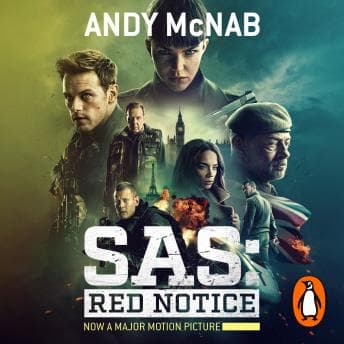
So, Red Notice. Andy McNab.
Here's the pitch: It's Die Hard in the Eurotunnel. That's it. That's the tweet.
The Tunnel as a Trap
Let's be real for a second—the English Channel Tunnel is already a horror setting. You're underwater, in a tube, in the dark. McNab takes that built-in anxiety and cranks it up to eleven.
We've got Tom Buckingham (SAS, obviously, because McNab writes what he knows) stuck on a train with a bunch of terrorists. Is the plot groundbreaking? No. Have we seen the "lone soldier saves the girl" trope a million times? Yes. Did I care? Absolutely not.
Because here's the thing—McNab's details are obsessive. The way he describes the tactical movement, the weapons, the sheer logistics of the situation... it feels heavy. Real. You can tell the guy lived this life. It grounds the story in a way that makes the stakes feel genuine, even when the villain starts twirling his mustache a little bit.
Colin Buchanan Saves the Cheese
We need to talk about the narration. A thriller like this lives or dies by the voice in your ear.
If the narrator sounds like a news anchor, it's over. Becomes background noise. But Colin Buchanan? He commits.
He does this thing where he switches gears instantly. One second he's the gruff, internal monologue of Buckingham, and the next he's doing these distinct, frantic voices for the hostages or the cold, calculated tone of the bad guys. It's dynamic.
There are moments in the text—specifically the romantic subplots (which, let's be honest, are a bit melodramatic)—that could have been cringe-city. Seriously. The "I have to save my girlfriend Delphine" angle is... well, it's there. But Buchanan sells it. He puts enough grit into the delivery that you buy the desperation, even if the dialogue is a little soap opera-y on paper.
(Shirley, my cat, was sleeping on my chest during the climax and didn't even flinch when the grenades started flying. She respects a professional narrator, clearly.)
Where It Drags (Just a Little)
The villain. Ugh. Look, he's effective, but he feels a little "comic book" compared to how grounded the military stuff is. He's almost too evil?
And there are moments where McNab gets a little too into the weeds with the technical specs. I love detail, but there were a few times I zoned out while he was describing the mechanics of a door or a gun and had to skip back 30 seconds. Minor gripe, though. Buchanan keeps the pace moving so fast you barely have time to question it.
The Verdict
I listened to this in the dark—habit, sorry—and while it didn't scare me like Hill House, it definitely spiked my heart rate. If you want something that will scare you in the dark, It remains my gold standard for pure dread. This isn't high art. It's not trying to be. It's a blockbuster movie for your ears.
Who should listen: Anyone who wants to feel trapped in a tunnel with a very angry SAS soldier while stuck in traffic or folding laundry. Fast, loud, and the narration elevates it way above standard thriller fare.
Who should skip: If you want deep, complex character studies where people stare out windows and think about their childhood trauma, this ain't it.
Just maybe don't listen while shelving books. I may have aggressively slammed a few encyclopedias during the final shootout.