
Most of the reviews for this book are screaming about the narrator change. Let's address the breaking change in production immediately: Yes, Vikas Adam is gone. Yes, Luke Daniels is in.
For a lot of listeners, this is like when your favorite IDE changes its entire UI overnight—disorienting and annoying. But here's the unpopular opinion from someone who listens to 50+ books a year: Luke Daniels is an upgrade in raw technical capability, even if the transition friction is real.
I listened to this on the 6 AM Caltrain to Mountain View, usually the time I reserve for debugging code in my head. *Raze* actually fits that headspace perfectly. Dakota Krout is a programmer, and you can tell. That design-brain was already booting up in Ritualist, but here the architecture feels like it is under real-world traffic. The plot here is basically a massive scaling problem. Earth is deprecated, humanity is migrating to the new server (Eternium/Ardania), and the infrastructure isn't ready for the load. We're talking supply chain failures, housing shortages, and a protagonist (Joe) trying to patch bugs while "smiling enforcers"—who feel disturbingly like corporate HR during a layoff cycle—try to shut him down.
The "Hotfix" Narrator Situation
Luke Daniels (famous for *The Iron Druid*) brings a different energy. Vikas Adam was theatrical and distinct; Daniels is grounded and sarcastic.
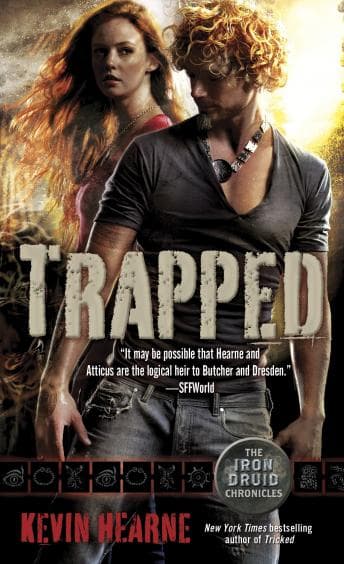
I had the same Luke-Daniels-as-sarcasm-engine reaction in Tricked: The Iron Druid Chronicles, Book Four, where his timing turns exposition into actual propulsion.The first hour is rough. Your brain keeps expecting Adam's specific cadence for Joe, and Daniels just sounds... tougher? Less whimsical. But once you re-calibrate, Daniels handles the LitRPG elements—the stat screens, the skill descriptions—with a rhythm that keeps things moving. He doesn't linger on the numbers like he's reading a phone book. He treats them like system logs: necessary, fast, informative. By the time Joe is dealing with the guild politics and base-building stress, I forgot about the switch.
Scaling Issues & Dad Jokes
Krout's humor is still dad-joke heavy. If you groaned at the puns in books 1-3, you'll groan here too. Daniels delivers them with a deadpan dryness that actually makes them slightly more tolerable than Adam's enthusiastic delivery.
The story itself drags a bit in the middle—classic "middle book" syndrome where we're setting up infrastructure for the finale. It feels like a sprint planning meeting that went two hours over time. Lots of logistics, base management, and resource allocation. If you love the "spreadsheet" side of LitRPG, this is your jam. If you're here for pure combat, you might find yourself hitting the +30s button during the town management scenes.
Who's This Build For?
**Queue it up if:** You're invested in the Completionist Chronicles, you enjoy base-building and resource management mechanics, or you're curious about Luke Daniels' take on the series. **Skip if:** You can't handle narrator changes mid-series, or you need constant action over logistics.
Final Stack Trace
Is it the same series? Barely. The tone shift is significant. But it works. It's a darker, grittier version of the *Completionist Chronicles*, which fits the "humanity on the run" plotline. If you can get past the initial shock of the voice change, the backend logic of the story still holds up.
Just don't expect a smooth handover. It's a hard fork.