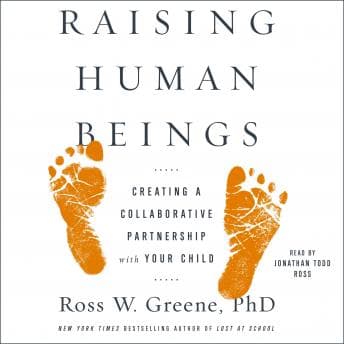

Every parenting book makes promises. This one actually delivers a framework you can use.
I came to Ross Greene's work sideways—through my research on collaborative problem-solving in educational settings, not through parenting struggles. But here's the thing: the psychology here is solid. Like, genuinely rooted in how humans actually function, not how we wish they'd function. Greene understands that kids aren't giving you a hard time—they're having a hard time. Simple reframe, massive implications.
The Case Study Approach That Actually Works
What makes this book compelling from a psychological standpoint is Greene's refusal to treat children as problems to be solved. The protagonist here—and yes, I'm treating your kid as a case study, it's what I do—exhibits behaviors that are signals, not defiance. The research shows that most "difficult" behavior stems from lagging skills, not bad intentions. Greene gets this. He's not interested in compliance for compliance's sake.
The Collaborative & Proactive Solutions model he presents isn't rocket science, but it requires something most parents find genuinely difficult: curiosity over control. You have to actually want to know what's going on in your kid's head. Not assume. Not project. Ask. And then—this is the hard part—listen to the answer even when it's inconvenient.
I found myself taking mental notes during my morning jogs through Cambridge, pausing the audiobook to think through how this applies beyond parenting. Because honestly? This framework works for any relationship where there's a power imbalance and a need for collaboration. I saw similar dynamics play out in Friday Night Lights, where Coach Gaines had to navigate that exact tension between authority and collaboration with his players. Managers and employees. Teachers and students. Therapists and clients. (My therapist would have thoughts about me analyzing a parenting book through a professional lens when I don't have kids. She'd be right.)
Jonathan Todd Ross Gets the Assignment
The narrator here—Jonathan Todd Ross—has exactly the right energy for this material. Warm without being saccharine. Clear without being clinical. He sounds like the kind of person who would actually sit with you at a coffee shop and walk you through why your kid won't do their homework, and you'd leave feeling less like a failure.
His pacing gives you room to absorb. This isn't a thriller; you don't need someone racing through it. The gentle delivery matches Greene's message: slow down, pay attention, collaborate. It's almost meta in that way—Ross is modeling the patience the book is asking you to develop.
I couldn't find much about Ross's background online, but based on this performance, he's got a gift for making dense psychological concepts feel accessible. The wisdom lands because he's not performing—he's communicating.
Where the Psychology Gets Real
Greene's approach requires parents to do something psychologically uncomfortable: give up the illusion of control. Most parenting advice is about getting your kid to do what you want. This is about figuring out what's getting in the way of them doing what works for everyone.
The book walks through specific scenarios—homework, hygiene, screen time, curfews—and shows how collaborative problem-solving plays out in practice. It's not abstract theory. You get the actual conversation structure. When kids feel heard, they're more likely to buy into solutions. Shocking, I know. Caste explores a darker version of this—what happens when entire groups of people are systematically denied the experience of being heard across generations. (Don't tell my students I just summarized years of developmental psychology in one sentence.)
What I appreciated: Greene doesn't promise this is easy. He acknowledges that shifting from traditional discipline to collaboration feels weird. Uncomfortable. Like you're being a pushover. But the distinction he draws between being a pushover and being collaborative is crucial. You're not giving in. You're solving problems together.
Who Needs This (And Who Doesn't)
If you want a book that tells you exactly what consequences to impose when your kid misbehaves, this isn't it. Quick-fix seekers, keep scrolling. But if you're genuinely curious about why your kid does what they do—if you want to understand the psychology behind the behavior—this is the framework.
Best for parents exhausted by the punishment-reward cycle. For caregivers who sense there's a better way but don't know what it looks like. For anyone who works with kids and wants to stop the power struggles. Skip it if you need high drama in your audiobooks or if you're looking for entertainment rather than practical application. This is a working book. You'll want to pause and think.
At just under eight hours, it's the length of a good road trip. I'd recommend 1.0x speed—Ross's pacing is already comfortable, and speeding it up might undercut the reflective quality that makes this work.
The Pattern Recognition You Didn't Know You Needed
The human mind has patterns. Greene teaches you to recognize them in your kids—and in yourself. That's the real work here.