
What does a Nobel Prize-winning physicist's actual lab notebook sound like when read aloud?
Not what you'd expect. I finished this at 2AM on a Tuesday - couldn't sleep after a rough on-call shift, which apparently is my brain's cue to queue up a 5-hour doctoral thesis from 1903. No regrets.
Marie Curie's Original Source Code
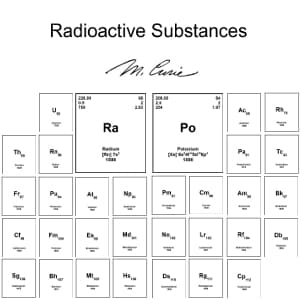
Here's the thing nobody tells you about this audiobook: it's not a biography. It's not a pop-science explainer. This is Curie's actual doctoral thesis - the one she submitted to the Faculté de Sciences de Paris in 1903, the same year she won her first Nobel. You're listening to raw research documentation. Measurement tables. Experimental methodology. The actual numbers she recorded while isolating radium and polonium from pitchblende, a process that required processing literal tons of ore to extract grams of material.
That's... kind of insane to sit with. She's describing her instrumentation setup - ionization chambers, electroscopes, the specific electrical measurements she used to detect radioactivity - and you realize this woman was essentially writing the documentation for a field that didn't exist yet. No Stack Overflow. No prior art to reference. She was committing to main.
The science actually holds up, obviously, because it's foundational physics. The contrast between that kind of ground-zero discovery and the sanitized way we usually discuss technological progress is something I kept thinking about while reading Impact of New Technologies on Society — though Curie's raw notebooks make that book feel almost quaint by comparison. But what surprised me is how readable it is even by modern standards. Curie writes with this methodical clarity that I genuinely wish more technical papers had. Every claim is followed by measurement. Every measurement has methodology. It's basically the original reproducible research.
What hits differently when you know the ending: she didn't know radiation was killing her. She's describing extended exposure to these materials with the same detached precision she'd use for any other variable. There's a section where she notes the physical properties of radium samples she handled directly. Her lab notebooks are still radioactive today - they're stored in lead-lined boxes at the Bibliothèque nationale de France. You have to sign a waiver to view them. That context hanging over 5 hours of dry experimental prose creates this weird, heavy atmosphere that no fiction book could manufacture.
Availle Does the Work
So here's the narrator situation. Availle is a LibriVox volunteer, which means this is a free recording, and the bar for free is usually "technically audible." Availle clears that bar and then some. The pacing through dense scientific terminology is controlled - she doesn't rush the measurement sequences, which matters because if you zone out for 30 seconds during a table of ionization values, you're lost.
The performance is clean and clear. Is it Ray Porter? No. Is it the kind of narrator who makes you forget you're listening to a thesis? Also no. But for this specific material, what you need is someone who treats the text with respect and doesn't editorialize, and Availle does exactly that. The LibriVox audio quality is what it is - slightly flat, no production flourishes - but it's perfectly listenable.
I ran this at 1.25x. Would not go faster. The content density doesn't allow it.
Who Should Actually Listen to This
Honest answer: this is a niche listen. If you want to understand Curie as a person, read a biography. If you want accessible science history, there are better entry points.
But if you're the kind of person who actually reads technical papers for fun - who finds primary sources more interesting than summaries - this is weirdly compelling. The ROI on this audiobook is high if you're a scientist, an engineer, or anyone who's ever wondered what it looks like when someone is genuinely operating at the edge of human knowledge with no map.
Perfect for: late-night insomnia listening, focused commute sessions where you want something that demands attention. Skip for: background, gym, anything where you'll miss 30-second chunks.
It's 5 hours. It's free. It's Marie Curie's actual thesis. That's a pretty low barrier to find out if it's for you.





![Steve Jobs [unabridged audiobook] audiobook cover](/_next/image?url=https%3A%2F%2Fcovers.audiobooks.com%2Fimages%2Fcovers%2Ffull%2F9788499923406.jpg&w=1920&q=75)