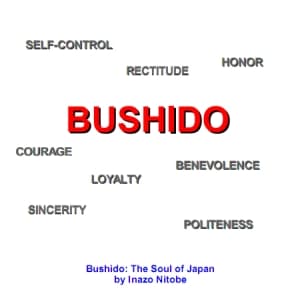

This is the book I wish I'd had when I was twenty-three and trying to explain to my Western Civ professor why the samurai code wasn't just "Japanese knights doing knight stuff." Nitobe wrote Bushido: The Soul of Japan in 1900, in English, specifically to bridge that gap between East and West - and over a century later, it still does the job better than most modern attempts.
I found this one on LibriVox, narrated by Availle, and listened to the whole thing during a Saturday afternoon walk along the lakefront with Denise. She had her own audiobook going (some cozy mystery I pretend not to judge), and I had Nitobe dissecting the moral architecture of feudal Japan. Three hours and fifty minutes. We walked longer than planned because I didn't want to pause it.
Nitobe Was Doing Comparative Literature Before It Had a Department
Here's what makes this book remarkable and not just a historical curiosity: Nitobe doesn't just describe Bushido. He contextualizes it. He pulls in Aristotle, the New Testament, Aquinas, the chivalric codes of medieval Europe - and uses them as parallel structures to help Western readers understand concepts like gi (rectitude) and jin (benevolence). This reminds me of what Hemingway said about writing - that the dignity of movement of an iceberg is due to only one-eighth of it being above water. Nitobe shows you the eighth above water, but you can feel the depth underneath every comparison he draws.
The chapter on honor alone is worth the listen. Nitobe traces the samurai concept of honor through its connections to self-respect, obligation, and shame culture - then holds it up against Western notions of honor rooted in individual conscience. He's not arguing one is superior. He's saying: look, these are parallel human attempts to solve the same problem. How do you make a warrior class moral? The prose deserves to be savored here. Nitobe writes with a formality that feels earned, not affected - sentences that coil and build with the precision of someone who genuinely thinks in multiple cultural frameworks.
My students would hate this. I love it. Though to be fair, I've watched the same kids who groan at dense prose absolutely devour Middle School, The Worst Years of My Life - which tells me the resistance is usually about access, not ability. The language is 1900s formal English, which means long sentences, classical references they'd need footnotes for, and zero concern for keeping your attention with cliffhangers. But that's the point. This isn't entertainment. It's an argument, carefully built, and if you meet it on its own terms, it rewards you.
Availle Reads Like She's Teaching You to Listen
Availle's narration is clean, measured, and respectful of the text's rhythm. Someone in the LibriVox reviews called this "a lesson on how to read out loud," and I can't improve on that description. She doesn't dramatize because there's nothing to dramatize - this is philosophical nonfiction, and she treats it accordingly. The pacing lets you actually process Nitobe's layered comparisons instead of scrambling to keep up.
Now - there are occasional mispronunciations. I caught a few, and some listeners find them charming while others might flinch. For a LibriVox volunteer recording, though? This is genuinely strong work. Her pronunciation of Japanese terms and names is notably careful, which matters enormously in a book that's constantly moving between Japanese concepts and their Western analogs. The narrator understands that pause is punctuation, and she uses silence well between chapters, giving you a moment to sit with what Nitobe just laid out.
I listened at 1.0x. Don't speed this up. Nitobe's sentences are architecturally complex - subordinate clauses nesting inside each other like Russian dolls - and rushing them defeats the purpose.
Who This Is For (And Who Should Probably Pass)
If you loved Ruth Benedict's The Chrysanthemum and the Sword, this is its spiritual predecessor - written not by an outside anthropologist but by a Japanese man explaining his own culture's moral code to foreigners. If you're interested in comparative ethics, feudal Japan, or the philosophical roots of martial arts traditions, this is essential listening.
But if you're looking for samurai action, battle narratives, or anything resembling a story - this isn't it. This is philosophy. Dense, structured, nineteenth-century philosophy. At under four hours it's a manageable commitment, but it asks for your full attention.
Also worth noting: this is a LibriVox recording, meaning it's free. No production frills, no music, no sound effects. Just Availle and Nitobe's words. For a book like this, that's exactly right.
The Lesson Plan I'm Stealing From a Dead Diplomat
I'm genuinely considering assigning excerpts from this to my AP students next semester. Not because they'll love it - they won't - but because Nitobe does something I spend entire semesters trying to teach: he makes a sustained argument across cultures without reducing either culture to a caricature. In 1900. In his second language. The man was doing the work. Worth pausing the faculty meeting for.